

The Unexpected Ingredient That Gives My Family's Adobo Its Signature Flavor
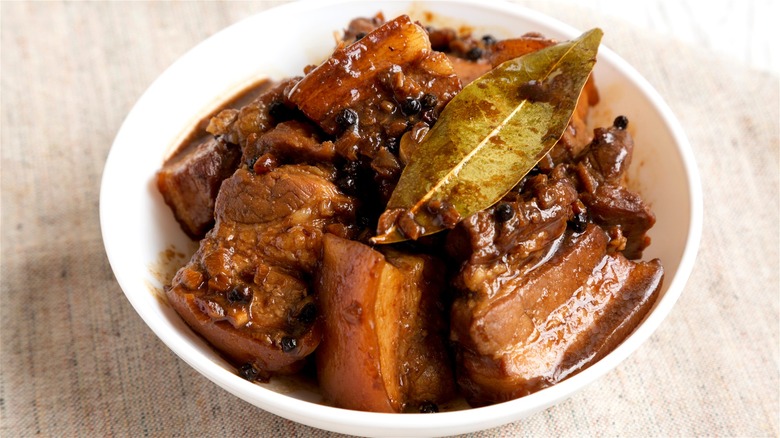
Living in the Philippines, you come to expect that every family has their own way of making adobo. This chicken adobo recipe, for instance, uses coconut milk, whereas others don't. A lot of the Western world may be more familiar with adobo styles that include soy sauce. However, other versions, such as adobong puti ("white adobo"), eschew this ingredient and give the key component, vinegar, more space to shine. My lola's ("grandmother's") take on pork adobo borrows heavily from multiple versions of the dish and adds her personal preference for butter, which is a pretty unexpected choice. You won't find it in most adobo recipes, but trust me — it works.
Lola's recipe skips the soy sauce just like you would with adobong puti, but also adds calamansi juice (whose namesake fruit is also referred to as the Philippine lime). There's a citrusy aspect to the acid, as with adobo sa calamansi ("adobo in calamansi"). It's slow-cooked until the garlic basically breaks down into a caramelized paste, and there's barely any braising liquid left. In that sense, it's similar to adobong tuyo ("dry adobo"). Finally, it's seared in a separate pan with a healthy amount of butter until it develops a nice little crust and is served with any remaining liquid as a sauce on the side. That last step makes it taste unlike any other adobo I've ever had, and it's something I highly recommend everyone trying at least once.
How finishing adobo in butter creates my family's signature flavor
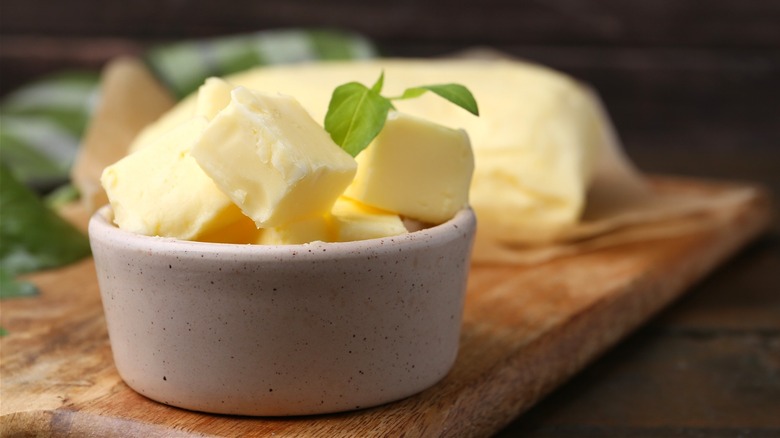
The most apparent thing you'll notice about my family's signature adobo is that it tastes a little more complex than usual. This is primarily because searing the meat in butter promotes the Maillard reaction, a chemical process known for adding deep caramel notes and nuttiness to food. The transformation helps balance the acidity you're getting from the vinegar and calamansi. The crust developed through searing creates wonderful textural contrast with meat that's been tenderized over hours of braising, giving my family's adobo incredible mouthfeel on top of all that flavor complexity.
The butter also plays nicely with two other ingredients prominent in the adobo's flavor profile. It complements the sweetness of caramelized garlic, while its inherent richness mellows out some of the garlic's harsher, more pungent tones. That same richness also balances out the acidity of the dish, which allows the calamansi's citrus flavors to shine through without thteir usual sharpness, making the dish brighter.
While my lola's adobo recipe is based on adobo styles that don't use soy sauce, the butter trick should also work with those that do. Soy sauce and butter combine to create a rich, velvety umami bomb, which is why soy sauce butter is a major flavor boost for savory entrees. It should go well with the balance provided by the acid from the vinegar in adobo.