

13 Craft Lager Beers, Ranked Worst To Best
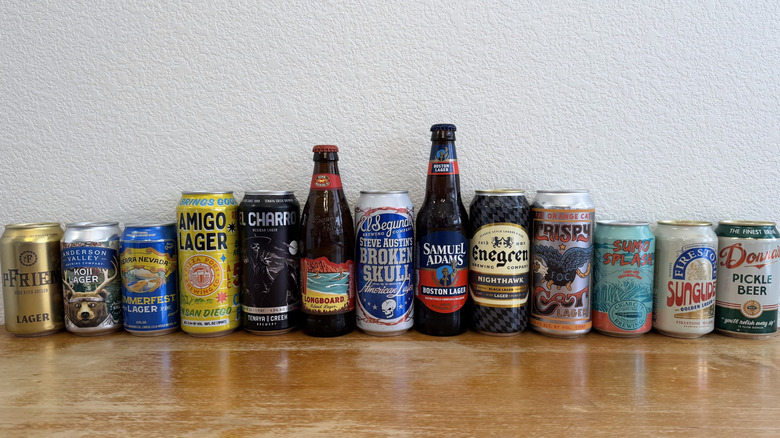
The vast majority of beers in the world can be categorized as either ales or lagers. Really the only difference between an ale and a lager is the type of yeast used in the fermentation process, each of which necessitates a different style of fermentation. Typically, ales are richer and more diverse in flavor while lagers are generally light and crisp. Nevertheless, lager is still a vast category, ranging from light beers like Michelob Ultra, which topped the Mashed ranking of seven popular light beers, to hoppy pilsners from the Czech Republic, the country that drinks the most beer per capita.
Sometimes a brewery will opt not to categorize a beer as, say, an American light beer or a Czech pilsner but simply a lager. Craft versions of those sorts of lagers that don't fit into more defined styles include flavored beers, small-batch interpretations of classic Mexican beers, sessionable offerings from brands that otherwise specialize in bold IPAs, and plenty more. I picked up a selection of 13 craft lagers from my local Total Wine located south of the Las Vegas Strip and tried them all back-to-back. For the most part, my selection features products from nationally recognized breweries, accompanied by just a couple of particularly noteworthy regional beers. Ahead are my thoughts on each of the craft lagers I tried, ranked from worst to best.
13. El Segundo Steve Austin's Broken Skull Lager
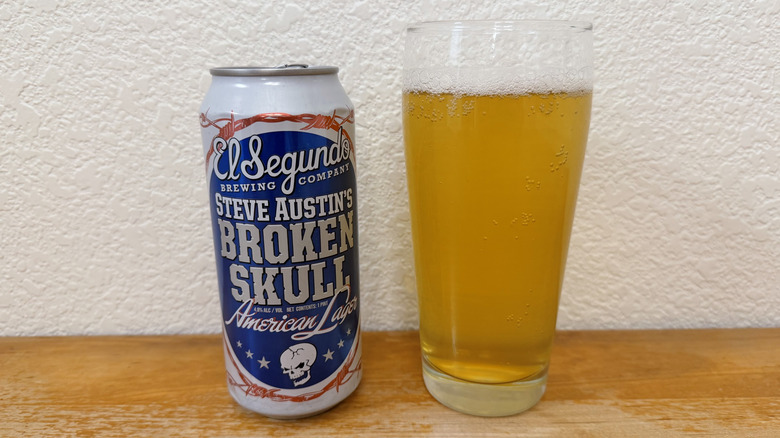
I'm someone who watches professional wrestling multiple times a week, and my earliest memories of wrestling involve my childhood babysitter's son losing his mind over Stone Cold Steve Austin. I would love a Stone Cold Steve Austin-branded beer to be good, then, but I've always avoided trying one because I've feared its label was more important than its taste. As much as I wanted to enjoy El Segundo Brewing's Steve Austin's Broken Skull Lager, my fears ended up justified. It just wasn't very good.
For what it's worth, El Segundo's flagship Stone Cold beer was its Broken Skull IPA, before introducing the lager seven years later as a spin-off. So I'm open to the possibility the IPA is the definitive beer for fans of the Texas Rattlesnake. While my Broken Skull Lager was objectively flavorful, its flavors were totally incongruous. I picked up a sort of indistinct, honey-like sweetness, which was drowned out entirely by an excess of bitterness, reminiscent of too much lemon rind. Its sweetness was insufficient and that bitterness felt extreme for an otherwise sweet beer. Plus, its color was an awkward combination of light and hazy, whereas its body was unnecessarily fizzy. With all due respect to Mr. Steve Austin, this was the only beer in my field of 13 that was a little hard to drink.
12. Pizza Port Amigo Lager
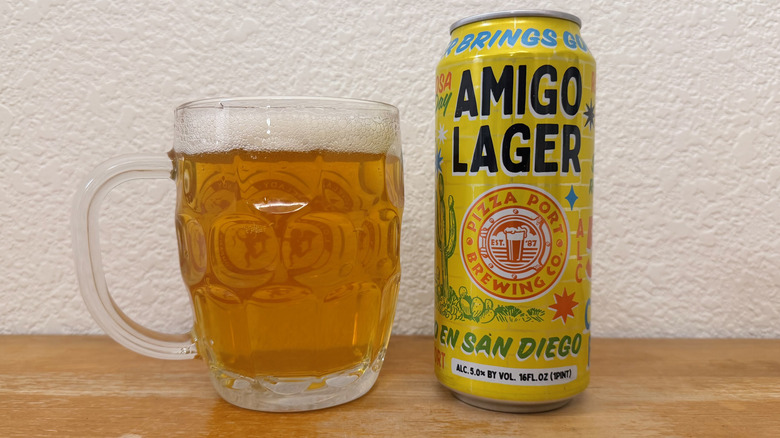
For a couple reasons, Pizza Port is one of a few somewhat regional beers I felt deserved a spot on this list. First of all, getting into craft beer in Southern California, Pizza Port was a longtime staple. Years later, I live in Las Vegas where it's still available to me. Its Amigo Lager is a craft beer interpretation of a Mexican macrobrew, which is a style that seems to have grown in popularity. After trying my can of Pizza Port's Amigo Lager, however, I'd recommend just sticking with a classic Corona or Modelo.
Amigo Lager boasts an incredible can design, at least — probably my favorite of all 13 beers I tried, reminiscent of, say, the visual style of a retro-modern taqueria. That said, I didn't really feel that it delivered on the premise of a Mexican lager. The key difference between an American and Mexican lager is that there's typically more flavor in the latter, without sacrificing the signature lightness of a mass-market macrobrew. My Amigo Lager wasn't very light, pairing a somewhat biscuit-y malt with an unnecessarily prominent hop bitterness. It wasn't quite unpleasant to drink like Broken Skull Lager, but its flavors were indistinct and unsatisfying nevertheless, resulting in a disappointing experience.
11. Fat Orange Cat Crispy Cat American Craft Lager
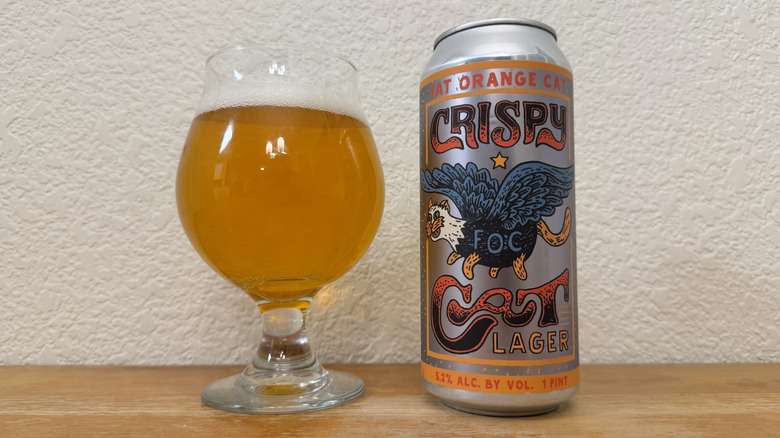
I'm a nearly lifelong cat owner, so I've always had a bit of a soft spot for Connecticut's Fat Orange Cat Brew Co. When I spotlighted the eight best beers for fall 2026, I included its Pumpkin Patch Kittens IPA among the season's best. As both a cat guy and a fan of that fall IPA, I ended up a little disappointed that I didn't enjoy Fat Orange Cat's Crispy Cat American Craft Lager more.
While there was nothing glaringly wrong with my can of Crispy Cat, I couldn't find anything to outright appreciate. Its core flavor was a mild sweetness, closer to that of a dark berry than a sweeter fruit. Accompanying that component was a pretty light level of fizz and not much bitterness, resulting in an experience that landed in a sort of uncanny valley between a classic American light beer and a craft lager. Since there are both better options in the lager section and in Fat Orange Cat's catalogue, I'd ultimately say to skip Crispy Cat American Craft Lager altogether.
10. Firestone Walker Sunglider Golden Lager
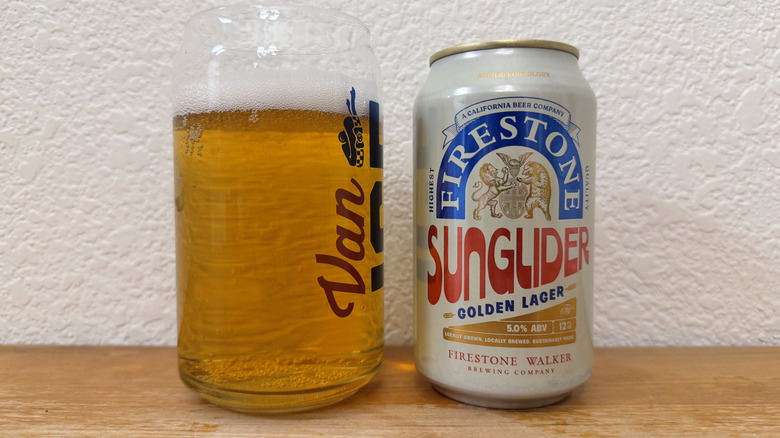
Firestone Walker is a brewery with which I have a sort of personal connection — I grew up in Santa Barbara, which shares an 805 area code with Firestone Walker's Paso Robles headquarters. It's no secret Firestone Walker is responsible for some of the more iconic releases in the history of craft beer, so beyond just hometown pride, it's a brand I typically associate with quality. Its Sunglider Golden Lager, however, didn't live up to what I felt was the usual Firestone Walker standard.
"Golden" is a descriptor I associate with golden ales, and accordingly, I found Sunglider's flavor to have some characteristics more typical of a lighter ale than a lager. Namely, its sweetness was prominent, revolving around a biscuit-y malt and some light fruity notes. Counteracting that was a surprisingly strong dose of bitter hops, that got in the way of that otherwise robust sweetness. While I didn't hate my can of Sunglider, I was left wishing it was either a little less bitter or even sweeter. The idea of a crisp but flavorful lager may have worked in theory, but this particular execution just didn't get the job done for me.
9. Donna's Pickle Beer Lager With Pickle Juice
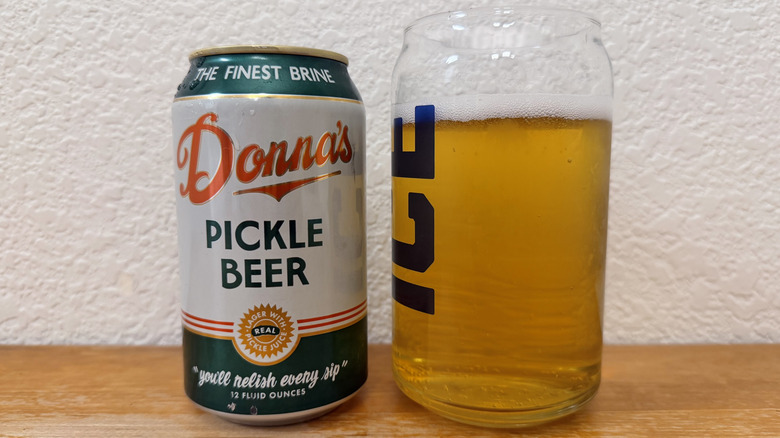
Donna's Pickle Beer is obviously a little gimmicky, appealing to customers interested in something left of center rather than the highest-quality beer possible. Nevertheless, there are good reasons to combine pickles and beer, and Donna's Pickle Beer is currently one of the foremost brands doing just that, earning a spot among comparatively more serious craft lagers at my local Total Wine.
I was surprised by just how much I liked my can of Donna's Pickle Beer. I was expecting it to be a little sour, but there was virtually none of the vinegar tang I anticipated. Rather, it was a strong dill flavor that delivered on the pickle concept. It also tasted like beer, as opposed to flavoring added to a generic alcohol base. As much as I felt Donna's Pickle Beer executed its core idea pretty exceptionally, it just isn't something I could ever see myself drinking more than once. To be clear, pickle connoisseurs may well love this, but to my taste, Donna's Pickle Beer still belongs in the novelty category.
8. Kona Brewing Longboard Island Lager
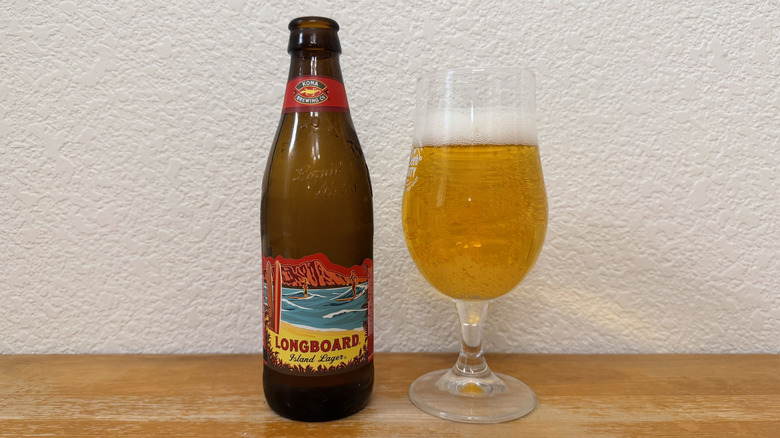
Most of the 13 craft lagers I selected are distinctly modern, whether that means a recent release from a legacy brewery, or an experimental brew from a newer player in the craft beer scene. Longboard Island Lager is one of just a couple old school craft beers on this list. It's essentially the flagship product of Kona Brewing Company, which dates back to 1994.
True to its age, I felt like my bottle of Longboard Island Lager was a relic of a bygone era, just flavorful enough to serve as an alternative for beer drinkers accustomed to American macrobrews. Some bitter hops complicated a crisp apple sweetness and a high level of fizz — it was almost akin to a hoppy cider. I wouldn't seek Longboard Island Lager out on my own, but I did find it pretty decent, worth ordering at, say, a restaurant where it's one of just a few craft beer options.
7. Sierra Nevada Summerfest Lager
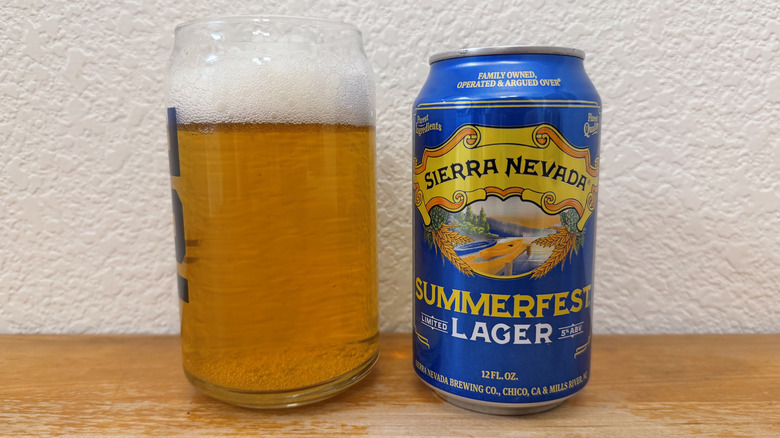
Like Firestone Walker, Sierra Nevada is a brewery from which I've tried enough beers to expect a consistently high level of quality. Overall, Sierra Nevada's Summerfest Lager met those expectations. Nevertheless, I found its flavor a little middle-of-the-road, hence landing no higher than this list's number-seven spot.
When I hear summer beer, I imagine something lightly sweet and refreshing. I was surprised, then, to find that Sierra Nevada's Summerfest Lager was decently hoppy, closer to a classic pilsner than the sort of beer typically branded as a straight-up lager. I got grapefruit from its hops, accenting a classic biscuit malt. The combination was refreshing and summery, while still, notably, robust in flavor. Summerfest Lager is the first beer on this list I would potentially get again, but a lack of personality beyond being simply refreshing and flavorful meant that I still found a handful of the craft lagers I tried to be superior.
6. Anderson Valley Koji Lager
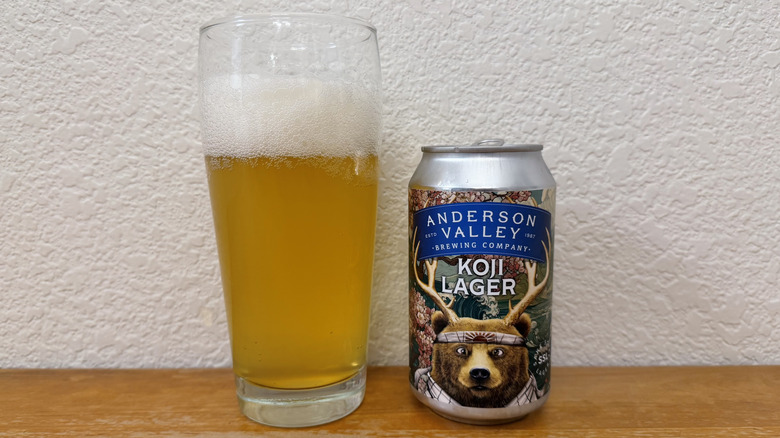
Koji is a type of fungus typically grown on rice, key to the fermentation of sake. While I knew this before trying Anderson Valley Brewing Company's Koji Lager, I figured it was probably a garden-variety Japanese-style rice lager, simply named after the sake fungus. As it turned out, my can of Koji Lager was pretty funky, genuinely incorporating koji as a key ingredient.
Anderson Valley is known for a variety of gose beers, and accordingly, I found my Koji Lager's funk closer to that of a lighter gose than a full-on wild ale — it was mouth-puckeringly sour, but only a little bit, maintaining a distinct lightness. The next most prominent flavor was tart berry. I didn't get much bitterness. Smaller text on the can describes it as a "sake-style lager," but to my palate it didn't taste like sake so much as it incorporated a sake-making ingredient into the brewing process. Anderson Valley's Koji Lager is a very cool beer, but it's also just weird enough that I'm not sure if I would drink it purely for fun. At the same time, I would absolutely recommend it to beer aficionados interested in trying something unique.
5. Samuel Adams Boston Lager
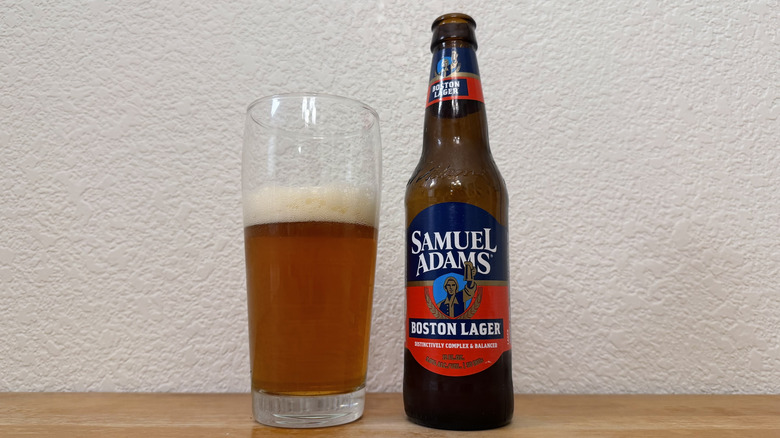
Coincidentally, I tried my first Samuel Adams Boston Lager about a week or two before this ranking. While it's readily available on the West Coast, I found Boston Lager overshadowed by by the likes of Sierra Nevada, Lagunitas, and other more local staples. As it turned out, I liked Boston Lager quite a bit the first time I had it. Tasting it again with my critical brain turned on for this ranking, it held up pretty well against its competition.
The sweetness in my bottle of Boston Lager was akin to a mild blackberry jam, whereas its hops were a little pine-y. As an old school craft beer, neither of those flavors were particularly bold, but they certainly weren't watered down. Its fizz, meanwhile, was at about a medium level, which suited its balance between drinkable and flavorful. Overall, each of those core elements complemented one another, adding up to something that, while simple, was well-made and pleasant to drink. Boston Lager may be older than virtually any other craft beer, but I've learned it's a classic for a reason, still plenty enjoyable today.
4. Tenaya Creek El Charro Mexican Lager
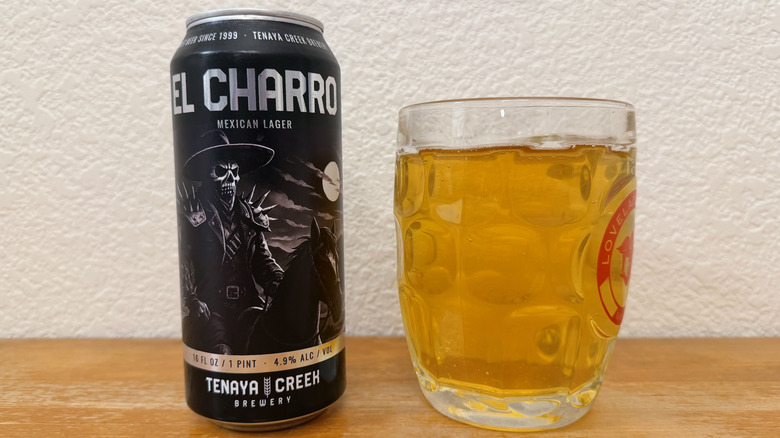
Tenaya Creek is a brewery local to my current home state of Nevada. That said, it dates back to 1999, and has been distributed to a few adjacent states and even Canada at one point. Its El Charro Mexican Lager is clearly intended to be a craft beer interpretation of classic Mexican lagers like Corona and Modelo. I found that it delivered pretty excellently on that premise, satisfying the requirements of its style while offering an elevated level of quality.
A pronounced sweetness was most prominent in my can of El Charro, akin to an agave syrup — maybe that just came to mind because it's a Mexican lager, but the fact it came to mind at all means the beer did something right. That was matched by bright fruity notes. While I perceived some bitterness, it was pretty mild. I also noticed a very muted level of fizziness, which differentiated it from many of the beers it was emulating, letting the quality of its flavor take center stage. A craving for, say, a Corona would still be satisfied best by a Corona. But fans of Corona interested in something similar and slightly more refined will certainly find plenty to love about Tenaya Creek's El Charro.
3. Cigar City Sumo Splash Lager With Watermelon Flavor
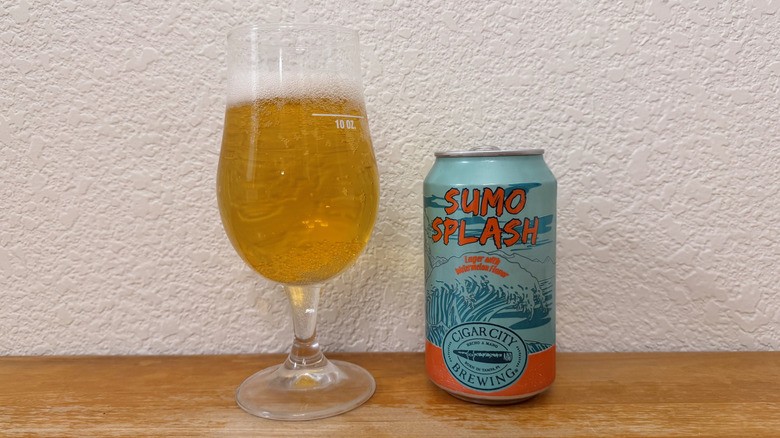
A basic lager may well be the ideal base for a flavored beer. Whereas most beer drinkers are going to expect some heft from an ale, literal light beers fall under the lager category. Cigar City's Sumo Splash Lager With Watermelon Flavor is, accordingly, on the lighter end of the spectrum. That said, watermelon is what's being showcased, and a mild lager base is just what's needed to make that adjunct flavor shine.
Rather than actual watermelon, I found that my can of Sumo Splash tasted pretty close to a watermelon Jolly Rancher. I'm genuinely not sure if I've had a single Jolly Rancher in my adult life, but I found that flavor welcome in beer form. From its light-ish lager base I did pick up some grapefruit notes, and those paired particularly well with the artificial watermelon. Plus, even if its defining element was candy-like, I didn't find it cloyingly sweet. Sure, Sumo Splash is a little gimmicky, but I happened to enjoy it more than plenty of non-gimmicky beers I tried alongside it. Simply put, Sumo Splash is a fun, crowd-pleasing, and pretty excellently made craft lager.
2. pFriem Lager
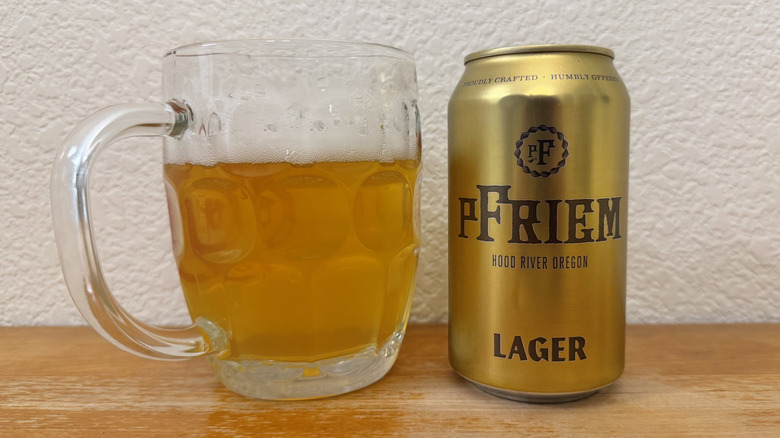
Based on the fact I've started to see its beers pop up in Nevada bottle shops over the course of the past year or so, I have reason to believe Hood River, Oregon's pFriem is a brewery on the rise. Many of its beers replicate European styles, from Belgian strong ales to saisons and more. I was surprised, then, to see a simple lager in its beer lineup. As it turned out, the thoroughly modern, forward-thinking pFriem's lager was equal parts compelling and drinkable.
"Compelling" isn't always to a beer's benefit — I found Donna's Pickle Beer extremely compelling, but not something I would ultimately want to drink again. My can of pFriem Lager, however, was compelling in that it hit every note an American lager should, while simultaneously tasting like something wholly unique. What stood out most about its flavor was an herbal bitterness, less piney like the hops in an IPA and more like an herbal tea. Its level of sweetness was light, akin to an apple or melon. Surprisingly for such an elegant beer, it was also pretty fizzy and crisp, similar in that regard to a macrobrew. While none of those elements were radical alone, they added up to one of the very best in my field of 13 craft lagers.
1. Enegren Nighthawk Black Lager
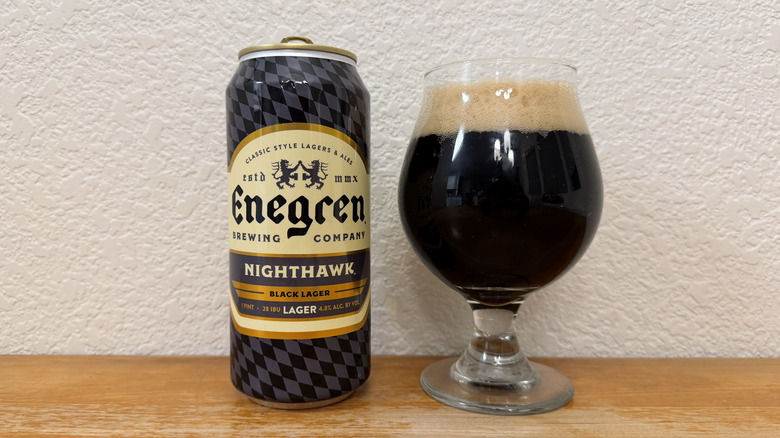
Enegren is a brewery based in Moorpark, California, near my childhood hometown of Santa Barbara. While a bit of a regional brewery, it distributes across California as well as to my current home state of Nevada. So, it's available, at least, across a significant swath of the Western United States. Energren's Nighthawk Black Lager earned the number-one spot in this ranking, which I think is emblematic of a larger craft beer truth — the very best beers usually aren't from national breweries, but rather, regional standouts.
A big part of my love for Nighthawk stems from a pronounced smokiness in its malt, accentuating a bitter milk chocolate sweetness and some piney hops. While those first two qualities are often more characteristic of stouts or porters, I found my Nighthawk pretty light and fizzy, courtesy of its lager DNA. Those all add up to a whole that's somehow both comfortingly familiar and different from the average beer. If Enegren's Nighthawk Black Lager is available, pick it up for one of the best craft lagers on the market. If not, check out whatever brewery is popular in your region, because there's a solid chance it makes something just as good.
Methodology
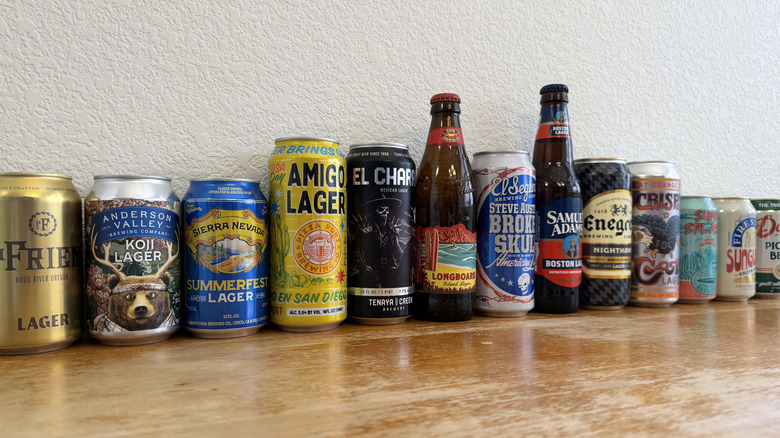
I picked out my selection of craft lagers based on a few must-haves — Samuel Adams Boston Lager, for example, is probably the first beer to come to mind when most hear "craft lager" — in addition to what was available to me at my local Total Wine, located south of the Las Vegas Strip. Notably, I only included beers that described themselves as lagers, which meant anything with, say, "pilsner" or "marzen" on its label was ineligible. While I avoided beers exclusive to Nevada, regional beers are an important part of the beer market, so I featured a few regional-ish options that at least distribute to a handful of states.
After my 13 beers had ample time to cool down in the refrigerator, I tried them all over the course of a single, two-ish hour tasting. I poured each beer into a glass before trying it, as depicted in my photos. While the order was largely arbitrary, I saved Donna's Pickle Beer for last, so what I assumed would be an extreme flavor didn't affect the rest of the field. I had tap water in between beers as a palate cleanser. My assessments are based entirely on this experience, and not any past thoughts on the featured brands or products.