

5 Tips For The Best Burgers On A Blackstone Griddle
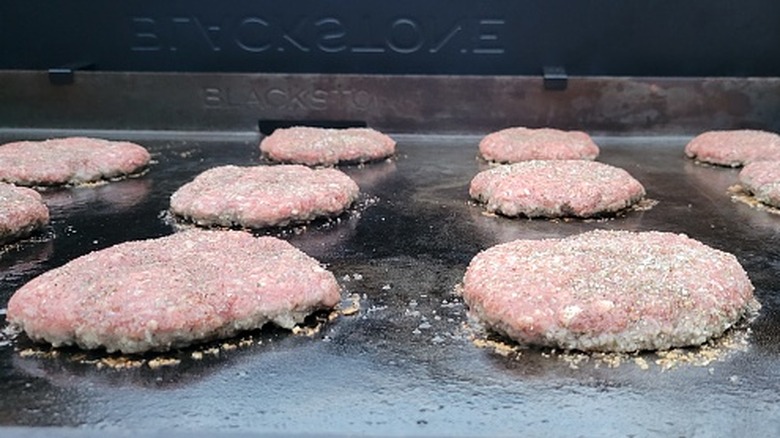
Blackstone is one of the most recognizable grill brand names, and indeed, an OpenBrand report found its 2025 market share beat both Weber and Traeger. TikTok helped Blackstone griddles appear in many American households, and users have developed a number of creative ways to use the flat-top grills. But if you're looking to perfect the basics, here's what you need to know about cooking the ideal burgers on a Blackstone.
First, the meat you choose matters. Form your own burgers from 80/20 ground beef and preheat the grill fully before adding your meat. You can take advantage of the flat-top surface by making smash burgers with crispy crusts, but it's important to use the right temperature and cook time for the type of burgers you're making. Plus, the large cooking surface of a Blackstone allows you to toast the rolls at the same time as the burgers are cooking.
Some of this advice is universal — 80/20 ground beef makes great burgers with any cooking technique, for instance — but you can't smash a burger on a regular open-grate grill, and the rolls won't toast as evenly on the grates of a regular grill. Plus, Blackstones and other flat-tops are better at forming a browned, crispy crust by maximizing surface area contact.
Use 80/20 ground beef and make your own patties
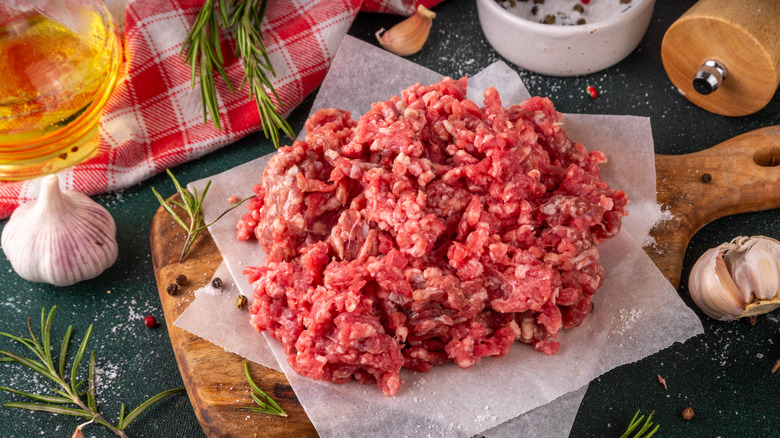
A great burger starts with great meat — not only high quality and fresh beef, but with the right fat percentage for a patty. Ground beef that's 80% lean and 20% fat makes for an ideal flat-top burger because it's the perfect amount of fat to keep the patty juicy while not being overly greasy. Higher fat might make your hamburger too soggy or small, and lower fat can result in a sad, dry burger.
80/20 ground beef works for just about any burger, but it's especially important when cooking on a Blackstone or other flat-top griddle. The flat surface doesn't allow excess fat to drain away the way an open-grate grill does, and the burger will sit in the rendered fat for the whole cooking process rather than the fat dripping down into the fire. The direct contact between the beef and cooking surface also has the potential to dry it out if there isn't enough fat because what little moisture there is may just evaporate into the air.
While pre-formed burger patties are convenient, they can be harder to get right. Packaged, pre-made fresh burger patties aren't always labeled with the fat percentage, so you don't have control over exactly how much fat there is. Form your own patties from 80/20 ground beef to make sure you get the ratio right.
Preheat the flat-top for a good crust
The cookout sadness hall of shame includes unripe watermelon, burnt hot dogs, mushy corn on the cob, and of course, soggy, soft burger patties. You can stay away from that last one with some careful temperature control. Make sure to preheat your Blackstone grill fully to the desired cooking temperature before putting the burger patties on it. Not only will it help the burgers cook more quickly, but you'll also develop a better crust on the edges of the burger.
Expect to preheat the Blackstone for around 10 to 12 minutes, though that range will vary based on how high you want the heat, your location, and the weather. Consider using an infrared thermometer to make sure the griddle surface is fully ready or look for faint wisps of smoke that signal the grill is prepared for meat to be added. It's also a good idea to let the griddle preheat dry, so long as it's been seasoned well and not necessary to add more oil, before cooking the burgers because there's already enough fat in them if you're using 80/20 ground beef.
Once the griddle is sufficiently preheated, it's ready to start the Maillard reaction. That's the reaction that causes the sugars and amino acids in the meat to brown, essentially ensuring good crust creation. At lower temperatures, the Maillard reaction won't start, and the meat will steam rather than brown.
Try smashing your burgers
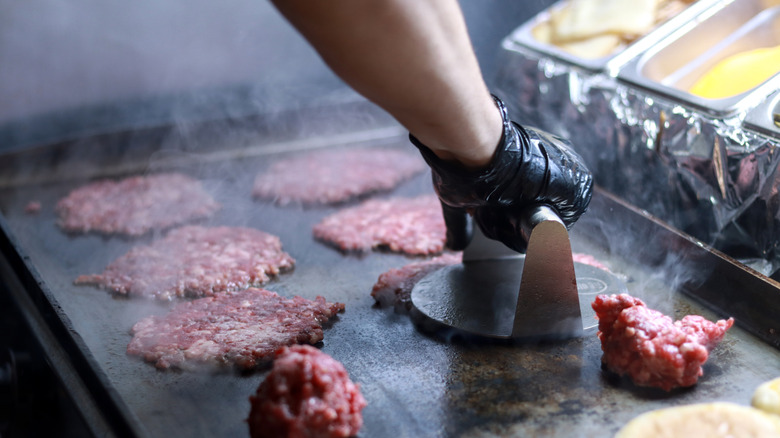
Smash burgers might have been made famous by the fast-casual chain of the same name, but the chain didn't invent the smash burger technique. Instead, the approach is typically identified with Indiana, where a burger joint called Miner-Dunn has been selling them since 1932. In some commercial kitchens, smash burgers became popular because of their ease on a flat-top grill — and you can take a tip from them for your own Blackstone flat-top at home.
The Maillard reaction only happens where the meat comes in direct contact with the cooking surface, and a smash burger maximizes the surface contact, thereby encouraging more Maillard reaction and better crust formation. You can't smash a burger on a regular, open-grate grill, so if the crispy browned crust of a smash burger appeals to you, use your Blackstone to maximum advantage to create it.
Smash burgers are very common to cook on Blackstone griddles, but they're not the only option. It's just as easy to use the griddle for regular burgers, though you'll need to cook them for longer at a lower heat. And while it can be a good idea to gently press down on a steak to form a better crust, avoid pressing down burgers unless they're smash burgers. In a thicker burger, the natural juices collect in the center of the patty, and pressing down on them results in the juices leaking out.
Cook at the right temperature for your burger type
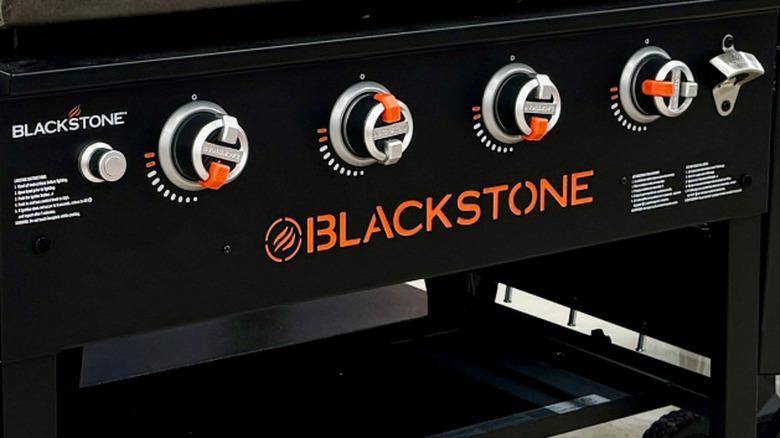
How hot should your Blackstone be for the perfect burgers? There's no single answer to that, and it's going to depend on what type of burger you're making and what your goal is. Smash burgers, which should be thin and crispy, should cook at a high temperature for a short time. Regular burger patties need to cook for longer at a lower temperature.
For a regular burger patty, cook on medium heat, which Blackstone estimates is around 350 degrees Fahrenheit. And even though a thicker patty will never get as crispy as a smash burger, make sure the griddle is thoroughly preheated before you add the meat. Those patties should cook for three to four minutes on each side — or cook for a total of around six to eight minutes while flipping as many times as you want, since that won't make a big difference here and might actually reduce cooking time.
On the other hand, crank the griddle up high, to 425 degrees Fahrenheit, for smash burgers and don't touch them. Once you smash the patty down upon adding the meat to the grill, leave it alone and let it develop its crust. The exact cook time will vary by how thin you've smashed your burger but look for a patty that's a bit more than halfway cooked but still has some pink spots on top. Flip it and cook for about another minute at most.
Toast your rolls on the griddle
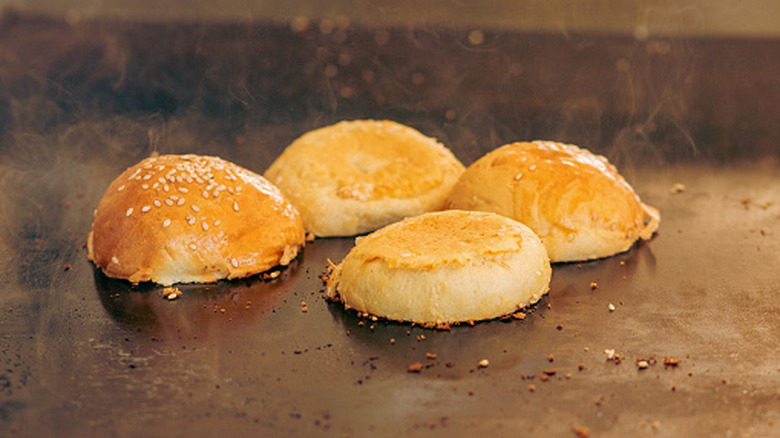
Most Blackstone griddles are large enough to hold multiple items at once, and many even come with multiple heat zones that can be controlled separately. Use that to your advantage. You can simultaneously toast your burger rolls until they're perfectly browned at the same time you're cooking the patties.
To evenly brown the bread, you'll need to apply a coating of fat. One approach is similar to what you would likely do in a kitchen: Butter the rolls, then place them face-down on the griddle so they grill in the melted butter. But the Blackstone gives you another option you might not otherwise have on a grated grill. As the burger patties cook, they'll release some fat that melts into liquid. You can dab that fat with the hamburger roll to absorb some of it like a sponge, then grill with that instead of butter. It'll help the roll brown perfectly while also imparting some of the beefy flavor.
If your griddle is equipped with multiple heat zones, take advantage of that control. Use a hotter zone on medium or high heat for your burger but set another to a lower temperature (generally low-medium heat, or around 325 degrees Fahrenheit) for the rolls. You'll be able to have both the rolls and the patties done at the same time if you're cooking them on different parts of the griddle.