

4 Possible Reasons Your Gas Stove Keeps Clicking After Lighting The Burner
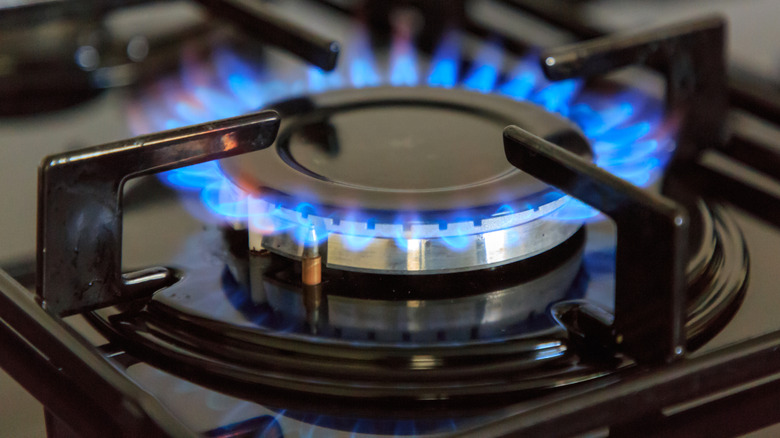
Many professional chefs, as well as home cooks, appreciate the control and immediate response that the flame of a gas stove gives them when cooking. (Cooking with a wok makes it especially hard to leave gas stovetops behind.) Seeing the flame increase and decrease with a twist of the knob is reassuring. What might cause worry is continuing to hear that distinct clicking sound even after the burner is lit.
There are four main causes that, with a little investigation, you should be able to discover for yourself. An out-of-place or wet burner cap could be the culprit, or the igniter might be blocked. You may also have a malfunctioning igniter switch. None of these are a sign that you need a new stove (the average gas stove should last up to 15 years), and each has a fairly easy fix. Read on to learn the details of each and (hopefully) put your mind at ease.
Burner cap is out of place
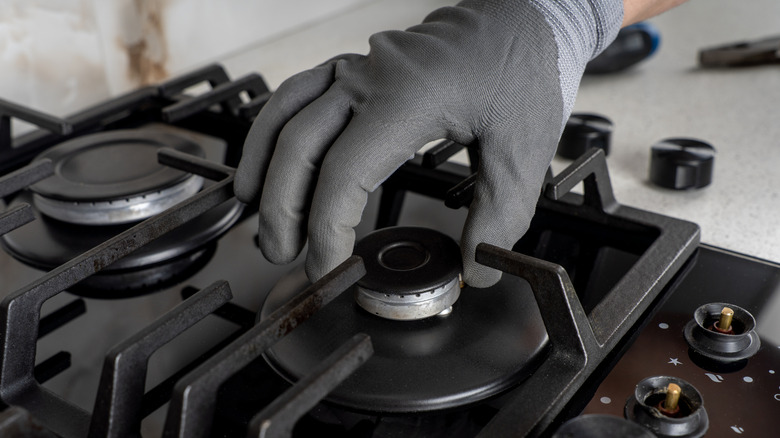
The burner cap is the metal disc that sits on top of the burner head. It evenly spreads out the flame for more consistent cooking and helps shelter the flame ports from grease and other food debris. Because the cap is removable, it can be accidentally knocked out of place while cleaning or during cooking. A misaligned burner cap can result in the burner not igniting at all or continuing to spark after the flame is lit, hence all the worrisome clicking.
This is an easy thing to check for as well as remedy. While the cap is cooled down, remove it and check for debris that could be forcing it out of alignment. This is also a good opportunity to give it a good cleaning, drying it thoroughly before placing it correctly back in place atop the burner head. Make sure it is even and not crooked or lopsided. The flame should burn a steady blue with no more sparking.
Burner cap is wet
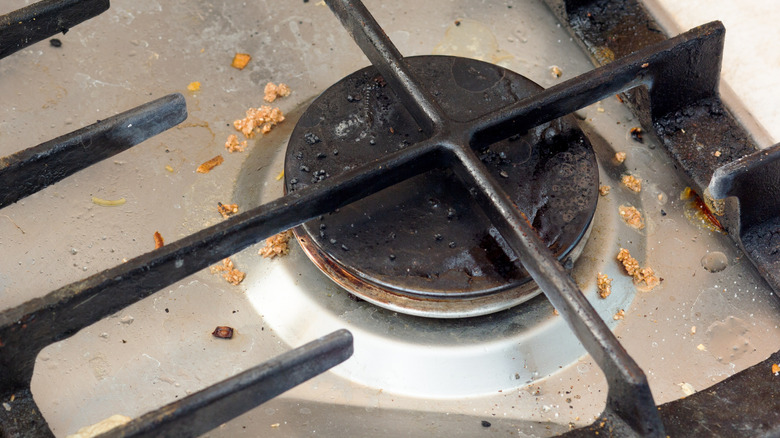
Burner caps take the brunt of abuse in the kitchen. They are exposed to grease and liquid during cooking and require regular cleaning. Both activities leave the cap exposed to moisture, and moisture buildup under the cap commonly leads to that frustrating repetitive clicking.
The key here is to allow the burner cap to dry completely. Remove it from the burner head to air-dry while you wipe down the stove with a dry cloth or towel to remove any excess moisture. If your oven is also gas-powered, try another method: Set the oven temperature to 350 degrees Fahrenheit and let it run for about half an hour. This will help to dry out the burners from the inside out.
Once you have made sure everything is clean and dry (and that the burner cap is sitting properly in place), your constant clicking days will hopefully be over.
Burner is blocked by grease or food debris
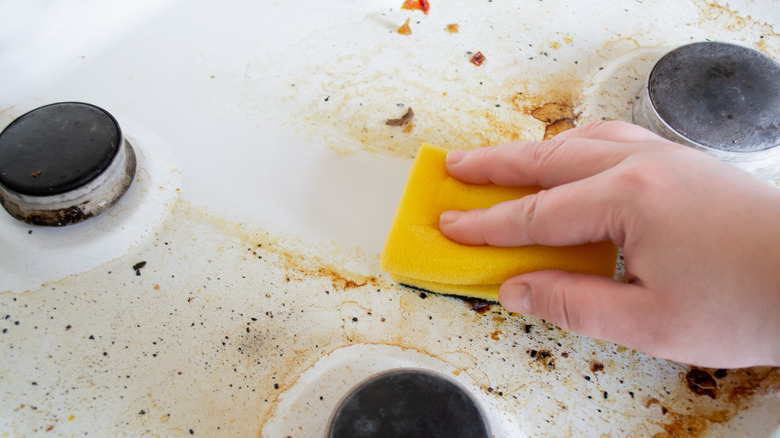
Gas stovetops may not be the easiest type of stove to clean, but regular cleaning is part of responsible stove care. Keeping your cooktop clear of leftover grease and food debris is one way that the U.S. Consumer Product Safety Commission recommends to avoid kitchen fires. But those same pesky particles that you think you wiped clear from the cooktop surface could be getting past the cap and blocking the grooves in the gas stove's burner, causing it to click even after the burner is lit.
To ensure the burner is clear, use a metallic pin or paperclip and carefully clean out any clogs. Avoid using wooden toothpicks, as they can break and leave behind the very clog you are trying to remove. Making a habit of regularly cleaning your stovetop can help you to avoid some of the anxiety you feel with endlessly clicking burners.
Igniter switch is malfunctioning
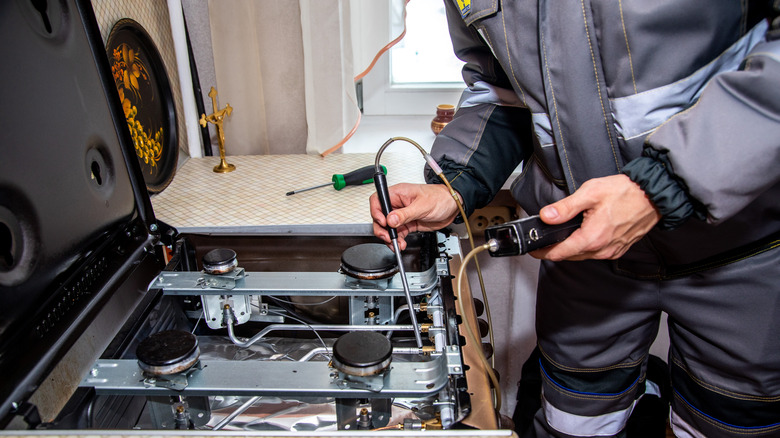
You've cleaned the cap, made sure that everything is in the right position and is thoroughly dry, and checked that the burner itself is free of debris, but the clicking persists. There is one more thing to investigate: the igniter switch. Also known as the spark switch, because it's the source of the "spark" that ignites the gas from the burner, the igniter switch is powered by electric current, which can become interrupted or malfunction if there is damage to its wires or they become twisted or wet.
Use a multimeter to check the electrical flow. If the switch reads as having continuous electrical flow, it's malfunctioning. Replacing a faulty igniter switch (parts are available at hardware retailers and on Amazon) is a task you can handle yourself if you feel capable. However, if you've come this far and are not completely confident this is the source of the problem, it might be time to call in an appliance repair expert. A continuously clicking stove should not be ignored.