

Who Supplies The Fish For McDonald's Filet-O-Fish Sandwich?
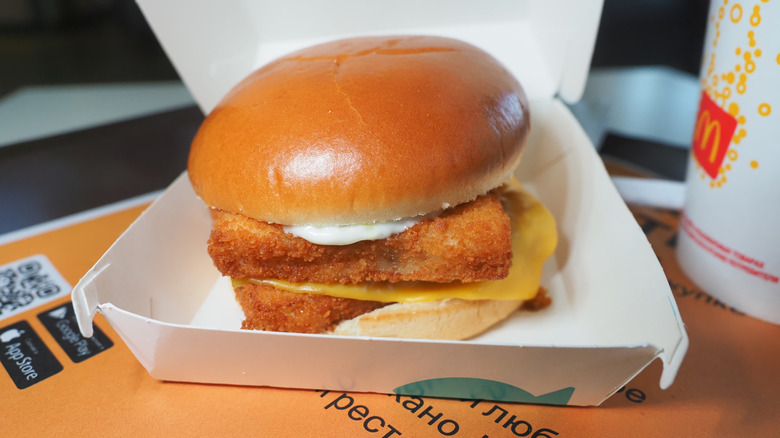
The Filet-O-Fish became McDonald's first non-hamburger sandwich offering (even preceding the McChicken) in 1965. Since then, it has become one of the world's most iconic fast food items, selling to the tune of about 300 million annually. Whether they reside on the shores of the Atlantic or are driving through a franchise in landlocked Nebraska, McDonald's lovers can get a fishy fix year-round. But where does this abundance of fish come from? And how does it find its way between buns across the globe?
Pennsylvania-based company Keystone Foods supplies a large portion of McDonald's fish for the Filet-O-Fish — about 15 million pounds annually. Keystone's relationship with McDonald's dates back almost as far as the company's incorporation by Ray Kroc. In the 1960s, Keystone founder Herb Lotman invented a way to freeze hamburger patties so they could be shipped long distances and arrive in good condition. In the 1970s, Lotman worked directly with McDonald's to develop the now world-famous chicken McNuggets. While Keystone was not involved in the invention of the Filet-O-Fish — a struggling franchise launched the beloved sandwich — its involvement in its production rings true with the close-knit history of the two companies.
While Keystone is the supplier most trumpeted by McDonald's, Massachusetts-based frozen seafood company Gorton's is another primary supplier, according to a March 2023 Alaska Seafood Supply Chain Report. Outside of the United States, top Filet-O-Fish suppliers include Denmark's Espersen, Japan-based Delmar, and Canada's High Liner Foods.
What kind of fish is in the Filet-O-Fish patty?
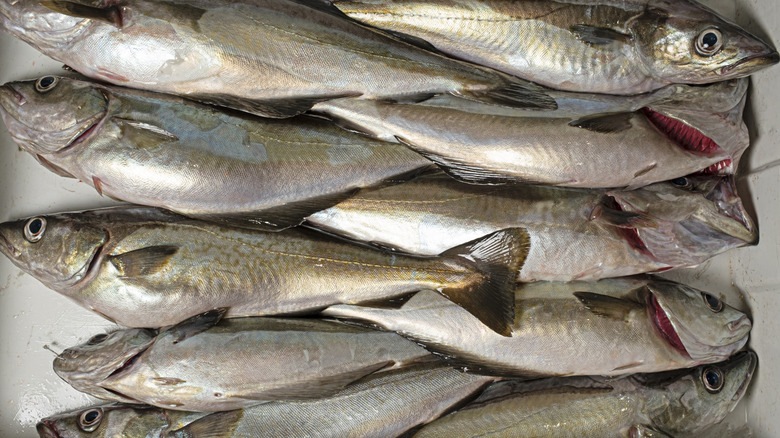
Alongside tartar sauce and American cheese, the fish patty is one of just three fillings in McDonald's Filet-O-Fish — and the unequivocal star of the sandwich. For all United States McDonald's locations (as well as numerous others around the world), 100% of that fish is Alaskan pollock, a mild-flavored whitefish native to the colder waters of the Northern Pacific. Pollock belongs to the same fish family as cod, another popular whitefish, but its plentiful supply makes it a more affordable option. Because of this, pollock is also the fish most likely to be found in American frozen grocery staples, such as fish sticks and imitation crab.
McDonald's sources pollock from fisheries operating in the Bering Sea and Gulf of Alaska. All of the fisheries used by the corporation have a sustainability certification from the Marine Stewardship Council, which sets standards to protect ocean environments from overfishing. However, there is criticism from environmental groups that the trawling nets used to catch pollock have dire consequences for other species that get caught in them. According to a report by Ocean Conservancy, pollock fishing is linked to the decline in species such as crab, salmon, and northern fur seals in the waters off Alaska. This kind of impact to the broader ecosystem is of increasing concern to scientists. This is not an issue caused by McDonald's alone, but rather a potential pitfall of any industrial-scale fishing industry.
From fresh catch to McDonald's fillets
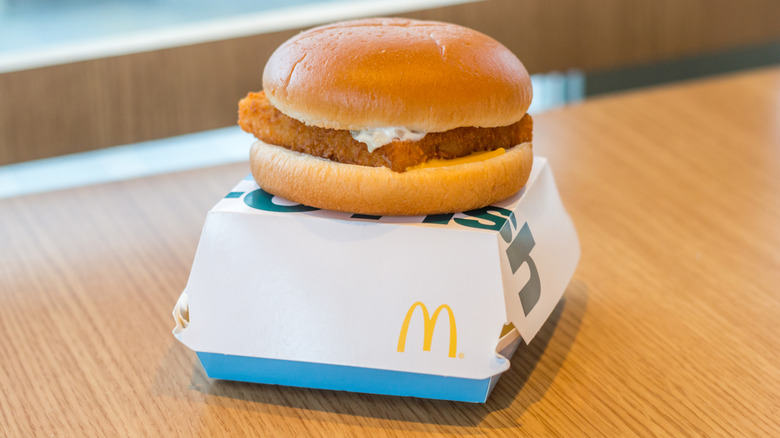
Ray Kroc initially resisted the idea of adding the Filet-O-Fish to McDonald's menu for fear it would stink up his restaurants. Although Kroc underestimated the potential of the sandwich, his concern was not unfounded: fish is a notoriously fickle ingredient to mass-produce, prone to spoilage and inconsistencies. Because of this, McDonald's maintains a tight system for turning that Alaskan pollock into sandwiches.
Once caught, the fish is skinned, deboned, and filleted in temperature-controlled facilities. According to McDonald's Japan, this process often involves picking out individual bones by hand. Once cleaned, the pollock fillets are layered on top of each other in large blocks, preserving the directional grain and texture, and frozen solid for transport. These blocks are sent to processors — like Keystone Foods and Gorton's — where they are cut into the familiar square-shaped patties. Because consistency is at the forefront of McDonald's business model, a single Filet-O-Fish patty might actually contain pieces of multiple different fish within that large frozen block. This ensures they are all roughly the same weight and size (although some suspect the Filet-O-Fish patty has gotten smaller). These frozen fish portions are then breaded before being shipped to McDonald's locations. This system ensures the smelly work of processing the fish is conducted far away from the golden arches. After the Filet-O-Fish is ordered, all that's left to do is fry it.