

Which Is More Energy Efficient: Gas Or Induction Stoves?
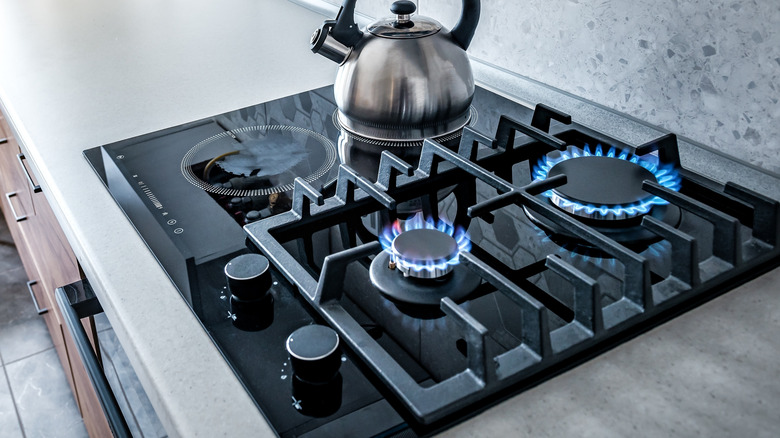
In 2022, a study published by Tel Aviv University found evidence that humans may have cooked with fire around 780,000 years ago. Placing food over flames is part of what makes us human, and gas stoves continue that tradition. But progress marches on, and some households are eschewing fire for something much higher-tech: induction stoves, which rely on electromagnetic currents to cook.
A 2022 Consumer Reports survey of over 2,100 people found that only about 3% of them had induction stovetops in their home. However, the popularity of this cooking option is growing and for good reason. A key benefit of induction stovetops is that they're far more energy-efficient than their gas counterparts, which lose more heat during cooking.
Thanks in part to their disparities in energy loss, gas stoves tend to be less expensive upfront, while induction-based models are often more affordable over the long haul. However, the exact difference in cost will be dictated by such factors as local utility rates. In areas where electricity is expensive, gas stoves may still be cheaper in the long run. Here's what you need to know about how well each performs in terms of efficiency.
Gas stoves tend to be less efficient
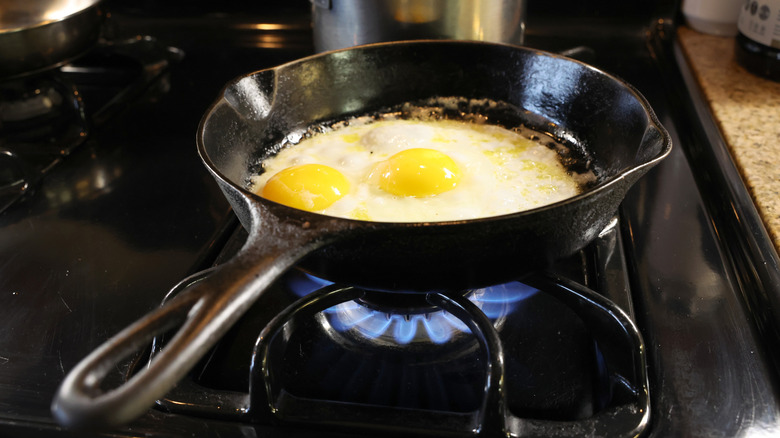
Gas stoves work a bit like early humans' firepits in the sense that they use open flames to cook. In both cases, the underlying mechanism is conduction, where thermal energy is transferred from one object to another through direct contact. However, a lot of heat from the flames gets wasted.
Just how much heat goes unused? A 2019 report by Frontier Energy prepared for San Francisco's utility group quantified the loss. One of the ways researchers did this involved boiling a pot of water. During that test, only about 32% of the heat produced by gas-fueled flames actually transferred to the pot. Roughly 68% of it simply dissipated into the air. This is a serious disadvantage of gas stovetops with real-life implications. When you fire up one of these appliances, much of the energy you end up paying for doesn't actually cook your food.
Still, there are ways to encourage efficiency on your gas stove. You can match the size of the cookware to the size of the burner (flames larger than the size of the pot or pan mean that a significant amount of heat is rising above the cookware). You can also keep the flame as low as possible, reducing the amount of gas you need to use.
Induction stoves improve efficiency by heating up the pot or pan directly
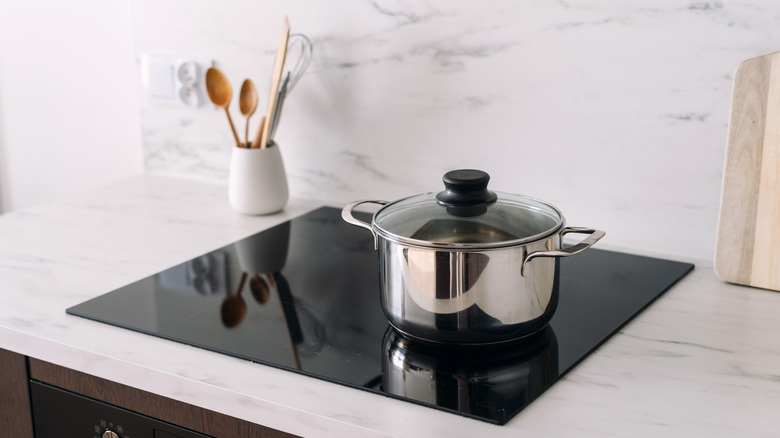
Induction stovetops work completely differently from gas. In their case, electric currents flow through coils under a glass surface. A magnetic field that forms between the burner and a pot or pan helps transfer that current to the cookware itself. As such, the cookware becomes the source of heat rather than the stove by itself, removing the middle step and boosting efficiency.
When you compare the numbers, the contrast becomes stark. The same Frontier Energy report which looked at gas stoves found that the induction burners ran with an efficiency of between 83% and 86% when boiling water. In this test, induction stovetops were more than 2.5 times as efficient as gas burners.
Because induction stoves work more efficiently, they can also work faster. A test shared by Bank Australia found that 500 milliliters of cold water reached the boiling point in a minute and 16 seconds on an induction stove. However, it took over five minutes on a gas stove. Although it bucks the human tradition of using flames, you might consider switching to induction if you want a more energy-efficient option.