

What Vegetable Do Americans Buy More Of Than Any Other In 2026?
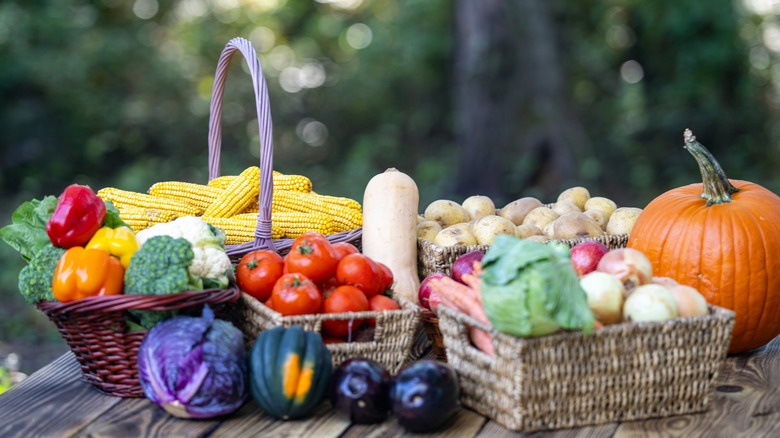
By now, we all know that eating the rainbow is good for our health. A spread of colorful red bell peppers, emerald-green kale leaves and golden, sweet squash, for instance, isn't just a mood-boosting tumble of pretty-to-look-at dinnertime sides: It's a vibrant collection of phytonutrients, hardworking compounds that help with heart health and immunity. Still, a usually more muted-toned, comfort-food vegetable took the popularity prize in the U.S. in 2026, according to a YouGov survey — the humble potato.
Building on 2025 data — when the International Fresh Produce Association reported that potatoes were the most-sold vegetable with 85% of households purchasing them — 2026's YouGov report found that spuds remain a consumer favorite, racking up an 87% popularity rating. This plays out in the USDA numbers, with an estimated 412 million cwt (the agricultural measurement hundredweight, equal to 100 pounds) of potatoes produced in the United States in 2025, and $20 billion worth of retail sales logged from July 2025 to June 2026, according to Circana (per Potatoes USA).
What some potatoes lack in color, they more than make up for in versatility: cut into logs, they can be double-cooked for fries; rubbed with oil and popped in the oven, they make for crispy-skinned baked potatoes; or simply boiled and laced with butter, they create a comforting mash. This starchy veg is also widely available year-round, with early potatoes harvested in June or July, second earlies in July or August, and main crop potatoes in late summer and early autumn.
Which potatoes are best, though?
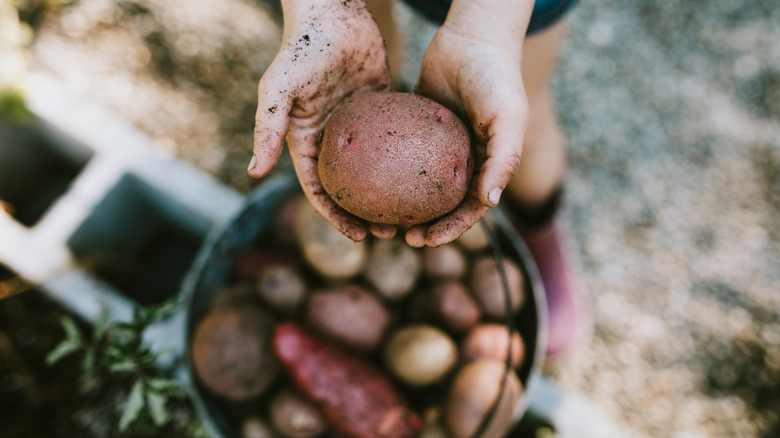
Americans need no encouragement to buy potatoes, but which ones shoppers reach for matters. Each offers different health benefits, and some suit certain recipes better than others. The telltale sign of what healthy qualities a potato possesses goes back to color. A rich-hued purple potato, for example, contains cell-protecting anthocyanins. Consumers don't have to commit this difficult-to-remember name to memory; it's enough to know that purple potatoes fight against inflammation and can lower the risk of heart disease. Potatoes with more pigment also spike blood sugar levels less, so could be a better option for diabetics. Red and purple potatoes are loaded with more than double the flavonoids — phytochemicals beneficial for brain health — of white or yellow varieties. Finally, sweet potatoes convert carotenoids into vitamin A for cell growth.
For shoppers who are more interested in making fluffy fries than learning about flavonoids, knowing russets from red potatoes is still helpful. As a general rule of thumb, yellow potatoes, like the Yukon Gold, are best for mashing and roasting thanks to their low-to-medium starch properties. Russets are particularly versatile, slotting easily into recipes that require roasting, baking or frying. In fact, during a head-to-head taste test of different fries on TikTok, Mythical Kitchen's Josh Scherer described russets as "tough to beat. That's the classic French fry: crispy, salty, perfect texture." For boiling, on the other hand, waxy new potatoes that won't fall apart when tossed in salads are the way to go.