

The Foods People Ate To Survive On The Alaskan Frontier
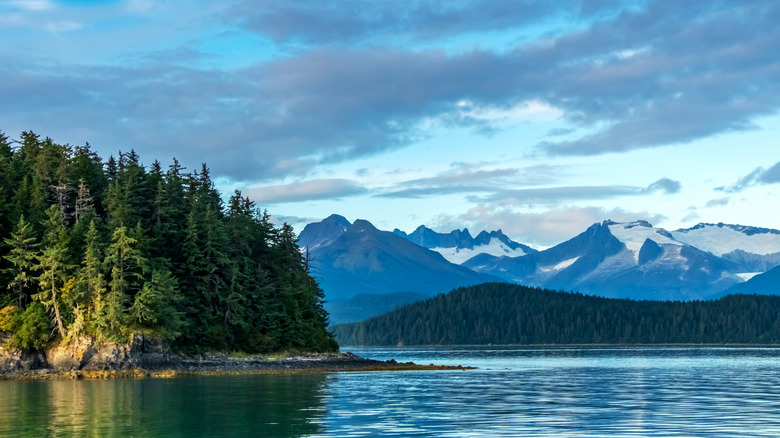
Alaska is not known for easy living. The pictures might look gorgeous, with vast waters surrounded by coniferous trees and snowy mountain peaks. But the truth of the matter is that Alaskans face living in a harsh environment, dealing day-to-day with all the struggles that come with it. However, the hardships of daily life that Alaskans face today are nothing compared to what the first occupants of the land dealt with, especially in relation to sourcing food.
The Alaskan Inuit used all the items they could find in their surroundings to survive, including as food. This pushed them to become extremely resourceful, using every part of the animals they hunted to aid them in daily life. And, the living-off-the-land mentality has stood the test of time, remaining very important to many Alaskans today.
Yet, when you consider the limitations these first inhabitants had, it certainly makes one wonder what exactly sustained them. To help us understand what these meals consisted of, we turned to the experts. Ian Hartman is an author and the director of the Institute of Social and Economic Research at the University of Alaska Anchorage. With his knowledge, we can shed some light on what these first residents likely relied upon as sustenance.
Moose
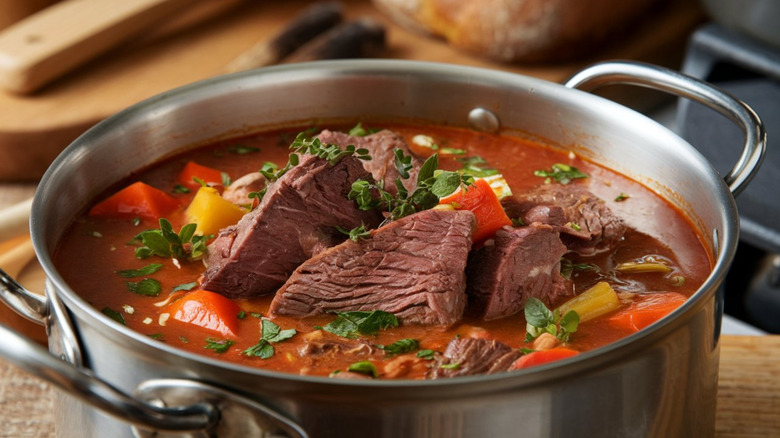
When you are required to live off the land, one of the natural steps to take is hunting the common animals on the terrain. As moose have the remarkable ability to remain warm despite dropping temperatures (this has been tested down to -22 degrees Fahrenheit), they are one of the mammals able to survive on the Alaskan terrain — and one hunted for their meat.
"Moose have long been quite popular, along with caribou and bear, to a lesser extent," Ian Hartman shares. In fact, when you consider that the first evidence of moose hunting within the state came from over 13,000 years back, it's clear that moose have been a feature on the Alaskan dinner table for a long time.
"It's most commonly served in a stew, as the meat is lean and benefits from a long and slow simmer with vegetables that grow well in Alaska, such as carrots and potatoes." Some other methods of cooking were smoking the meat, which they would then turn into jerky. Additionally, they could turn moose meat into pemmican, a powdered meat and lard mixture. If you're wondering about the taste, it might not be the best, according to culinary history YouTube creator Max Miller, who cited it as one of the foods from his show Tasting History that he did not enjoy eating.
Salmon
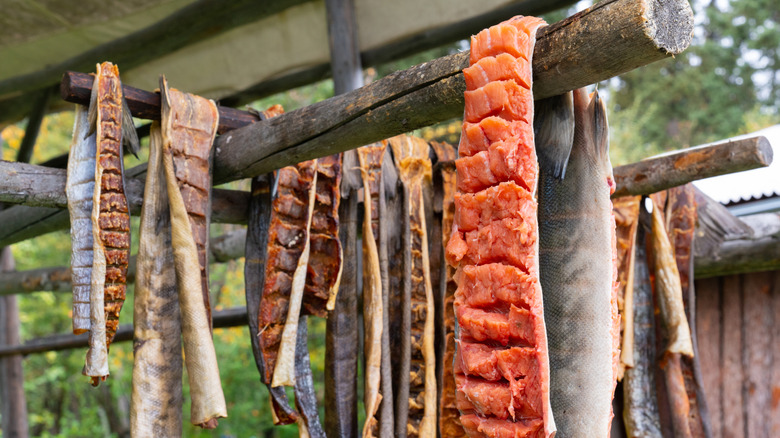
With the surrounding bodies of water offering many forms of marine life, it should be no surprise that fish is on the list of traditional Alaskan foods. Yet, when it comes to salmon, the connection to the state's cultural history seems to be unlike any other. Ian Hartman shares, "Alaska is synonymous with salmon. Of course, we also have halibut, cod, pollock, crab, and lots of other seafood. But salmon is by far the most popular fish to eat and has been for time immemorial."
The ways that Alaskans used to eat salmon (and other fish and game) would have depended on the season, Harman continues. "During the summer, when the salmon run, it would be common to eat salmon as fresh catch or the meat fresh from the hunt." He goes on to say that once the seasons changed, "it would be necessary to smoke the meat and fish; that would be among the most common ways to preserve food."
Not only was salmon popular (and remains so today), but Hartman also points out that Alaska is home to five species of salmon, providing a variety of types for hunters. This includes sockeye (red salmon), chum salmon, coho (silver salmon), pink salmon, and Chinook (king salmon). As for which salmon is the most popularly eaten today, Hartman says: "King salmon is prized for its high fat content and is usually regarded as the most valuable."
Berries
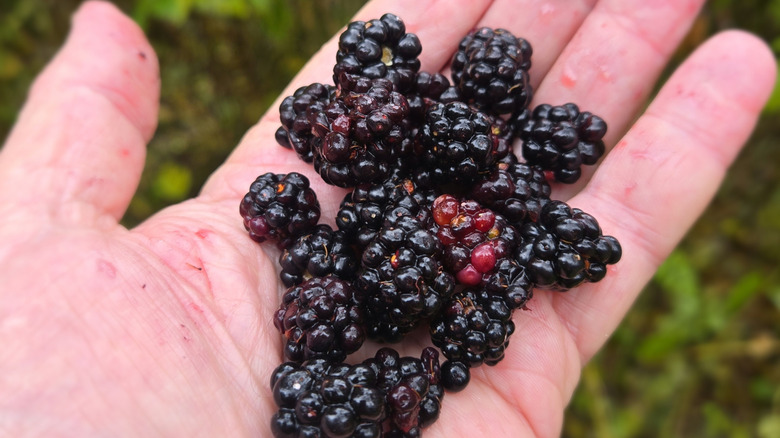
Berry picking in Alaska is more than a favorite pastime, it is a big part of seasonal foraging for residents of the state. When you consider that Alaska itself has over 50 types of berries lying within its borders, it makes sense that berries have long held a place in the Alaskan diet. "Just like fishing and hunting, gathering and foraging berries was a highly seasonal activity that provided a supplement to the diet of early Alaskans and contemporary Alaskans as well," Ian Hartman shares.
When you think of berry picking, you might be imagining Alaskans munching their way through the forest on fresh wild berries, but there are many other ways they used them. "Berries may be eaten fresh, but it's always a good idea to freeze some as well," Hartman adds, referencing the long and dark winters. If you consider that berry picking season runs only from about mid-summer through to the first frost of the season, it adds another layer of urgency to preserving them for the fast-approaching winter. Hartman goes on to say that jelly or jam could be made from berries, or they could be "incorporated into recipes with fish and game."
Akutaq
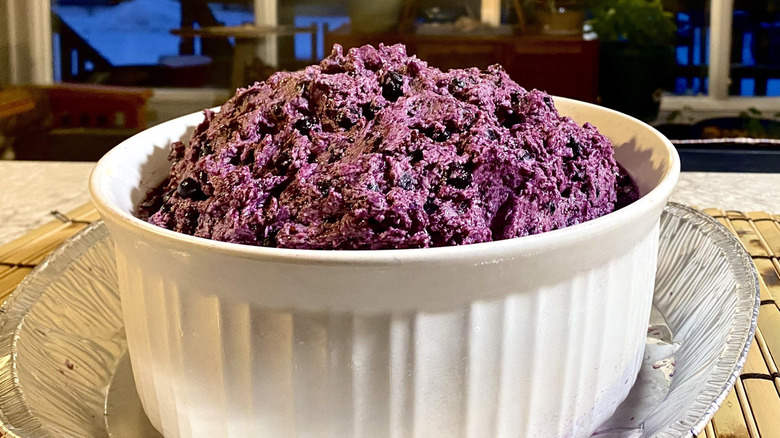
Just because the Alaska Natives were fighting for survival in a harsh climate and foraging most of their food from the earth, does not mean they didn't have something of a sweet tooth. They commonly created a dish called Akutaq, a Native frozen dessert which pairs perfectly with both sweet and savory flavors. To make this dish, which essentially a version of ice cream (though with far less sugar and cream), reindeer fat or tallow, seal oil, water (which could be supplemented with fresh snow), and berries were all mixed together. Traditionally, this was a dish that was served during special occasions, like to celebrate the first catch of game in a season.
While this recipe certainly stands out from the 5-minute ice cream-making hacks that you are inundated with throughout the internet, Ian Hartman shares that Akutaq is the real deal. "While it may be an acquired taste to many, it is a highly regarded treat in many parts of Alaska," he mentions, adding that the dish was a great way to use their berry harvest as well. The dish is still eaten today, though many have made the swap from using fat or tallow to Crisco. While, based on sources, it seems like every family manages to put their own twist on the recipe, the berries used are often dependent upon those found regionally.
Spruce tips
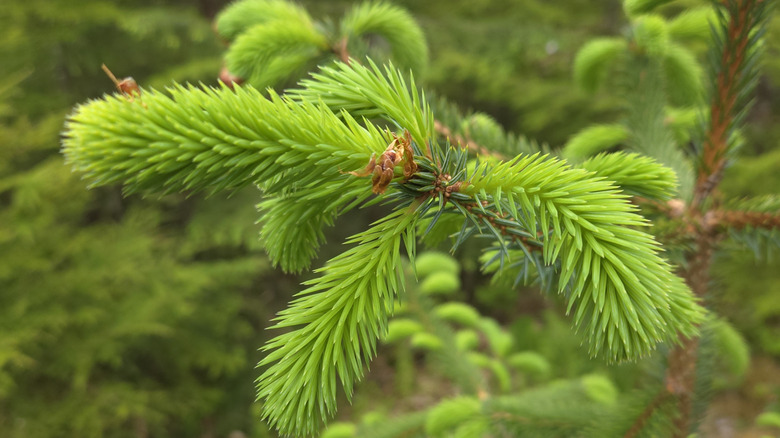
Spruce tips in modern-day Alaska are often used to create beer, but thousands of years prior, spruce tips were harvested for tea, historically from Sitka spruce trees found throughout the state. There is a very short season for which they can be harvested between April and May, which makes finding them a bit of a family affair, or group project. Besides making tea, the tips were used to create syrup (by mixing them with sugar and water) and occasionally eaten raw.
These days, the significance of the spruce tip has not faded within Alaska. Not only has the idea of spruce tip beer become a popular drink within Alaska, but spruce tips are even used as currency in some Alaskan towns, such as Skagway. In other areas, harvesting spruce tips is not only with the intention to save them as a taste of spring for the long upcoming winter, but with the intention to turn them in for cash. Some businesses will pay Alaskans per pound for spruce tips, creating an entirely different incentive for their hard work. If you're curious about consuming spruce tips, perhaps start with safely repurposing your Christmas tree as holiday food.
Kelp
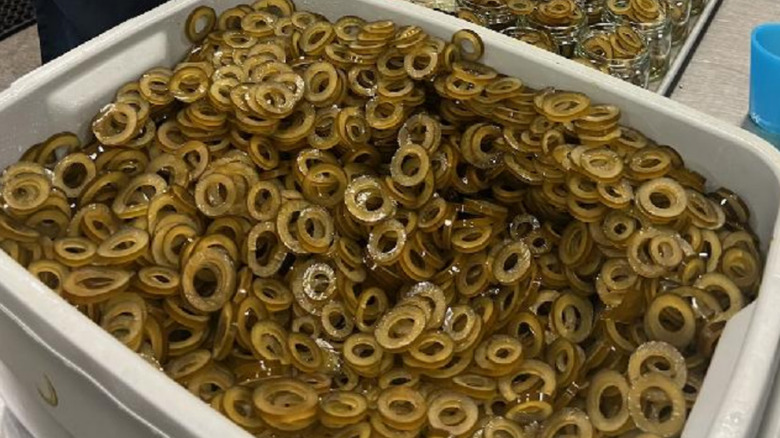
The thought of foraging for kelp on a beach with the hopes of turning it into a snack for later might cause a wrinkle of disbelief to form in your forehead. But in Alaska, the harvesting of one of the most eco-friendly foods on the planet has been commonplace for centuries. There is evidence of Alaskan Natives cultivating sea life with the intention of harvesting it from the ocean for over 1,000 years. When you hear the word sea life, you might automatically think of the livelier ocean residents —such as whales — but technically, according to the Alaska Department of Fish and Game, sea plants are also included in this.
Although there are over 500 different species of kelp that thrive in Alaskan waters, there are three main species that are harvested as food. These include bullwhip kelp, sugar kelp, and ribbon kelp, all of which produce a yearly crop. Some of the historical recipes for harvested kelp involve stir-frying, adding it to recipes for additional taste (such as in mussels), or even eating it raw. Other than being used as a food, kelp was also medicine for Alaskan Natives. When kelp was boiled, the resulting liquid would be given to those suffering from the flu, with the addition of a teaspoon of seal oil.
Sourdough bread

While the origins fermentation of bread can be traced to ancient Egypt, Alaska certainly has a strong claim to sourdough, going back to the 1800s during the Klondike gold rush. During this time, the yeast that was typically used for making bread was only delivered to the area one to two times a year by ship. This constraint led miners to turn to a mixture of wild yeast and bacteria that could create a bread starter. Soon, the miners found that the bread kept well in the environment, which led them to continue to eat it. This had such an impact that even now, the wonder of sourdough bread has remained important to the state.
Ian Hartman weighs in on this as well, stating, "For many early settlers and prospectors, basic frontier meals consisted of hardtack (and its successor, pilot bread), salt pork, and of course, sourdough." He also shares that Alaskans of the past likely fed attendees of their celebrations with "a meal that reflected the bounty of the land: moose stew, smoked and fresh salmon, root vegetables, perhaps baked goods like sourdough bread, always a frontier staple!"
Gull eggs
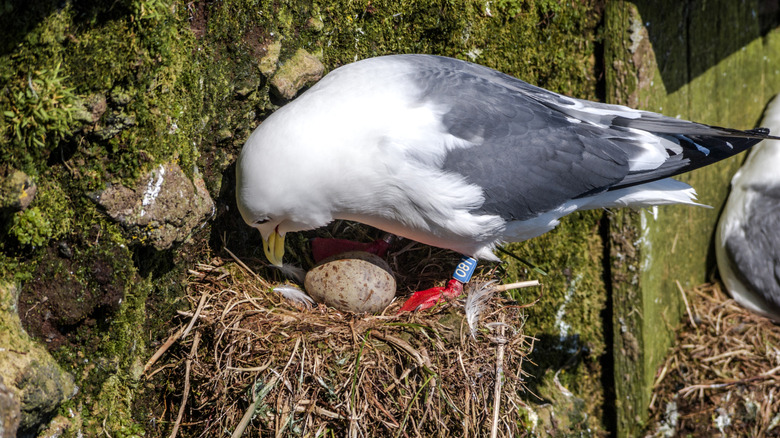
Though there were likely many Alaskan tribes that harvested seagull eggs, it seems that one tribe especially has a very dedicated history in doing so. The Huna Tlingit are a group of Inuit peoples who have inhabited the southeast of Alaska for hundreds of years. Nearby sits Glacier Bay, an attractive nesting ground for seabirds due to its rocky outcropping. This nearby abundance provided the opening for the harvesting of seabird eggs as regular sustenance, and as a byproduct, family bonding and carrying on of tradition that came along with it.
Even though this was such an important spring tradition for the Huna Tlingit, the collecting of gull eggs was banned in the 1960s. In the 1960s, the Migratory Bird Treaty Act was passed, which brought this Native tradition to a grinding halt. Glacier Bay eventually became a national park, and so the wildlife and plants within it were under the government's protection.
After environmental studies were done on the effect of egg collection in the bay, the Huna Tlingit Traditional Gull Egg Use Act was passed in 2014, authorizing renewed traditional harvests in Glacier Bay National Park under co-management between the National Park Service and the Hoonah Indian Association, which is the federally recognized governing body of the Huna Tlingit.
Whale
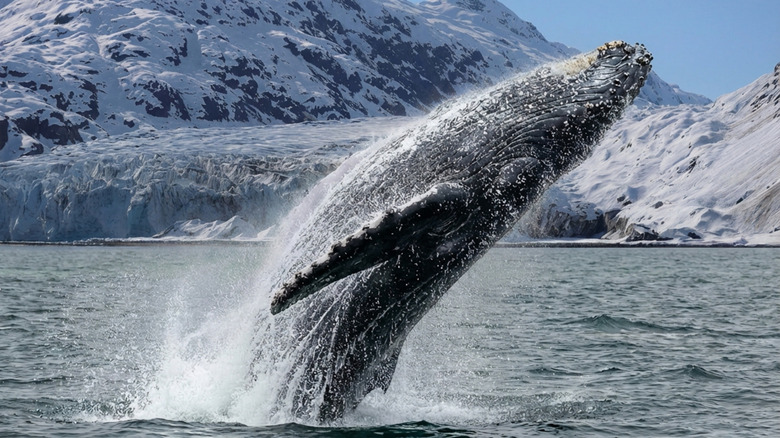
With the Pacific Ocean, Bering Sea, Chukchi Sea, and the Beaufort Sea surrounding the state of Alaska, it's only natural that Natives would turn to marine life for sustenance. And with the massive size of a whale, the animal could provide food for a vast number of people, especially when compared to the size of any game found on Alaskan soil. "A single gray or bowhead whale can feed dozens of families over the course of a season," Ian Hartman shares. Bowhead whales, specifically, were popularly hunted and have been in these parts for over 2,000 years, though there are eight species of whale commonly found within the surrounding bodies of water.
Whale hunting is still allowed in Alaska, but only for eligible Alaska Natives, with specific restrictions in place. "Along the coast of the Arctic and Chukchi Sea, communities relied on whaling, and still do," Ian Hartman shares. It is also important that no part of the animal goes to waste, with most of it being utilized. The outer skin of the whale, along with the layer of fat underneath, is served as raw whale blubber in a dish called Muktuk. Even the bones have their place, used for carvings, jewelry, or other artwork.
Fiddlehead Ferns
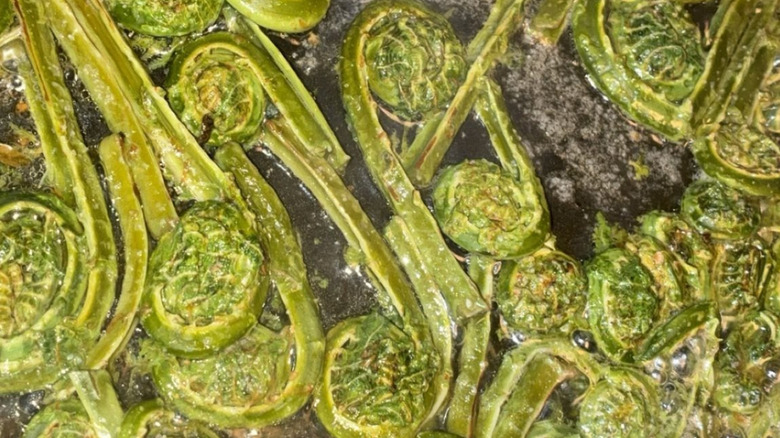
The subject of fiddlehead ferns may confuse some. You might even be wondering what the heck fiddlehead ferns are, and what they taste like, if you aren't familiar. Well, it turns out that despite their name, fiddlehead ferns are actually a type of vegetable as opposed to simply a fern. As for the taste, most say they are similar to asparagus, with others adding that the flavor is really a mixture of asparagus, baby spinach, and artichoke.
This vegetable was a popular foraged item for Native Americans throughout America, including those in Alaska. The Huna Tlingit, for example, have had these in their repertoire for generations. The traditional method of eating them was to clean the brown fuzz off of them and then boil them in salted water. While fiddlehead ferns are still eaten in Alaska today, more modernized recipes are common, like fiddlehead hot giardiniera or grilled Alaskan oysters with fiddlehead butter.
An interesting piece of information about fiddlehead ferns is that there is only a short window in which these vegetables can be harvested. If the top of the fiddlehead fern is allowed to mature to the point that it uncoils, the flavor profile is lost. As Ian Hartman shares, "people were resourceful and quickly had to learn the rhythm of the season and what each could provide."
Seals
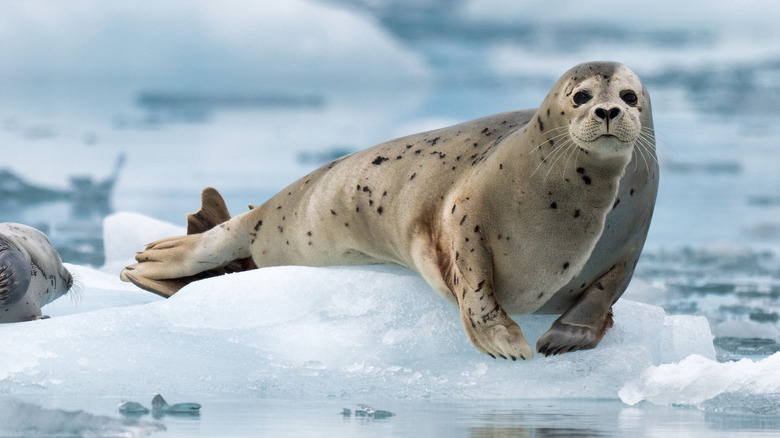
While seals might seem like adorable furry animals, in Alaska, the seal was a very important resource for Native communities. Ian Hartman shares that "marine mammals like seals and otters may also be consumed in some coastal communities." When seals were hunted, they provided meat and fat for rendering into oil or for cooking purposes, both precious resources. Waterproof clothing could also be created from the seals' hides, another bonus.
Typically, the seal meat was butchered and then turned into roasts, added to stews, or even fried. The seal intestines, on the other hand, went through an entirely different traditional process. The intestines were stuffed with meat, fat, and other fillings for sausages. It is important culturally that as much of the seal is used as possible.
Ian Hartman points out that while seal hunting (much like whale hunting) is allowed for Alaska Natives, there are limitations. "These days, there are, of course, much stronger regulations around who's permitted to hunt marine mammals ... This is largely in response to the ruinous effects of overhunting that occurred as settlers from Russia and the United States colonized Alaska in the 18th and 19th centuries."