

What Are The Main Differences Between IPA And APA Beers?
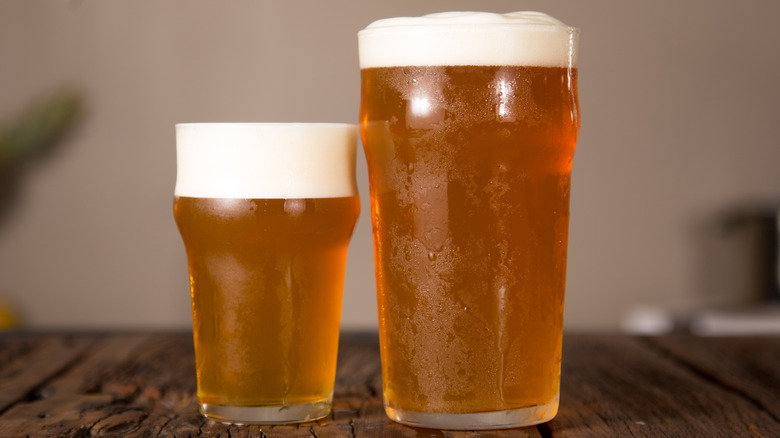
Enjoying a beer is one of life's simple pleasures, right? Wrong. These days it's very possible to enter a beer black hole. Not the kind stumbled into after an evening of overindulging, the technical kind where hop chat, complicated brew styles, and similarly named products make it unclear what's inside those cans you snagged from the store. For instance, IPA (meaning India Pale Ale) and APA (as in, American Pale Ale) may sound similar, but these two beers have several distinct differences.
Subtle disparities begin right from the early stages of production and continue all the way to the taste of the finished product. The result is two pale ales that vary in taste, origin, and hop and alcohol content. These gold-tinged liquids aren't niche products only purchased by hardcore hop enthusiasts, either. Market Data Forecast predicted the value of the U.S. craft beer market to reach $32.6 billion by 2026 and nearly $43 billion by 2034. IPAs and APAs are both under the craft beer umbrella, so consider this your cheatsheet for understanding what makes each style unique.
The origin stories of IPA and APA are centuries apart
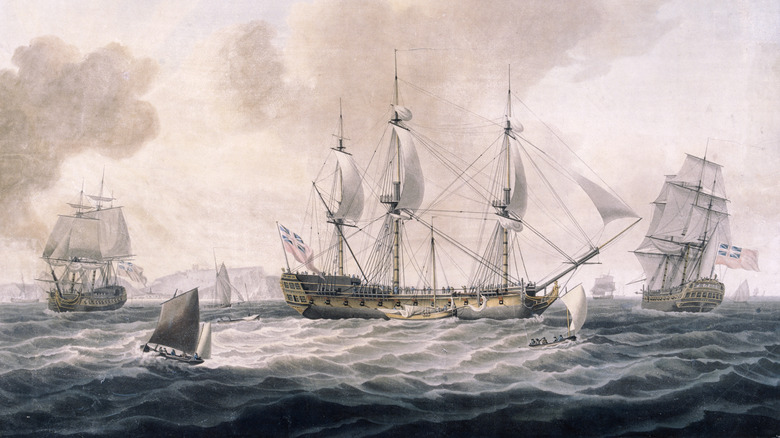
Both beers are pale ales, but the Indian Pale Ale was born in the 1780's, during the British colonial era. The goal was to supply British troops in South Asia with a familiar beverage, and the existing styles didn't survive the six-month ocean journey. A London brewer came up with a heavily hopped version (hops are a preservative). Over the years, the recipe was tinkered with to suit the hot Indian climate. In the mid-1970s, American home brewers resurrected what was, by then, a dying style.
It was a few years after breathing new life into IPAs when Americans created their own twist on the beer: the 1981 American Pale Ale. This beer came about from a desire to go toe-to-toe with competitors in the craft beer revolution. The recipe was tweaked to please a U.S. crowd, and Sierra Nevada Pale Ale is largely considered the pioneer that all others followed.
IPAs have a higher hop content
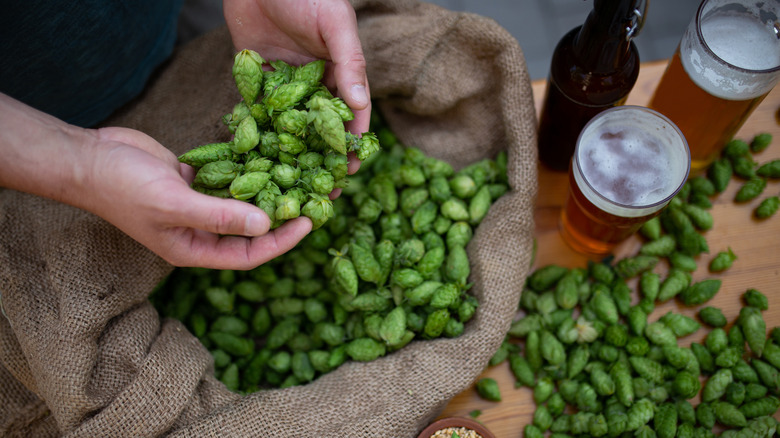
While some beer devotees know what hops are, regular drinkers may have heard the phrase many times yet only have a vague concept of what their beer-mad friends are referring to. Put simply, hops are the flowers that give beers their aroma and bitterness. They're grown across the world — like grapes for wine — and each hop has slightly different characteristics. Sierra Nevada Brewing Co., for example, flavors its IPA with Cascade hops from the Pacific Northwest, giving its classic pale ale notes of grapefruit and pine. One of the most fundamental differences between IPAs and APAs is their respective hop content and the stage at which they are added to the beer.
IPAs contain a greater amount of hops and implement a dry-hopping technique, which sees them added later in the brew, sometimes even directly into the fermentation tanks. The malt-to-hops ratio in APAs is more balanced by comparison, causing the intense hop flavors to become more subtle.
APAs are subtler in taste
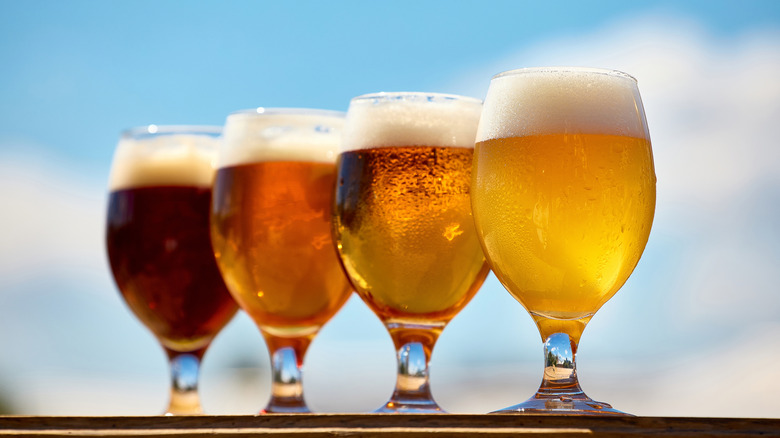
Potential IPA buyers shouldn't be put off by the repeated description of strong hop flavor that is a telltale marker of the beer. The bitter hoppiness is of the floral variety, with pleasing background notes of citrus. With fuller-bodied IPAs, expect tang and zest to come through. White IPAs and black IPAs will differ in taste from regular IPAs as well — with the former adding witbier yeast into the mix and the latter containing roasted malt. Take a moment to make sure the right pale ale is being plucked from the shelf or ordered at the bar; otherwise, you could encounter some unexpected yeastiness or a darker flavor than anticipated.
If IPAs are all foot-stomping flavor, APAs are the more pared-back, considered younger sibling. The hop taste is present and can lean piney, but it's kept in check with malty notes that are often described as bready or biscuity, with a caramel sweetness. There's also some fruitiness depending on the brewer's hop selection — think hints of jammy plum, juicy peach, and refreshing melon. For those reasons, medium- to light-bodied APAs are often considered a gateway, beginner-friendly pale ale.
Food pairings are different for these beer styles
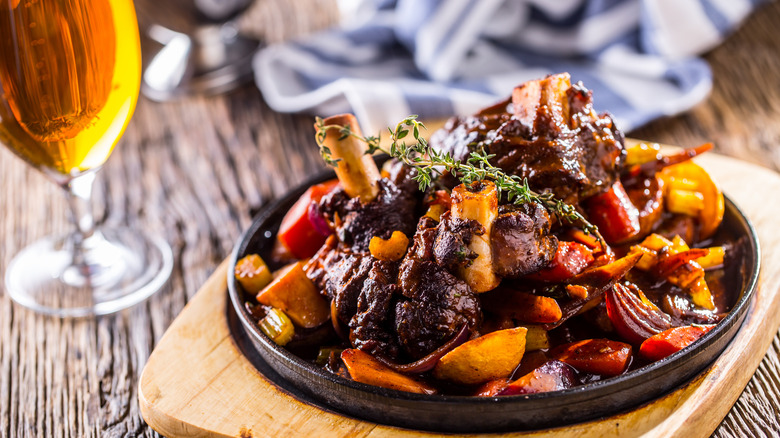
There are many types of beer with differences in taste, so it makes sense that each pairs best with specific dishes and cuisine styles. The same is true of IPAs versus APAs. As a general rule, APAs are a good accompaniment for milder foods, whereas IPAs can stand up against hefty whacks of spice. Try an APA with casual burgers and bar bites, or tacos. The fattiness of beans, cheese, and avocado is cut by the beer's slight bitterness, while lime juice is mirrored by its citrusy hops, and tomatoes play well with the sweet, toasty maltiness.
With IPAs, throw caution to the wind and get a little more adventurous. Thai food, laced with plenty of lemongrass and kaffir lime leaves, complements grassy hops and is a natural fit. The bitterness will also play off the spice and offer some relief through mouthfuls of chili. For more of a contrast, opt for Vietnamese dishes made with silky, buttery coconut milk and funky fish sauce with a tang that curbs the intense hoppiness.
The alcohol content of APAs is generally lower
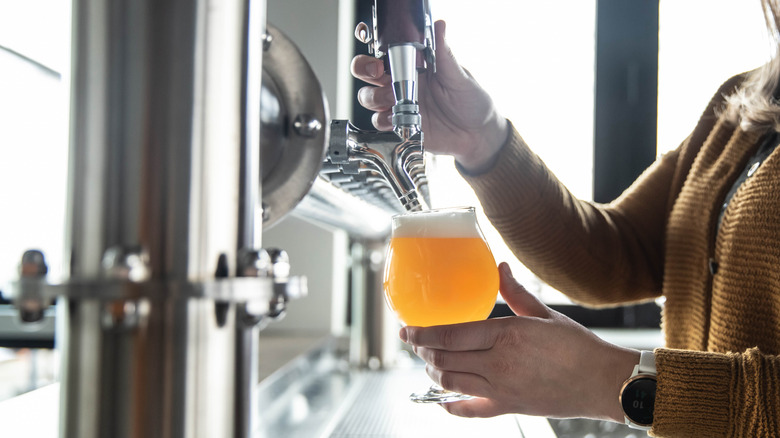
A key metric to compare APAs and IPAs is their ABV percentage. What starts to sound like a bunch of acronymous code is actually just the measure of alcohol by volume. This is the amount of pure alcohol in each can, glass, or bottle of beer. Consumers can look to ABV to buy a strength of beer that suits them, or to work out how to pace drinking their chosen pale ale. IPAs typically have a higher ABV and therefore a greater alcohol content.
Both beers start around the 4.5% ABV mark. The strongest APAs usually reach about 6.2%, while double IPAs can exceed 7.5% and triples can surpass 10% ABV. That's why IPAs are often viewed as the slow, brooding sippers of the beer world, and APAs are the sunny, easy-drinking beers that those who are new to the craft beer scene may find more approachable.