

The Rise And Fall Of Tupperware's American Empire
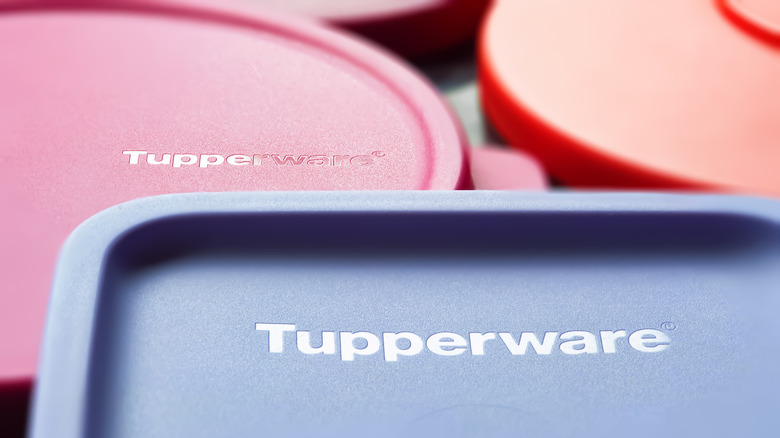
Where would we be without Tupperware containers to store our leftovers, make meal prepping possible, and prevent cookies from going stale? When we do our loved ones a favor by bringing soup to their house when they're sick or prepare effortless heat-and-eat meals when a baby is on the way, we rely on plastic storage containers to preserve food and fit conveniently in the fridge or freezer. What grew into a massive empire is now threatened with extinction.
Unless you've heard the news about Tupperware filing for bankruptcy, you may not even guess that such an iconic brand has ever faced trouble. However, 2020 brought major trouble for the company, and Tupperware clung to hope until it finally filed for bankruptcy in 2024. There's a ton of fascinating history between Tupperware's invention in the 1940s and today. Crack open the lid to discover how this brand became a household name and then watched its empire crumble.
World War II taught families the value of reducing waste

Life during the 1930s and '40s was often grueling. First came the Great Depression, then World War II. Throughout this era, families struggled immensely to keep nutritious food on the table. There are tons of Depression-era dinners we don't eat anymore, but it's astonishing to learn the unique ways people sustained themselves during such hardship. When WWII rolled around, the government set rations for many staples and encouraged folks to grow their own Victory Gardens to help supplement the struggling supply chain. Since every item from the grocery store was precious and never guaranteed, people ensured that they made the most out of every meal.
Peace finally came in 1945, and the '50s proved to be one of the most impressive economic flourishes in American history. Still, anyone who lived through one or both of those traumatic events had habits instilled to never be wasteful. As a result, the general public was extremely primed for an invention like Tupperware.
Tupperware was invented in 1946 but had a shaky start
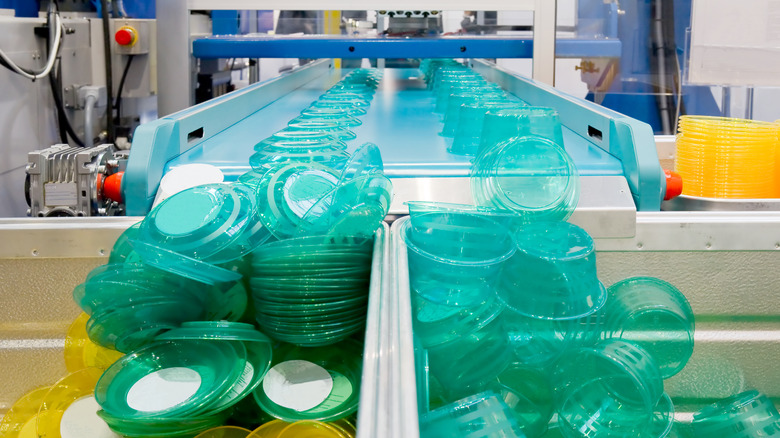
Tupperware is one of those products that feels timeless, but it only came to the market in 1946. The founder, Earl Tupper, had been tinkering with the idea since 1942. His goal was to turn waste from oil production into something useful. You know the saying: One person's trash is another person's treasure. Yet, at this point in history, plastic already had an unfavorable reputation. Other plastic products were oily, and they smelled bad. When Americans heard that some guy wanted everyone to put their precious food in a plastic container, they thought the idea was bonkers.
At this point, everyone was still using glass to store their food. Tupperware promised lightweight containers that kept food fresher for far longer. The major struggle was to get people open-minded enough to try the product. Once they saw how high-quality the containers were, they'd be convinced.
Tupperware parties made the brand a household name
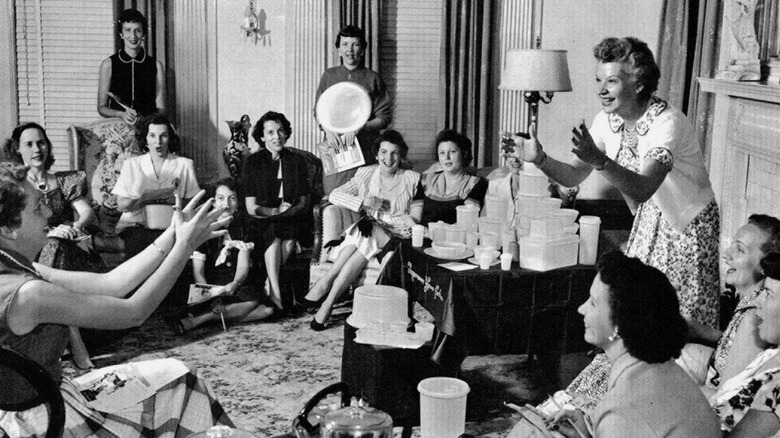
Tupperware owes so much of its success to a brilliant woman named Brownie Wise. Wise teamed up with her mother to start their own business, using direct selling to push products. Buying something a friend can vouch for feels safe, especially if you already have reservations about the item. Thus, the famous Tupperware parties took the country by storm during the '50s.
The concept was simple: People who were interested in entrepreneurship could host parties for their friends. They could pass around the plastic containers so folks could feel how lightweight they were. They also did all kinds of demonstrations that showed why Tupperware was superior to other storage solutions.
These parties began at the dealer's home, and as the hype grew, other hostesses invited their local Tupperware dealer over to do demonstrations. While men also became dealers, this business opportunity was a critical way for housewives to earn their own money on a flexible schedule, network with other dealers, learn transferable business skills, and feel empowered. Through their passion, Tupperware easily became a household name.
Expired patents allowed competitors to swoop in during the '80s
Companies need many ingredients to thrive in a competitive capitalist market. Patents are a major safeguard that shields must-have goods when competitors try to create copycats. History has been favorable to some copycats, though. For example, many folks are shocked to learn about the strange history of the Oreo and Hydrox rivalry. America's favorite cookie may have stomped its predecessor into the dirt, but Tupperware stayed afloat when a seemingly endless number of competitors flooded the market.
In addition to iconic Tupperware parties, the patent for the airtight container, which was valid until the '80s, gave the brand decades to solidify its status as a household name. By the time other high-quality copycats launched, people had already developed brand loyalty to Tupperware. Of course, at the right price, many consumers could still be persuaded to deviate and try another plastic storage container. Those who didn't want to take any risks could always count on Tupperware because the company had nothing left to prove.
Poor-quality containers may have unfairly tarnished Tupperware's reputation
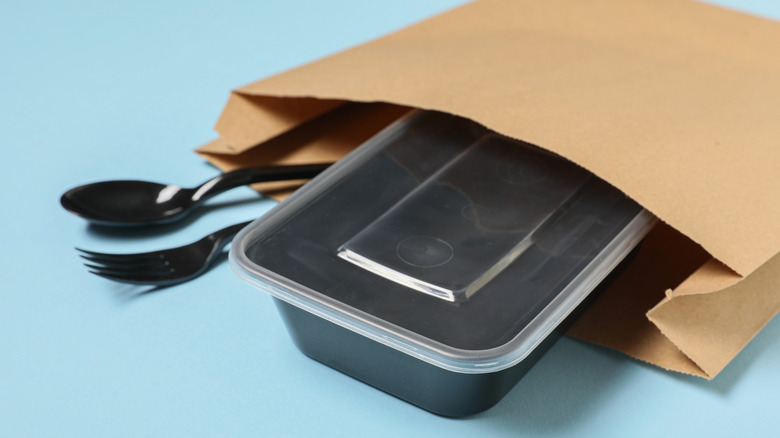
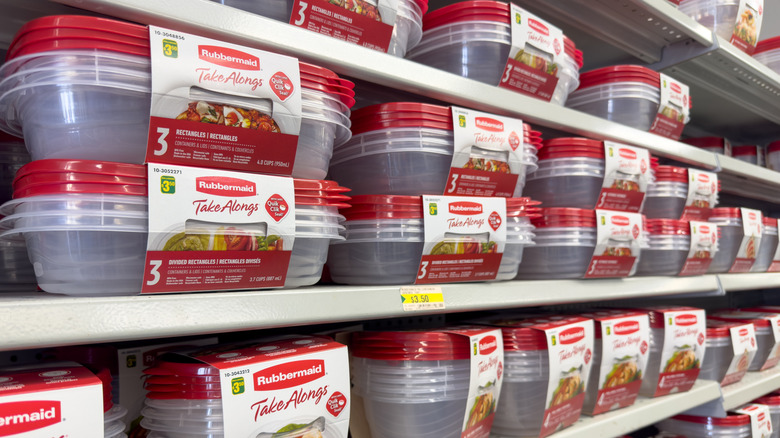
Have you ever noticed that when someone has their hands full packing up leftovers, they'll ask someone else nearby to grab them a Tupperware? For decades, this request was straightforward because Tupperware's patents kept the brand at the top of the plastic storage container game. However, once competitors could release their own airtight designs, folks increasingly started to explore these different products. The household name stuck, though. Even when an item came from Rubbermaid, Pyrex, Snapware, or elsewhere, people still called these containers Tupperware.
When the storage containers were high-quality, this wasn't necessarily bad for the brand. However, cheap designs frustrated folks. If you've ever held onto cheap, flimsy to-go containers from restaurants, you've likely experienced how they hold onto grease and odors from whatever was in them last, even after washing. This isn't a good look for Tupperware, and the brand didn't even commit this crime. Instead of one massive scandal with immediate consequences, this unfair association slowly chipped away at people's enthusiasm for plastic storage containers in general.
The company debuted on the New York Stock Exchange in 1996

Even with the release of new plastic storage containers throughout the '80s and onward, people still held favorable opinions of Tupperware. The company became big enough to finally get listed by the New York Stock Exchange (NYSE) in 1996. Even folks who are fairly well-versed in investing may not realize how difficult it is to break into this exclusive club.
According to ResearchGate, the NYSE tweaked its eligibility requirements in 1984. Companies still needed to earn $2.5 million in the previous year, plus an additional $2 million in each of the prior two years. However, companies now needed an $18 million market value of equity (up from $16 million) and had to meet other ambitious figures. As if this doesn't sound tricky enough, it helps to know how many companies actually cleared these hurdles back then. From 1980 to 1990, an average of 18 companies joined the NYSE annually. Needless to say, getting listed was an incredible feat for Tupperware. The NYSE's prestige signaled to the public that Tupperware was a titan in the economy.
The 2008 recession slammed many industries, but Tupperware was still thriving
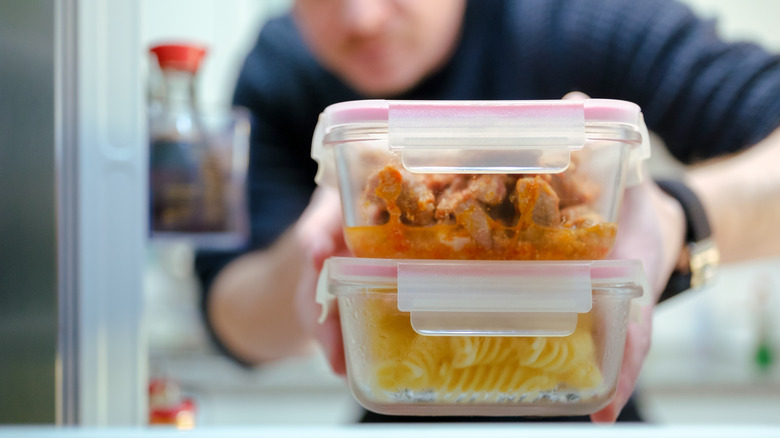
2008 was a challenging recession, and the years surrounding it were also quite rocky for many American families. To put things into perspective, unemployment jumped from 5% to 10%, according to Federal Reserve History. The last time the economy was that bad was during World War II. Some industries can flourish, however, no matter how deep the recession. Since its origin, Tupperware had always presented itself as the solution to food waste.
When times are tough, dining out is one of the first luxuries people cut. Even folks who hated cooking could turn to easy meal prep recipes and keep their lunches and dinners safely stored in Tupperware for the week. It's no wonder that the company's sales climbed when so many other businesses floundered. Tupperware also let Americans stock up on perishable products that were on sale and preserve them longer. At the start of 2008, Reuters reported that Tupperware's revenue was $2 billion, and by the end of the year, it was up to $2.16 billion. Folks couldn't spend frivolously then, so this growth speaks volumes about how people weathered that storm.
Sales peaked in 2013 and haven't recovered since then
Tupperware had been on its A-game through all kinds of economic climates and societal trends. Whether folks were hunkering down and preparing every meal at home to save money or hosting big dinner parties with friends, Americans always needed storage containers for leftovers. With so much success, it's hard to imagine the brand ever floundering, yet 2013 was a major turning point. According to that same Reuters report, revenue reached an all-time high this year, and it's never been topped since then. At its height, Tupperware's sales revenue was $2.67 billion.
For a company that designed plastic storage containers that are meant to last many years, it's impressive that Tupperware trended upward for nearly 70 years. Yet the following downward spiral can't solely be blamed on its durable products. The heart of the matter is the higher-ups who controlled marketing efforts.
Modern consumers shop online, but Tupperware didn't make its products accessible
Learning about the internet is always a doozy because it's such an integral part of everyday life now, yet it's still a relatively new invention in the grand scheme. Online shopping seemed outlandish and even risky at first because people had to give away sensitive credit card information and their address. Yet by the end of the '90s, the process was streamlined enough to gain steam, and people really fell in love with the convenience during the 2000s. Online shopping has contributed to Tupperware's steady decline since 2013.
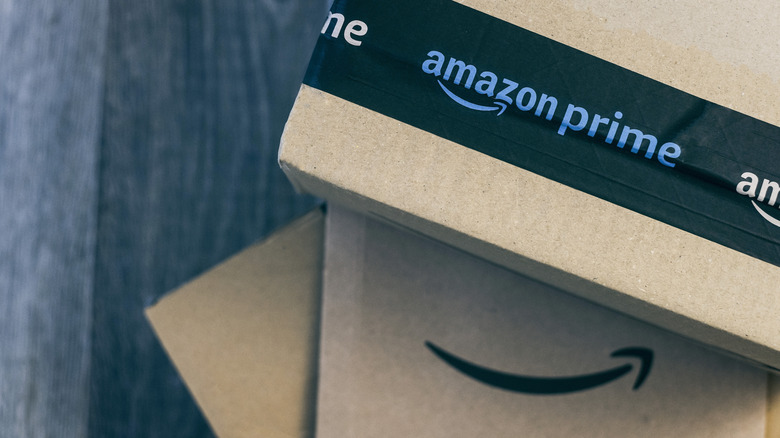
The baffling part is that Tupperware never needed to struggle. It's true that the company made online shopping possible when it launched its website in 1999, but customers had to seek out its site specifically to make a purchase. Third-party sellers like Amazon let folks buy a range of products and even stumble across impulse buys. If Tupperware had loosened the reins a little and collaborated with other businesses, the brand's story could be very different today.
The problem is that Tupperware refused to let go of its old-fashioned ways. Not many folks host parties to sell products nowadays, including Tupperware. People also aren't keen on opening the door to strangers, so door-to-door salespeople often leave empty-handed. The direct-selling method is almost guaranteed to fail in today's fast-paced world, where convenience is not only a luxury but also a time-saving necessity.
The 2020 pandemic caused supply chain issues and limited social interactions

COVID-19 brought the world to a halt in the hope of slowing the spread. Grocery stores became places of panic, so many opted to have their groceries and other necessities delivered to reduce risk. Even those who weren't as concerned about getting sick still had to be mindful of government mandates on the size of social gatherings. Life became pared down, yet so much more complicated. For a business that made online shopping difficult, this was only the start of Tupperware's rapid downward spiral.
The pandemic also caused massive supply chain issues, which is why basically every industry struggled during this time. We may be several years removed from the pandemic, but many industries are still struggling to catch up. Tupperware had to deal with production disruptions and higher material costs.
Since the 2000s, the company has experimented with taking its direct-selling methods to shopping malls and other high-traffic locations. While malls have been declining for years, COVID-19 ensured most folks stayed far away. Not many people want to listen to a sales pitch normally, and adding the risk of catching a gnarly virus made Tupperware's strategy impossible. This triple whammy was too difficult to overcome, and it was the final nail in the coffin that led to Tupperware's bankruptcy announcement only a few years later.
Tupperware hired a failing competitor to face the 2020 slump

2020 pinned Tupperware against the wall as the ongoing effects of COVID-19 attacked its sales on several fronts. The blow could have been cushioned by making its products available on platforms like Amazon several years earlier. To make matters worse, the company went into the pandemic with a leadership shakeup.
In March 2020, Tupperware hired the former global president of Avon, Miguel Fernandez, as its new CEO. The timing certainly wasn't fair, since no one knew the extent of what lay ahead, but a talented CEO should have been able to face unexpected challenges with inventive solutions. Instead, Fernandez maintained the status quo. For those unfamiliar with Avon's history, Avon is a competitor that also uses a direct-selling strategy. While the brand sells a variety of products, it also sells kitchen goods, including plastic storage containers. It used to be an iconic brand, but it faced the same financial struggles as Tupperware going into 2020.
Tupperware was thrilled to have someone on the team who was already very familiar with direct selling. That short-sightedness only worsened the pandemic's ramifications. Tupperware replaced Fernandez after a little over three years.
Tupperware started selling on Amazon and at Target in 2022
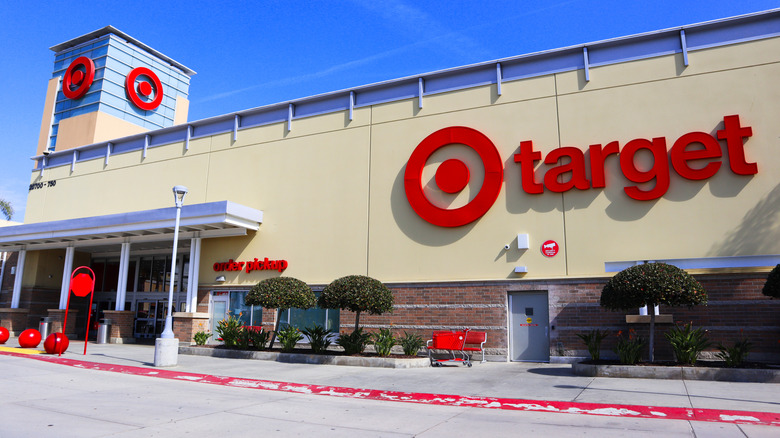
Given Tupperware's stubborn reputation, it's shocking that the company finally caved and started selling its products through Amazon and Target in 2022. At this point, though, those who know about this dire situation wonder if it's too late for Tupperware to recover. Still, it was a step in the right direction.
The bad news is that Tupperware didn't have much literacy with third-party selling. It was great that you could finally buy Tupperware alongside other products on Amazon, but would shoppers even realize its products were for sale? Tupperware had always benefited and been harmed by the fact that its name became the generic term for all kitchen storage. That meant the brand was iconic, but modern consumers searching for Tupperware on Amazon would see endless results from other brands, including Amazon's own plastic storage containers. These other options also had better deals and a greater presence on the online retailer, boasting more ratings and customer reviews.
It was also bizarre that Tupperware put off offering its products on grocery shelves. Since stores like Target met shoppers' needs by stocking other container brands that would collaborate, Tupperware got lost in a sea of options.
The company filed for bankruptcy in 2024
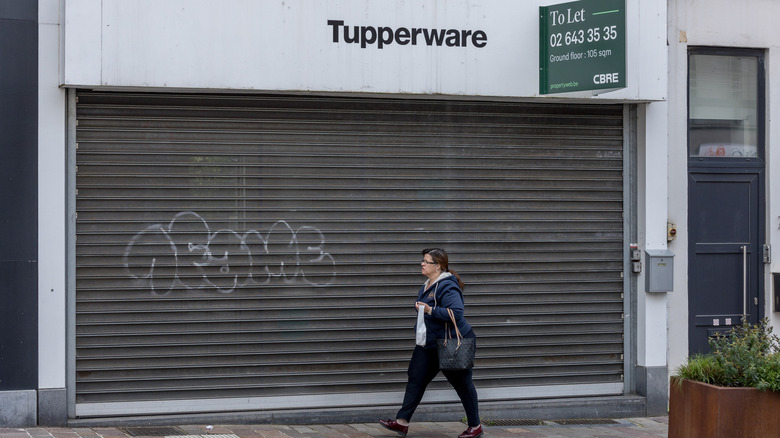
Tupperware wasn't innovative enough to execute a turnaround after 2020's hurdles. Expanding to more third-party sellers occurred far too late in the game, so bankruptcy seemed inevitable at this point in its saga. Sales from Amazon and Target starting in 2022 were promising, but not enough to stave off this declaration. In April 2023, Tupperware publicly sounded the alarm, announcing it was at serious risk of going bankrupt unless financial backers swooped in to save the day. By the end of 2024, the company filed for Chapter 11.
At the time, Tupperware had anywhere from $500 million to $1 billion in assets, and its estimated liabilities ranged from $1 billion to $10 billion, which was a huge, concerning range. Still, the announcement was hopeful and determined. The brand had finally acknowledged publicly that it needed to revamp its entire marketing strategy, and it was committed to becoming profitable again.
More news coverage has educated people on the dangers of plastic
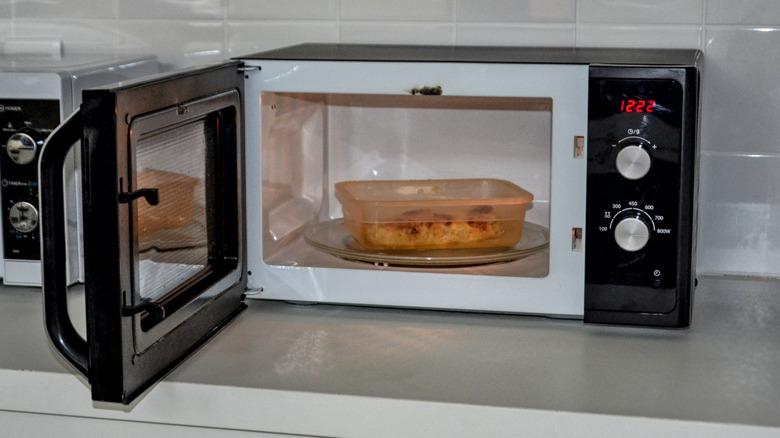
There's something everyone should read before storing food in plastic containers. Research is still in its early phase, but the findings are shocking. Microplastics are released into our food when we store it in plastic, and the amount significantly increases if you microwave the container. When we eat microplastics, they potentially wreak havoc everywhere in our bodies. The foreign particles may trigger inflammation and, over time, increase our risk of heart attacks, strokes, and other serious health conditions.
The reassuring news is that Tupperware has already developed a line of glass storage containers. Many folks may not even know that Tupperware works with healthier materials, though. Now, the brand's next step should be focusing more of its marketing power on its glassware. Its Voila Glass collection, which launched in 2025, wasn't around when Mashed compiled the best glass food storage containers, but this move inspires some confidence.
The brand is still hopeful yet seems to lack promising ideas for success
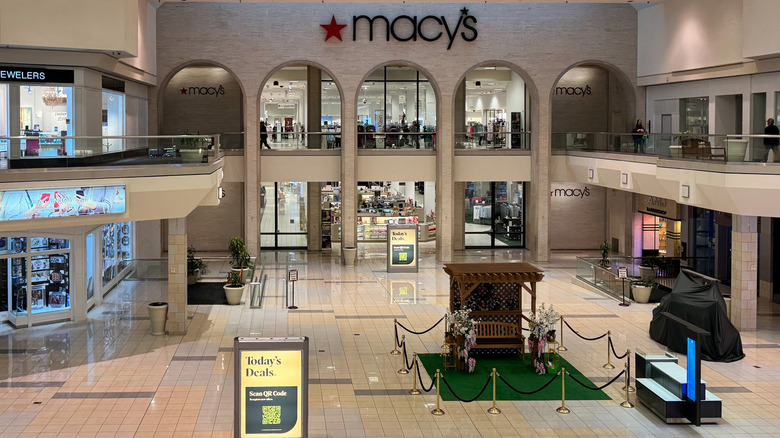
Tupperware's new glassware line is fabulous news, but the brand still has work to do if it wants to dig itself out of the grave. Its other business strategies still point toward hesitancy to embrace newer, more effective ways to sell. In 2024, Tupperware made headlines when it announced a team-up with Macy's to sell its products in-store and online. This collaborative spirit is a change of pace, but the partnership seems a bit questionable. The department store was also a titan in 20th-century America, but with the online shopping boom, fewer people go out of their way to shop at malls.
Neither brand is doomed to fail, though. Macy's is also plotting a major comeback, and its strategy is unique. The company has been intentionally downsizing to cut operating costs. Macy's will still be around, but it will have fewer than half as many stores as its early-2000s peak. There may be fewer stores, but Macy's is focusing on its best-performing locations where a mall comeback is most likely. Both brands are proving they won't go down without a fight, but only time will tell whether this collaboration will be fruitful.