

What State Produces The Most Avocados In The US?
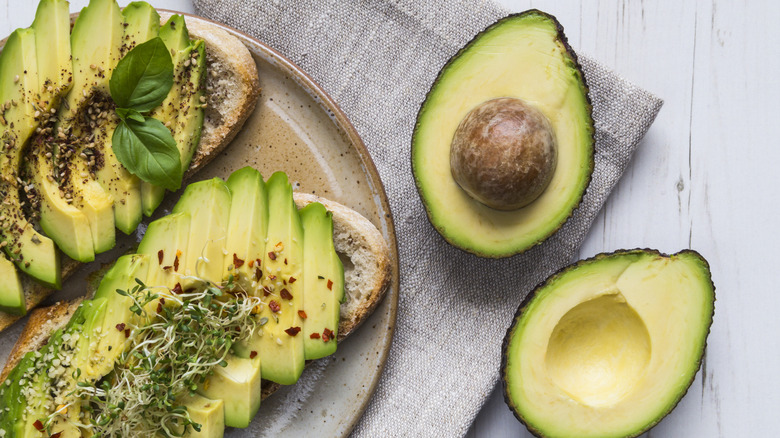
The consumption of avocados in the United States has risen significantly over the past few decades. According to the Wall Street Journal, Americans presently eat about 9 pounds of the creamy fruit per capita per year. That's far greater than the amount folks were consuming back in 2000 when the food's per-capita availability barely averaged 1 pound (via the USDA).
The ever-rising demand may very well be linked to more widespread knowledge of avocado's various health benefits, but it also has something to do with increased access. About 90% of all the avocados currently smashed, spread, and chopped here in the U.S. come from Mexico, which wasn't actually allowed to export them to the States until 1997. Given that staggering statistic, avocado lovers who want to buy produce grown in America may wonder if that's even possible.
Well, thanks to California, it (kinda) is. The Golden State is the largest domestic producer of avocados, churning out 90% of the home-grown harvest — the most of the merely three states that are able to produce to them: California, Florida, and Hawaii. However, California alone can hardly satisfy Americans' increasing demand.
California's avocado producers are struggling
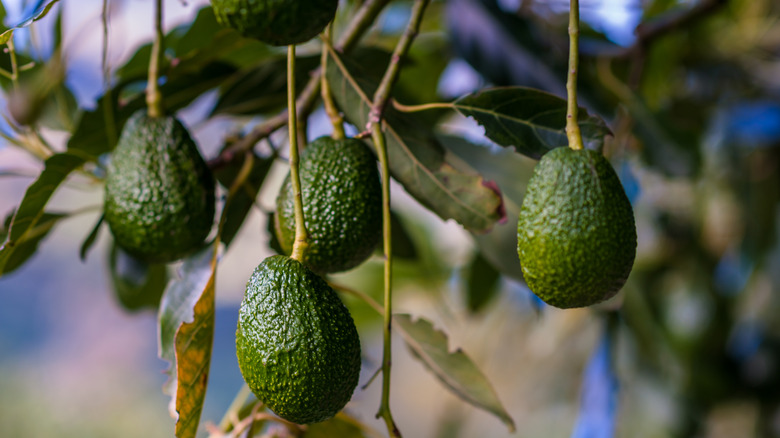
California, like Florida and Hawaii, boasts the right environmental conditions to grow the popular crop. Native to South-Central Mexico and Central America, avocados thrive best in warm areas with rich soil that get plenty of sunlight. There is one variety, however, that is actually native to California: the Hass avocado, which developed from a single tree in the 1920s and now makes up about 95% of California's total crop.
Despite the rising demand and the state's growing potential, though, California's avocado production has seen a downturn over the past ten years. According to data from the California Avocado Commission, both the state's crop acreage and yield have been steadily declining since the late 2000s. The price to grow avocados in the United States has increased; paired with some resource restrictions, it makes farming the fruit less lucrative for domestic producers.
As KPBS recently reported, the struggles of battling rising land and water costs, paired with a labor shortage, outweigh the benefits for some. "A lot of my neighbors are...dropping the fruit because there ain't no local workers," one San Diego grower explained. "Most of the big ranches around this area is gone because of the water prices is killing us, the labor is killing us." Still, California farms offer a welcome supplement to the import market. In 2024, the state's total harvest approached 365 million pounds (via California Avocado Growers). That's a lot of avocado toast for the locals.