

The Popular Condiment That Might Be Ruining Your Mexican Food
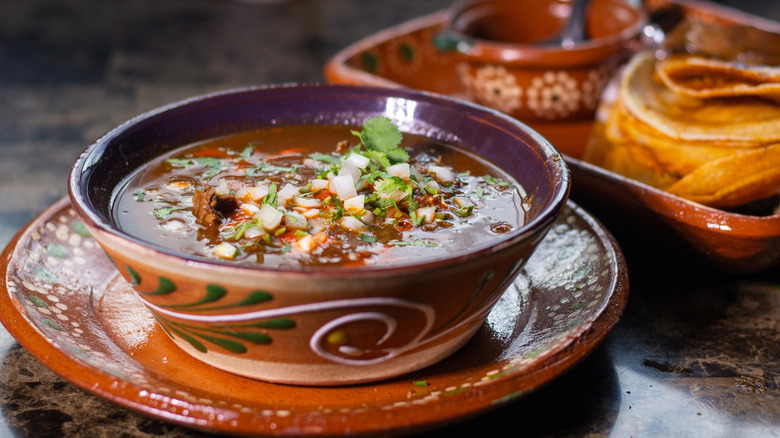
Spices are a crucial part of Mexican food, but tongue-tingling heat isn't all the cuisine is about. If you enjoy spicy food, there's a lot to love in the deep-heat flavors of a slow-cooked birria or dish slathered in mole sauce. The spice in most Mexican dishes comes from a calculated mix of various chilis to give the food a complex spiciness that can range from sweet and fruity to smoky and earthy. Trying to replicate or elevate these complex spice notes using commercial bottled hot sauce isn't a good idea. In fact, one of the major mistakes you can make at a Mexican restaurant, according to chefs, is to douse your meal in hot sauce. Even if you see a bottle sitting on the restaurant table, it may be best to avoid or go light on the hot sauce since its strong salt and vinegar notes tend to overwhelm the food's layered flavors.
In addition to dozens of chili varieties (some estimates put it at least 60 different kinds), many traditional Mexican dishes use a wide variety of flavoring herbs — everything from cinnamon and cilantro to nutmeg, sesame, mint, and marjoram. Hot sauces, like most commercial condiments, are more generic in flavor to make them versatile. While the combination of chili, salt, garlic, and vinegar, which often forms the base of most hot sauces, tastes good, it also invariably overpowers the complexity of the dish. Even a much-loved Mexican hot sauce like Valentina will only work well with a few dishes, and there really isn't a one-hot-sauce-to-rule-them-all when it comes to dolloping on your favorite Mexican eats.
The best ways to spice up Mexican food without missing out on flavor
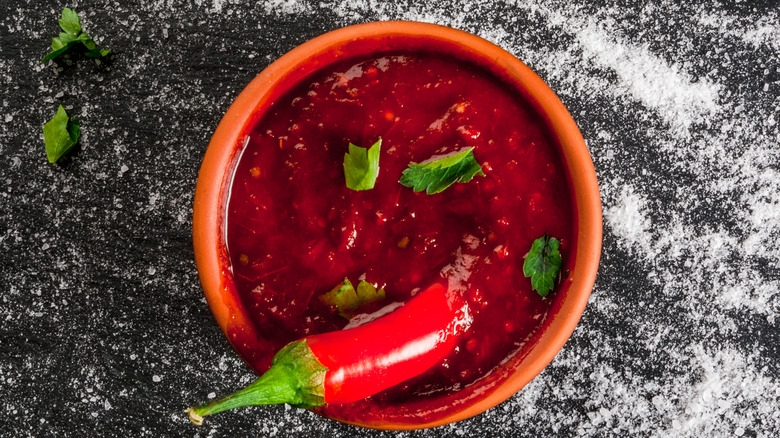
Most Mexican eateries let diners specify whether they want their order extra spicy. While this is more common with traditionally fiery foods, you can sometimes request common dishes like enchiladas or tamales to be made hotter. And when the option isn't available, you can ask for a spicy salsa on the side. If you're eating at a traditional Mexican restaurant, you'll usually get a fresh salsa that's customized to complement your order anyway. Since Mexican cuisine's palette has dozens of chilis to choose from, you may get salsas or in-house sauces made from various peppers. Sauces can channel sweet heat from the likes of ancho and guajillo peppers, the smoky, earthy spiciness of pasilla chilis, and the sharpness of serrano and explosive habanero peppers.
While any in-house spicy salsa made by the restaurant will almost always be better than the bottled variety, if you do want to go the hot sauce route on your Mexican food, you need to have a few different options to complement specific dishes. A bright and zingy green hot sauce adds light, fresh sharpness and goes with lighter dishes and citrus notes. Deep, smoky hot sauces are more suited to slow-cooked dishes like stews and pulled meats, which have more assertive flavors.
Instead of splashing hot sauce all over the dish you've ordered, consider using it as a dipping sauce, which lets you adjust how much (or little) it overpowers the flavors. This is also a good strategy if you're using some of the hottest hot sauces in the world, like Blair's Caldera or Magma Hot Sauce, to add fire to your food.