

Buying Prime Rib At The Grocery Store? Use These 5 Tips To Get The Best Cut
We may receive a commission on purchases made from links.
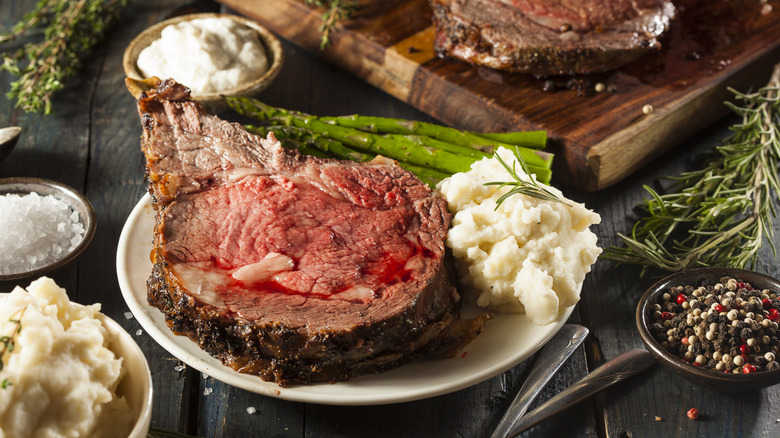
Holiday celebrations just wouldn't be the same without a selection of tantalizing foods. While poultry and ham get plenty of love this time of the year, homemade prime rib is the true star of the dining table. Transcending your standard hunk of roasted beef, prime rib is juicy, succulent, and loaded with bold, meaty flavors. Though most people associate this fancy preparation with high-end restaurants, making prime rib on your own is not as intimidating as it might seem. The first and perhaps most important step is choosing the highest quality prime rib from the available selection.
Whether you hit up a grocery store or butcher shop, we have some essential tips for buying prime rib. The quality and freshness of the beef naturally make a huge difference, but the aging process it undergoes is another flavor factor to consider. How the roast is trimmed by the butcher can also affect the quality of the meat, as can the extent of the marbling evident throughout the cut of beef. Prime rib might not be a contender for a breezy weekday dinner, but the dish is ideal for celebrating the holiday season with the people near and dear to your heart.
Look for select USDA certified Prime beef
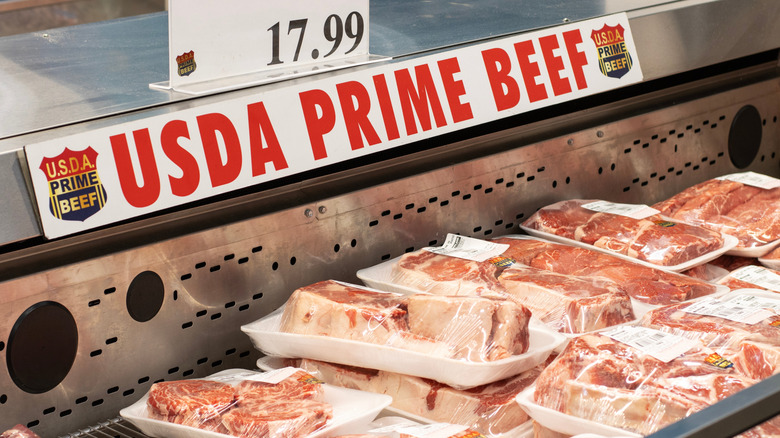
Prime rib is named after the part of the cow from which it's sourced, meaning the beef rib primal that lies beneath the front portion of the ungulate's backbone. The name does not refer to the quality of the beef, which the USDA ranks using three designations: Prime, Choice, and Select. Marbling is the crucial identifier between each beef grade (though the age of the cow also matters), as higher quality cuts will feature more marbling than lesser cuts. Prime beef has the most substantial marbling, Choice cuts have slightly less, and Select cuts are often quite lean and may lack succulent flavors and textures as a result.
When buying prime rib at a grocery store or butcher shop, your options will likely be relegated to Prime and Choice cuts. Prime cuts are more expensive per pound, but the exquisite marbling creates unbelievable flavors and juiciness. Keep in mind that Prime beef isn't as accessible as Choice and Select, and some estimates claim that less than 2% of beef in the U.S. meets the designation, according to Masterclass. As such, you may need to visit a butcher shop or specialty grocery store to score Prime cuts.
Check out the marbling
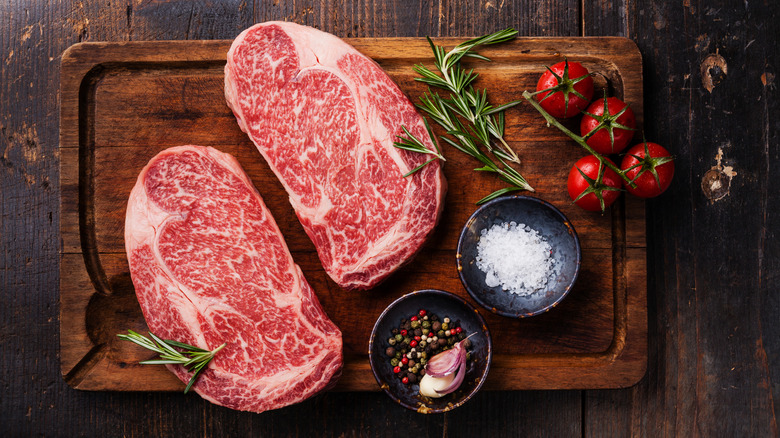
You know that Prime cuts of beef feature the most marbling, but how does generous marbling affect the taste of prime rib? Marbling refers to the fat that's dispersed throughout the meat (intramuscular) as opposed to the fat that surrounds the meat (intermuscular). This intramuscular fat breaks down at high temperatures and infuses the meat with delicious flavors. Marbling also creates a desirable texture, as it keeps the beef moist and juicy. Marbling can be influenced by the breed of cattle, what and when the animal eats, the age of the cattle, and how active it is.
Abundant marbling is an important aspect of quality beef and can elevate prime rib to an even tastier meal, but is all marbling the same? Marbling can be broken down into three categories: fine, medium, and coarse. Fine marbling is thinner but more evenly dispersed through the muscle tissue, whereas medium marbling features thicker lines of fat but isn't as consistently dispersed. Last on the list is coarse marbling, which is characterized by large specks of unevenly dispersed fat. While not everyone agrees with these designations, it's believed that fine marbling is best because the smaller portions of fat melt quicker and the consistency ensures the meat is evenly infused with flavor and juiciness.
Look for dry-aged beef
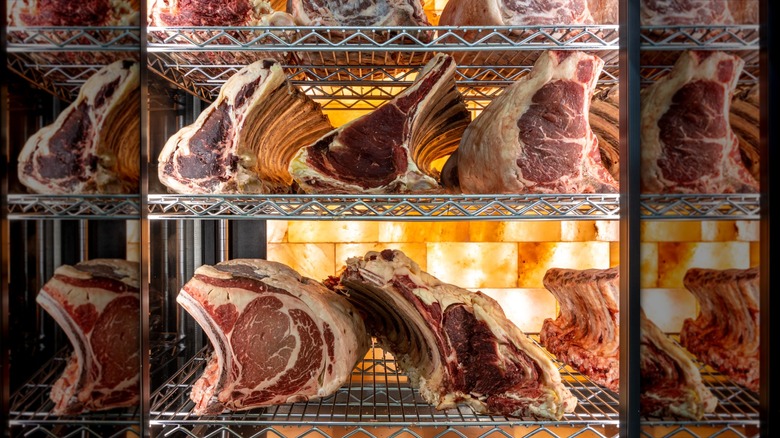
There are countless ways to age a steak, from slathering the beef in tallow to submerging it in liquor. Dry-aging is a particularly beloved method, as it has a dazzling impact on the outcome of cuts like prime rib. The process is a bit laborious, as dry-aging requires a refrigerated space, a wire shelf or rack (to encourage even aging), and a fan to ensure steady air circulation. However, the labor is fully worth the end result. Dry-aging concentrates flavor within the meat, while softening muscle tissue to make it unbelievably tender. Chemical reactions that take place during the aging process also benefit flavor, and dry-aged beef can have an umami-rich nutty flavor profile.
While dry-aged beef features an incredible flavor, the taste of the meat will become more intense the longer it's aged. Timelines roughly range from 20 to 60 days or more, and the longer you go, the more intense (and potentially off-putting) the flavor profile will be. As such, stick with prime rib that's been aged 45 days or fewer, as this length of time typically yields the best flavor without going overboard in terms of intensity.
Ask the butcher to keep the fat cap
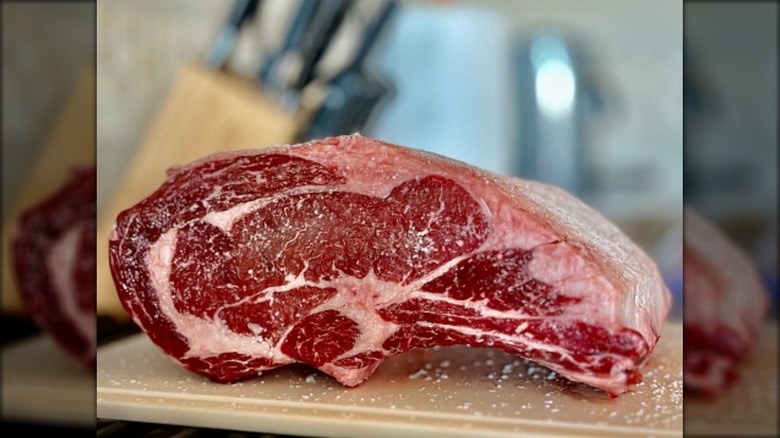
We previously discussed the importance of marbling, aka intramuscular fat, in your prime rib, but what about the intermuscular fat? This is where visiting a butcher to source your prime rib might be the best idea. Grocery store butchers can do all sorts of neat things, including finding specialty meats and trimming down larger cuts. Butchers can also honor specific requests when it comes to prime rib, such as leaving the fat cap intact. This portion of the prime rib is a type of intermuscular fat, and it can play a substantial role in locking in great flavors and juiciness when roasting the meat.
A robust fat cap can prevent prime rib from drying out, while also flooding the beef with rich flavors. And as the roast cooks, the fat cap will take on a delectably crispy texture to complement the tender beef. When seasoning prime rib with an intact fat cap, making strategic cuts into the fat helps the spices and herbs become fully enmeshed with the beef (as opposed to simply resting on the fat cap). In this case, use a cross-hatch pattern and avoid cutting into the beef directly.
Look for the freshest cuts available
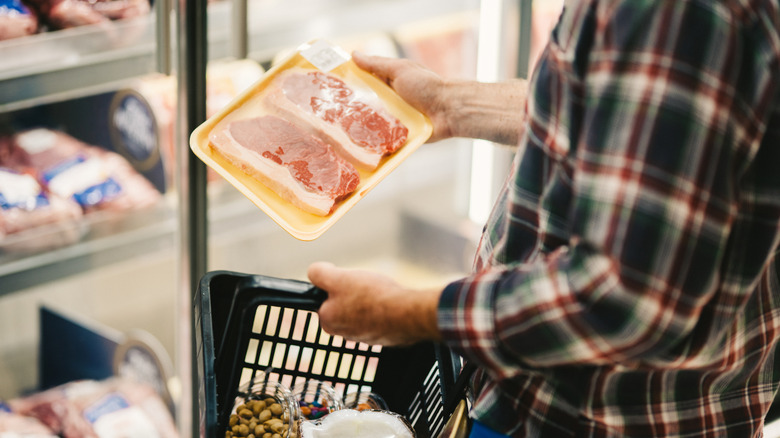
No matter how amazing a cut of beef is, the freshness of the meat will make or break your meal. Fortunately, it's relatively easy to identify good quality when you know what to look for. When it comes to appearance, assess the color for vibrancy and evenness. Fresh cuts will have a bold red shade (unless you're buying aged beef, which is a deeper, reddish-brown color) that is consistent across the meat. If a steak appears brown or gray, it's not necessarily spoiled, but it may not be as fresh as its better-hued counterparts. The firmness of the meat can also provide clues to its freshness. Look for springy textures that bounce back after being pressed, and avoid meat that dimples easily when touched.
You should also be on the lookout for certain meat department red flags, which can detract from the appeal of your prime rib feast. Damaged packaging is a major problem, as rips and tears can foster the growth of bacteria on meat due to prolonged air exposure. Odor is another vital consideration, as spoiled beef often has a tangy or otherwise offensive scent. It may even give off hints of ammonia, which has a pungent chemical smell.