

The Vintage WWII Tip That Makes Your Butter Go Further
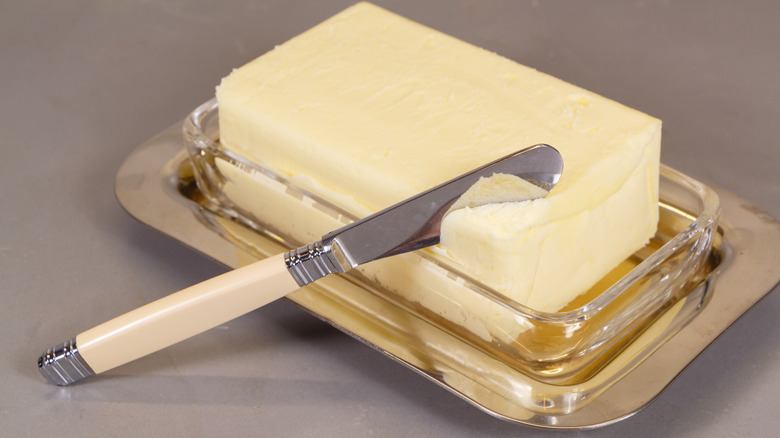
As the fighting raged in Europe and the Pacific during World War II, there were major changes on the home front as a result. Government-mandated rationing forced home cooks to cut back on their usage of a variety of staples, from meat, sugar, and coffee to dairy products like butter. This forced Americans to get creative to stretch these staples without sacrificing their favorite foods and recipes. With grocery prices sky-high, many of these tips are just as useful today, including turning butter into what's known as "magic spread."
The technique, published in The Portsmouth Herald newspaper in 1943, involves a few simple and affordable ingredients beyond the butter itself: powdered unflavored gelatin (or a vegan alternative), evaporated milk, and water. The gelatin and water are combined in a double boiler, a traditional kitchen setup where a heatproof bowl is set over a pot of simmering water without touching it directly. This allows you to soften ingredients without applying direct heat, which can melt or otherwise prevent them from being used as directed by recipes. This same double boiler setup is also used to soften (but not melt) the butter.
This water-gelatin mixture is combined with evaporated milk and the softened butter, then beaten with an electric mixer. The resulting product is "magic spread," which those who've tried say tastes and performs like butter, but triples the quantity of the butter you start with.
Quantity benefits, but cautions about use

Other contemporaneous articles about magic spread are more specific about its use. While it's said to be a great choice for spreading on bread, flavoring items like waffles or vegetables, or in certain dessert recipes, the writers advise against using it for sauteing, frying, or greasing pans. In addition, it seems to perform best in baking when used in recipes specifically designed for the unique spread.
This is just one of the recipes developed during World War II to lessen the impact of rationing. An old-school apple pie everyone was cooking during WWII swapped out rationed sugar for more plentiful honey, while the unique dish of "emergency steak" was also born during World War II. With rationing lasting until as late as 1947 for some items, these swaps came to define much of the food legacy of the decade.
There's no doubt we have a lot to learn from old-school cooking tricks people rarely use anymore. If you're looking to save money or avoid an extra trip to the grocery store, give this unique wartime recipe a try and experience the "magic" for yourself.