

Why 'Pasture-Raised' On Beef Packaging Isn't The Green Flag You Think It Is
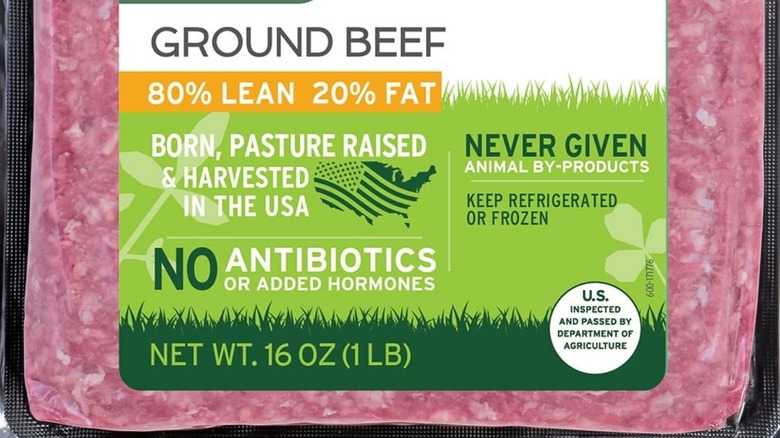
When shopping for meat, it's good practice to know the common phrases on beef packaging and what they mean. For instance, it's helpful to know the truth about grass-fed beef and to compare grass-fed vs. grain-feed beef to get a better understanding of where your beef comes from and how it will taste. Another label you have likely come across is "pasture-raised," which has to do with the cows' living conditions rather than their diet. However, you should view this label with a critical eye since its meaning is largely up for interpretation.
In theory, pasture-raised cattle are raised outdoors on grassland, rather than being confined to stalls or tight, indoor living conditions. This practice is praised for its humane, ethical approach to raising livestock for food. However, the problem is that the label "pasture-raised" is unregulated by the USDA, meaning its loose definition allows food companies to establish their own interpretation, which could range from cattle that is raised completely on pasture, to cows that spend only a fraction of their time outside in small spaces. Thus, while pasture-raised sounds nice, without certified backing, its difficult to know if it's a gimmick or truly a humane practice.
It's also important to keep in mind that pasture-raised doesn't necessarily mean that the cows are fed only grass — instead, the farmers may feed them both grass and grain (unless otherwise indicated). Similarly, grass-fed cows aren't necessarily eating only grass or living completely on pastures, unless it's certified 100% grass-fed.
A better way to verify humane farming
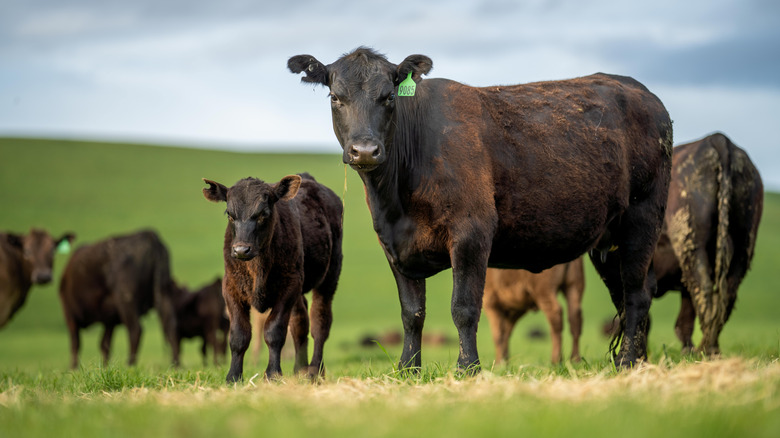
Fortunately, there are better ways to verify if the beef you buy comes from humane farms. Look for certifications from independent, third-party organizations like A Greener World (AGW) and the American Grassfed Association (AGA), which perform inspections to verify humane farming practices. Specifically, you can guarantee truly pasture-raised cattle by buying beef labeled with the following certifications from A Greener World: Certified Animal Welfare Approved, Certified Grassfed, Certified Non-GMO, and Certified Regenerative by AGW.
A Greener World's Certified Animal Welfare Approved program is considered among the strictest animal welfare certifications because of its strong stance on pure pasture-raising. This certificate is only awarded to independent farmers and is a "birth to slaughter program," meaning it monitors the welfare of the animal's entire life-cycle.
Additionally, American Grassfed Association requires that their certified animals be unconfined, pasture-raised, and receive most of their diet from pasture grazing. Meanwhile, Certified Humane is another popular certification program for animal farming welfare, but its standards are not as strict as AGA or AGW. It doesn't require strict 100% pasture-raising, but states that, "beef cattle must be raised with continual access to the outdoors."
Other ambiguous and sometimes deceptive labels to watch out for on your beef include words like "all natural" and "organic," which don't have anything to do with how the animals are raised. Additionally, "humanely raised" is an unregulated phrase, as is "cage free," which doesn't necessarily mean the chickens are raised in large, open spaces.