

What's Happened To Ghia Since Shark Tank?
We may receive a commission on purchases made from links.
Ghia is a non‑alcoholic apéritif and spritz brand launched by French‑born founder Melanie Masarin. On "Shark Tank" Season 14, Episode 4, she pitched the brand as a sophisticated, alcohol‑free alternative for people who wanted the taste and social ritual of a cocktail; all the good stuff but without the booze.
If you've ever ordered a mocktail, you may have received one that uses a lot of sugar to make up for the lack of alcohol. Or, somewhat worse, a $14 mocktail that's simply sparkling water, citrus juice, and a splash of syrup. Ghia, on the other hand, is an alcohol-free liquor with a strong profile of complex bitter and herbal notes like a proper apéritif, such as Campari or Vermouth.
Masarin's business idea was inspired by summers she spent in the Mediterranean and a desire to offer a "grown-up," sober‑curious drinking option. At the time, Ghia already had a strong customer following, previous funding, and a well-defined brand aesthetic and mission.
What happened to Ghia on Shark Tank?

There have been plenty of great alcohol products on "Shark Tank", but Masarin pitched Ghia with a clear vision of wanting to provide a non‑alcoholic aperitif that felt legitimate enough to drink at any social function or party. She brought samples of Ghia's ready‑to‑drink spritzes, called "Le Spritz," as well as the bottled apéritif. She explained that the drinks could be enjoyed straight or mixed into a cocktail. Her ask was quite bold compared to the average "Shark Tank" pitch: She was seeking $250,000 in exchange for 5% equity; the average equity given is around 27%, according an analysis done by The Hustle.
Masarin broke down the math, explaining that the bottled aperitif cost around $6.50 to produce and sold for about $38, providing about 12 servings per bottle. Spritz cans cost about $1.25 to make and retail for about $5. When Ghia hit the "Shark Tank" stage, it was said to have already done $2.5 million in sales. Two Sharks, Daymond John and Lori Greiner, passed because they didn't care for the taste of bitter, citrus‑heavy drinks.
Mark Cuban, who has been known to invest in health-conscious brands, worried the beverage business was too costly and competitive to break into. One shark took the bait: Robert Herjavec offered exactly what Masarin asked for. Right before she accepted, Kevin O'Leary slid in with an offer: $250,000 but for 10% equity. Masarin declined, and in a surprising twist, Herjavec withdrew due to Masarin not accepting his offer before hearing out O'Leary's offer. In the end, Ghia left "Shark Tank" without a deal, just like another mocktail company that pitched on the show, Little Saints.
Ghia after Shark Tank, then and now

It's normally never the end of the road for those who leave "Shark Tank" without a deal. Although Ghia didn't secure investment from the Sharks, the brand didn't struggle, but rather accelerated forward. The "Shark Tank" spotlight has been known to give company brand awareness a big boost. Ghia raised around $6.5 million from investors after appearing on "Shark Tank." Its retail footprint has also expanded, going from around 750 accounts at the time of the "Shark Tank" pitch to over 1,500 stores, bars, and restaurants across the U.S. and Canada. Ghia is also sold online on Amazon.
In April 2023, Ghia relaunched its signature aperitif with a revised recipe and a new bottle design. The update increased the concentration of the drink to make it more cost-efficient for the customer. The new bottle's design became more unique, using a ribbed glass to add texture. Some original ingredients, like fig, were swapped for plum, date, and rhubarb to maintain sweetness and use ingredients that provided more consistency.
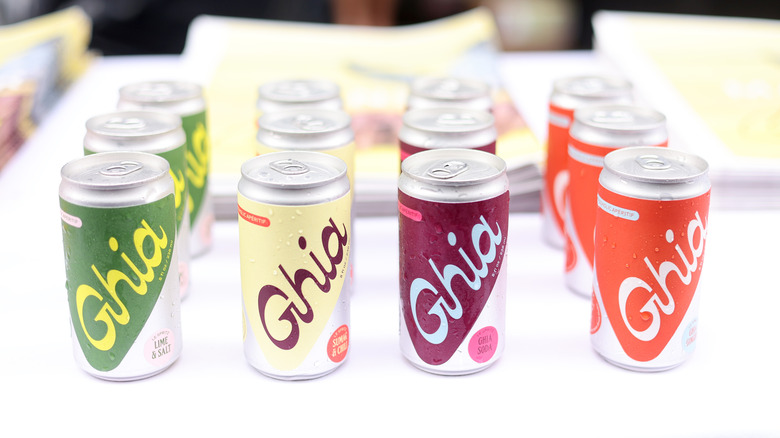
Besides the original apéritif and canned spritzes, Ghia has also expanded its product catalog. The company now offers new flavors like Sumac & Chili Le Spritz and a Berry apéritif that uses strawberry and black currant juice. The brand branched into lifestyle and merch territory, selling things like cocktail glasses, bottle openers, shirts, and curated gift sets. Valuation estimates vary — at the time of "Shark Tank," it was said to be at $35 million, and in 2025 it may now be around $50 million.
What's next for Ghia?

Going into 2026 and beyond, Ghia seems positioned to continue its upward trajectory. The movement towards sobriety and being sober curious has only strengthened in the past few years, setting Ghia up for success. Especially those in the Gen Z generation are choosing to drink less or no alcohol, and by extension experimenting with alcohol-free beverages such as Ghia so they don't feel left out in social settings and bars.
If these trends continue, the non-alcoholic spirits space in the United States is expected to be worth $85 billion by 2033, according to a study by The Spirits Business (via Natural Origins). Ghia does face other competitors now, such as Kin or Seedlip, but it has already established itself with a unique offering and strong customer base.
In a Substack interview on Good Drinks, founder Melanie Masarin said that the company works on so many new flavors but is careful with how they are launched. She's considered more bitter and dry apertifs that are popular in Europe but isn't sure if they would fare well in America, and hinted at going into a new beverage category.