

You're Completely Wasting This Cut Of Beef If You're Using It For Stew
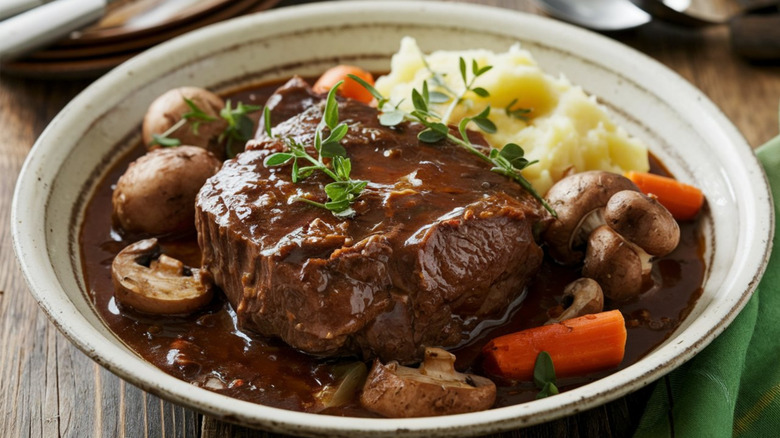
A rich bowl of beef stew doesn't need much else to be a complete meal. The succulent chunks of meat and tender vegetables in a deeply flavorful, deliciously thick broth check all the right boxes. However, avoid the costly mistake of using a premium cut to make the dish. While it may seem reasonable to suppose a pricier cut makes a better stew, in an interview with Tasting Table, Jesse Moore, a corporate chef at Cargill Protein North America, says high-end cuts aren't ideal for stews. "Those types of cuts are wasted in the long cooking times," he explains. Prime cuts like ribeye, a favorite of Michelin chefs, are pricey largely because of their texture, which is easily apparent without extensive cooking. A home-cooked slow cooker beef stew, on the other hand, tenderizes the meat at a low temperature over a longer time frame. In fact, one of the reasons multiple versions of beef stew are found across cultures in most parts of the world is that the dish is economical and hearty, meaning it can be made with cheaper cuts of meat.
Now, before you ask your butcher for their lowest-priced cuts, note that they may not be the perfect starting point either. Moore discourages using lower-priced lean cuts of meat since they don't have enough fat to imbibe the stew with heartiness. Instead, the meat needs to contain a good amount of fat and connective tissue, which can then break down over the extended cooking time to impart flavor into the dish while also retaining enough texture so that the chunks of meat remain juicy.
How to get the most flavor and texture out of the beef for your stew
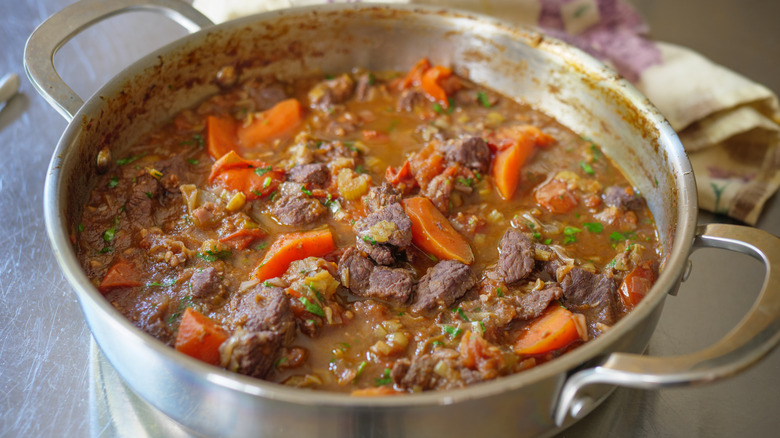
Beef flavors the broth and also doubles as the solid component in beef stew. Therefore, the cut you use needs to work particularly hard. A good way to remember the meat you should be buying for tender beef stew is that it should come from a particularly hard-working muscle of the animal. The chuck is usually a good cut because of the dense muscles, connective tissue, and fat it contains. Other cuts like brisket or short rib also work well, and all of these options are cheaper than top-of-the-line cuts like ribeye. Bone-in cuts like short ribs bring even more flavor to a stew from the bone marrow. Once you have the right cut of beef, you can maximize its taste by searing it before using it in stew. This browning adds depth of flavor, and you should then roast your vegetables in the same pot, scraping up the brown bits stuck to the bottom by deglazing it.
You don't need to be concerned about the toughness of the cut, since slow cooking breaks down tough connective tissue, and the pieces of meat are sufficiently tenderized by the time the dish is served. If in doubt, let the stew cook for longer to get the desired tenderness, but be careful not to cook the meat to the point where it dries out. For an ideal texture, the beef chunks should retain their shape and not fall apart. The right cut is crucial, but overcooking the beef is one of several mistakes that can ruin a good beef stew.
Static Media owns and operates Mashed and Tasting Table.