

What It Was Like Eating At The First Waffle House
We may receive a commission on purchases made from links.
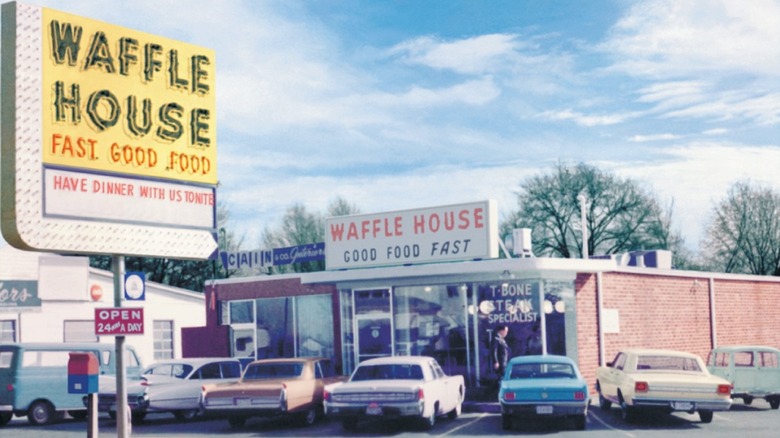
Every person who opens a restaurant hopes for success, but nothing could've prepared the two friends who opened the very first Waffle House in 1955 for how their brand would shape the entire country for decades. Joe Rogers Sr. and Tom Forkner were neighbors on a simple yet noble quest to create a nice community hangout spot that offered good food at convenient prices. Their idea has since led to the creation of over 40,000 new openings in the modern job market, and fed millions of people over the years.
Nowadays, we all know and love Waffle House. But the first restaurant in the chain was quite novel for its time. Even the concept of dining out was unfamiliar territory because most Americans cooked every meal at home. It wasn't until the '60s when more Americans went out to eat on a regular basis. What's even more surprising is that this massive brand didn't begin in a bustling city like New York City or Chicago. Waffle House began in a small town in Georgia called Avondale Estates.
Have you ever wondered what it would be like to visit that original diner in the 1950s? Read on to learn more about what eating at the first Waffle House was really like.
Like modern Waffle House locations, the original restaurant was open 24/7
One of the most important rules for eating at Waffle House is to avoid the sketchy hours between 2 and 3 a.m., as this is when rowdy drinkers may stumble in looking for trouble with a side of bacon. Waffle House is a gift we may not deserve because we have the ability to get comfort food 24/7, and this has led to some scary headlines about late-night fights breaking out.
You may be surprised to learn that the first Waffle House was meant to be a beacon of hope after a night of drinking. The founders wanted to create a welcoming space that served the entire community, day or night, every day of the year. It may have led to a lot of chaos in the modern day, but the goal was entirely wholesome. We're still waiting for the verdict on whether or not customers back in the '50s ever brawled at the original location.
Despite the occasional startling headline, people are comforted knowing that their local Waffle House will always strive to serve up delicious food 24/7. Even during a major catastrophe, the employees will do their best to keep those doors open. Waffle House has built a reputation for being reliable enough that FEMA invented the Waffle House Index, which accurately gauges how devastating a natural disaster is based on how many locations are operating with a limited menu or closed completely.
The interior had a blend of cozy wood paneling and clean stainless steel

If you ever find yourself near Avondale Estates, Georgia, you can visit the original Waffle House location, and step back in time. While it's no longer a functional restaurant, the birthplace of the iconic franchise has been preserved to commemorate its fascinating history. Once you step inside the museum, you can pretend you're living in the '50s.
The interior balances coziness with a futuristic glow, with the intention behind the design to make customers feel good about the cleanliness of the establishment. There's wood paneling all around the kitchen to highlight frames advertising popular menu items. The counters, and the backs of the booths are also wooden. The contrasting kitchen area is open, so diners could watch their food being prepared with care, using the impressive stainless steel appliances. The stools along the central counter were also made with steel, and soft cushions. And of course, no diner experience would be complete without easy access to ketchup, mustard, salt, pepper, napkins, and a menu. Waffle House had a convenient setup along the counter so that every patron could grab anything they might need during their visit.
An interesting fact about the first Waffle House is that its ceilings are tall, at least compared to other diners from that era. The belief was that this would make the place feel more germ-resistant. The layout encouraged friendly conversation between neighbors, and being able to watch the cook prepare everything each step of the way also built trust.
You could eat like royalty at an impressive price
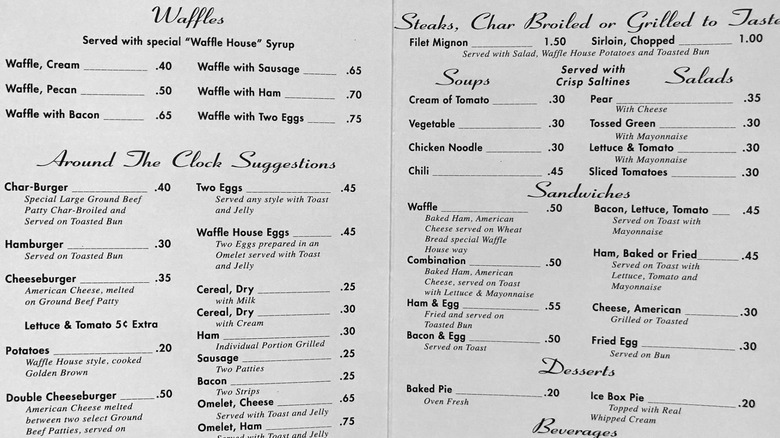
Are you the type of person who squints at the gas prices or grocery store labels in old movies, just to see how much inflation has ruined our lives in the modern day? If you take a look at the original 1955 Waffle House menu, your eyes might pop out of your head. An employee who helps run the Waffle House Museum declared that anyone who walked into the first Waffle House with $25 could try the entire menu.
To give you a better idea of how rich you would feel stepping back in time, let's look at a few staple menu items. One big waffle served with cream and syrup only cost 40 cents. Two eggs prepared any way with toast and jelly was 45 cents. Orders of sausage and bacon were a quarter apiece, while a double cheeseburger would set you back 50 cents. Waffle House also baked fresh pies in-house every day back then, and diners could take an entire pie back home for just $1.25. Those pies are just one of the many old-school Waffle House dishes we want back on the menu.
Another noticeable difference between the first Waffle House menu and the current one is that there weren't any combo meals listed. The original Waffle House had breakfast meats, eggs, toast, waffles, potatoes, and more, but diners had to build their own meals based on how hungry they were.
The menu was simpler and more wholesome back in the '50s
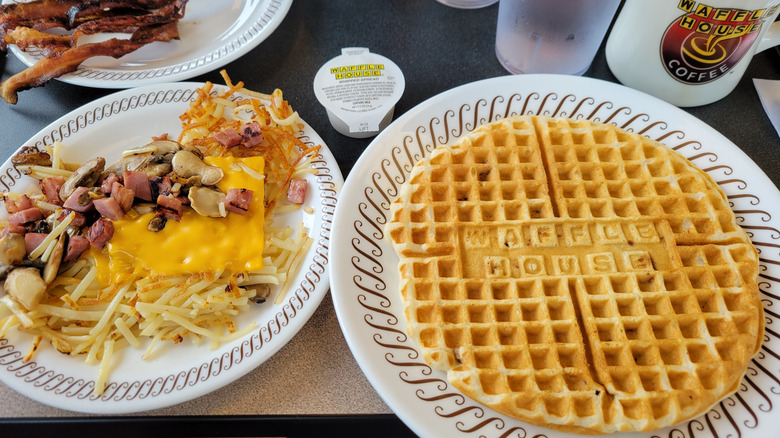
Don't get us wrong, a giant plate of greasy diner food can truly heal the soul. However, some modern Waffle House menu items, such as the Cheesesteak Melt Hashbrown Bowl, can give you a little bit of anxiety about your heart health.
Back in the '50s, Waffle House struck a beautiful balance between indulgence, and nutrition. Sure, you could order a fluffy pecan waffle with bacon, but you could also round your meal out with a bowl of vegetable soup or a pear salad. Ordering each menu item a la carte, rather than a combo plate, also made it easier for diners to eat intuitively. While it's definitely still possible to order a healthy meal at Waffle House, you have to avoid a lot of temptation.
Having lots of items to choose from is exciting, but there's something really special about an old-school diner menu, especially one that sold a high-quality cut of beef, like the filet mignon at the original Waffle House. The $1.50 price tag included a salad, potatoes, and a toasted bun.
You could set the vibe with a jukebox
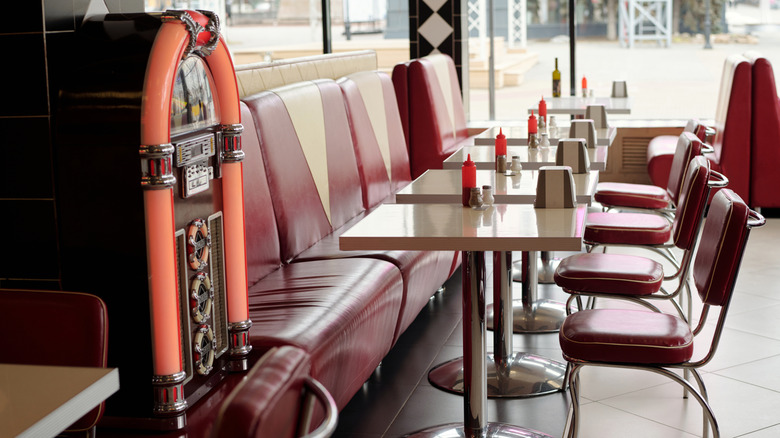
When most people imagine a traditional American diner from the 1950s, their vision includes a big jukebox that could flip through all kinds of vinyl records for only a dime. And, yes, the first Waffle House took part in this fun. Whether it was a group of teenagers hanging out after school, or adults trying to perk up before work, everyone was welcome to help set the mood while they ate together.
What you might not know about Waffle House is that the franchise takes its music very seriously compared to other diners throughout history. What defines this passion? Well, not many chains or independent businesses care enough to invent its own record label. Waffle House believed in the magic of jukeboxes enough to start Waffle House Records in 1984, and then it got even cheekier when it handed out Golden Waffle awards to the singers involved in its Waffle House Records projects. One of the label's most iconic songs to date is "There Are Raisins in My Toast" by Danny Jones.
While the first Waffle House didn't have its own branded records when it opened, it's fun to think about the building blocks that were set in place throughout history. You can still rock out to Waffle House Records the next time you visit, but keep in mind that the franchise tries to change with the times. Instead of the charming analog jukeboxes that accept coins, modern Waffle Houses have digital ones.
Your food would come out on fun branded plates with a syrupy font
The first year after opening a new business is intimidating because you're not sure how successful it will be. For a restaurant, the second year can sometimes be even scarier. The hype surrounding your new eatery has died down, and the business now has to rely on regular customers to keep turning a profit. But once Waffle House got over that initial hump, the founders decided it was safe to invest in branding to elevate the dining experience.
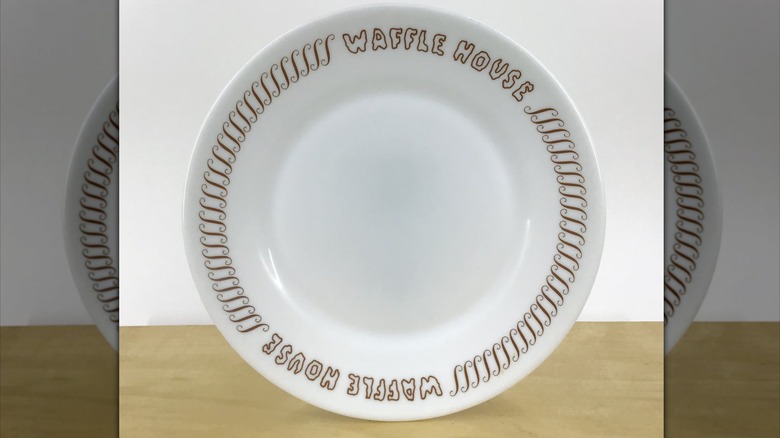
A small detail that delighted Waffle House diners in the early '60s was the cute plates spelling out "Waffle House" in a font that looked like it was dripping with syrup. The plates had a creamy white base, while both the logo, and the pattern around the border, were a syrupy brown. If that didn't get you in the mood for some waffles, what else could?
All good things must come to an end eventually, though. There are plenty of retired restaurant logos that never should have changed because they were full of personality. Waffle House only used its syrupy logo for around 10 years before switching to the bold, black lettering in yellow boxes that we all know today. No one can deny that this change was brilliant for brand recall, but those plates should've remained in circulation. While the plates that Waffle House uses nowadays aren't ugly by any means, they definitely feel impersonal by comparison.
Eating at Waffle House felt like a special experience rather than an everyday occurrence
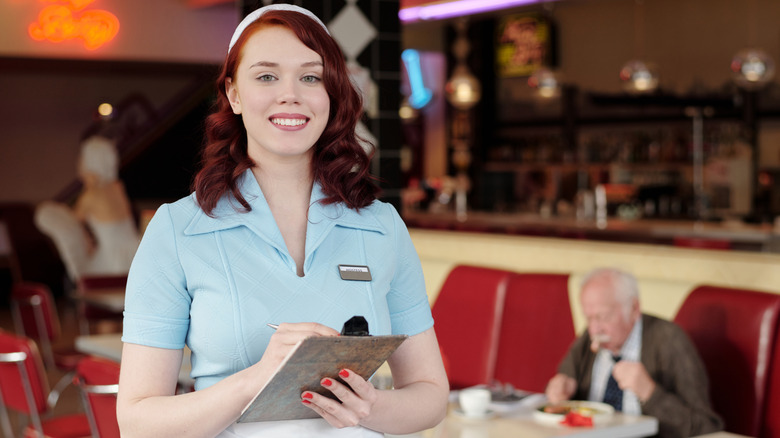
Trends come and go, and sometimes, they're cool enough to resurface decades later. For example, banana bread and meatloaf are a couple Depression Era foods making a comeback now. In a rare and incredible cultural feat, retro diners have never gone out of style. If they did, the Waffle House brand would probably not be as vast as it is today.
It's easy to take Waffle House for granted since it feels like you can find one around every corner. To us, classic American diners may not be much of a novelty. But it's important to remember that, back in the '50s, eating out was a real treat. After World War II, with the economy shifting into high gear, new restaurants slowly cropped up around the country. Diners as we know them were born in the Northeast, and they spread like wildfire once people discovered their charm, and convenience. However, that ripple effect didn't immediately reach all the way down South, into small towns like Avondale Estates, Georgia. There, diners were still a rare find in the 1950s.
The lack of a major restaurant network in Avondale Estates, combined with the eat-at-home culture of the '50s, created a sizable risk for the two friends opening the first Waffle House. Thankfully for us, the community flocked there, and made it possible for the brand to expand. Today, there are over 1,900 Waffle House locations throughout America.