

The First Hot Chocolate Wasn't Sweet At All – It Probably Tasted Like Corn
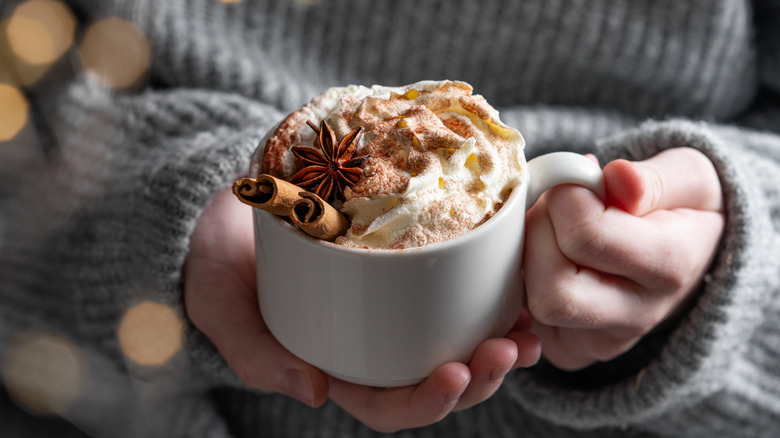
It's not uncommon for foods to stray from their roots over time. Ketchup started off as fermented fish sauce long before tomatoes came into play. The down-home favorite that is the hamburger likely evolved from the hamburger steak, a pricey restaurant menu item in the 1830s. Hot chocolate, a traditionally sweet drink, began as a bitter beverage dating back to 500 BC. So, how did it evolve into the sweet winter beverage we enjoy today? The untold truth of hot chocolate is a fascinating story spanning several centuries.
Like many popular foods that have been around longer than you realized, the original hot chocolate bears little resemblance to the modern variety. The earliest versions of hot chocolate are linked to ancient Mayans, who incorporated ground-up seeds from the cocoa plant with water, cornmeal, and a dash of chili. To blend, Mayans would pour these ingredients back and forth between two vessels to form a foamy, lightly whipped texture. As raw cocoa is actually quite bitter, the mixture was certainly not sweet and probably tasted noticeably of corn.
In addition to having a vastly different flavor from the drink we enjoy today, the earliest hot chocolate was not hot at all. The beverage was served cold, and it actually stayed that way for quite a few centuries. In the 1500s, when conquistador Hernán Cortés introduced Spain to Mayan hot chocolate, the chilled temperature remained fashionable.
How did hot chocolate become sweet?
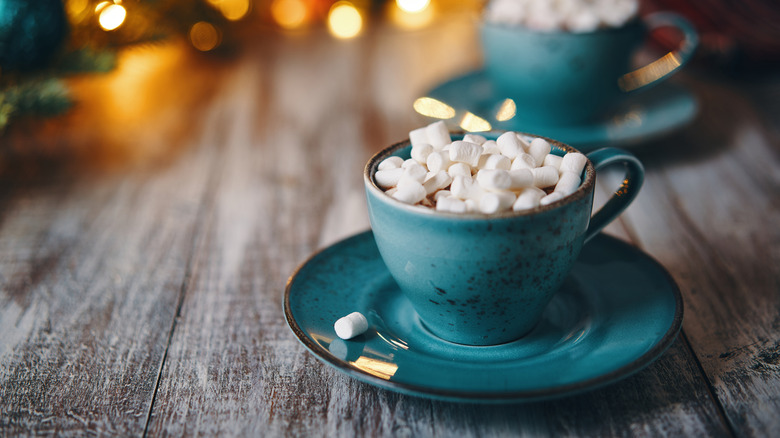
It took centuries of innovation for hot chocolate to go from cold and bitter to warm and sweet. When the original Mayan drink gained favor in the court of the Holy Roman emperor-turned-King of Spain, Charles V, it started to take on a sweet flavor. Over time, the chili disappeared, and sweeteners took its place. People also began drinking the beverage hot.
Hot chocolate was something of a luxury item for a long time, mostly enjoyed by royalty and the upper class, until chocolate itself became more widely available. In the mid-1600s, stores selling chocolate began to crop up in London, a phenomenon that gained prevalence during the 1700s, but remained exclusive to wealthy patrons. As time went on, increased access to different types of chocolate and various uses for them helped propel the popularity of hot chocolate. By the end of the century, the Royal College of Physicians popularized a Jamaican recipe that mixed chocolate with milk, helping create the version of hot chocolate we enjoy today.