

Every Restaurant Where The Real Chef Boyardee Worked
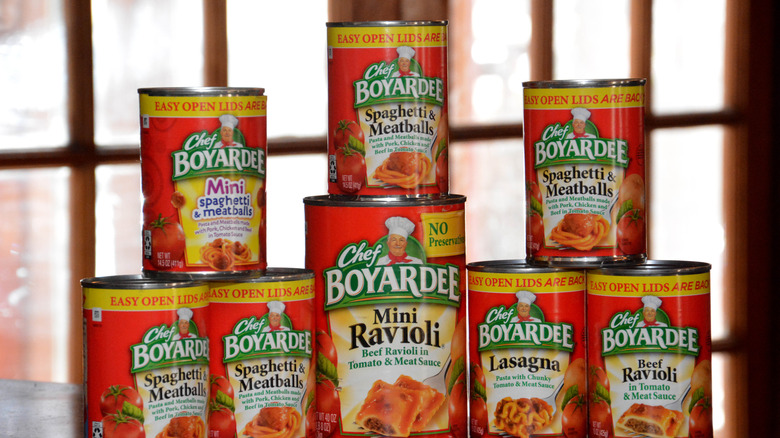
Chef Boyardee: the famous red and yellow cans that contain the convenient and nostalgic beef ravioli, spaghetti and meatballs, beefaroni, and more. Unbeknownst to many, the company's founder was, in fact, a real person named Ettore "Hector" Boiardi, who was born in the late 19th century in Piacenza, Italy and eventually immigrated to New York.
Boiardi began working as an apprentice at a local restaurant, La Croce Bianca, at age 11. He wasn't exactly cooking but rather peeling potatoes and other odd jobs, but he also learned valuable culinary skills working in Paris and London. He joined his brother, Paul, in New York, who got Boiardi a job in the Plaza Hotel kitchen. From there, his popularity skyrocketed as he began to impress people with his cooking talents. He then became the head chef at the restaurant, Barbetta on 46th Street in New York City, and shortly after as a chef at Greenbrier Resort in West Virginia.
Boiardi later moved to Cleveland, Ohio, to serve as the chef for the Hotel Winton, then went on to start his first restaurant with his wife. Together, they opened Il Giardino d'Italia, or The Garden of Italy. From the immense success that the restaurant saw and at the request of many locals, Boiardi opened the Chef Boiardi Food Company in 1928, a canning and processing plant to mass produce his recipes. Still passionate about restaurants, Boiardi also opened Chef Boiardi's in 1931.
Boiardi's success led to a profitable company
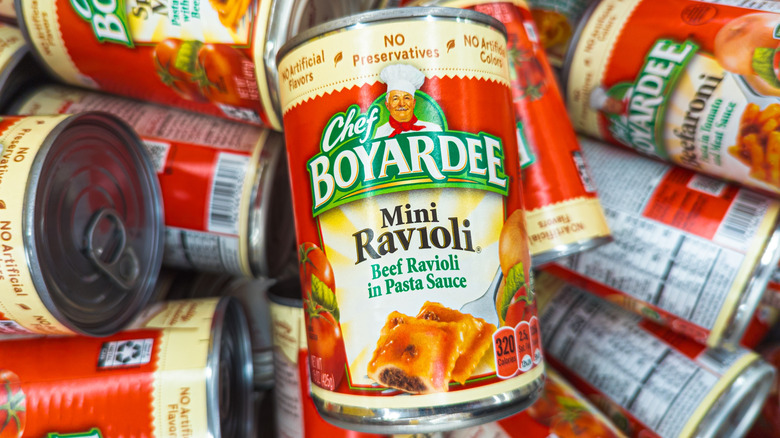
Boiardi became so successful as a chef that he was even invited to cater President Woodrow Wilson's wedding, after which, the president asked him to take charge of a formal welcome-home meal for American World War I soldiers. His popularity and talent in the kitchen eventually led to the mass production of his recipes, which prompted Boiardi to become the pictured logo of his products with the classic white chef's hat and red neck tie that we all know today, and to change the spelling of his name to Chef Boyardee.
He moved his company to Milton, Pennsylvania with the intent of growing the tomatoes for the products themselves, as demand had increased so much. Boiardi profited during the Great Depression as the foods he produced were cheap and filling. By the end of World War II, sales were so high that American Home Foods purchased the company, of which Boiardi continued to be a consultant until the late '70s.