

This State Dominates US Lobster Harvests By A Huge Margin
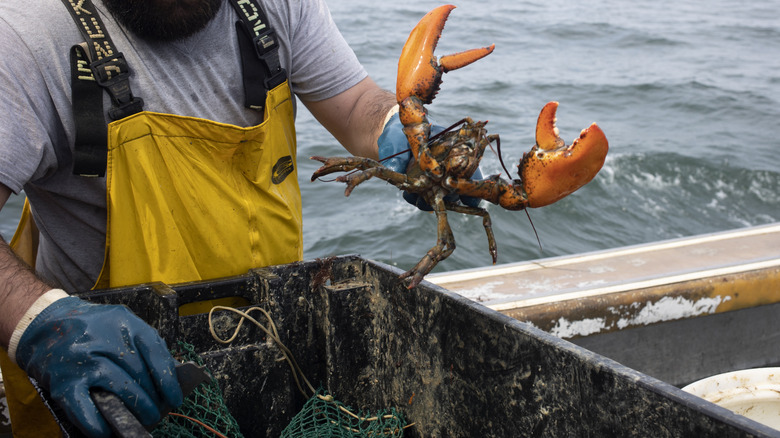
In particular parts of the country, regional specialties simply dominate the culinary landscape: barbecue in Texas and the South, pizza in the New York and Chicago areas, and seafood throughout New England. Among the many fish and crustaceans that grace northeastern plates, lobster often stands above the rest as a symbol of succulent luxury. One state stands out far beyond the rest when it comes to hauling in these delicacies. That's Maine, a state long associated with lobster fishing and cuisine.
According to the federal NOAA Fisheries data, commercial fishermen in Maine harvested 87,229,896 pounds of American lobster in 2024, worth a stunning $536,171,172. That's many times more than second-place Massachusetts, which brought in 16,511,281 pounds, valued at a comparably meager $115,588,769. The numbers drop even more steeply after that, with New Hampshire harvesting 7,624,136 pounds of lobster, followed by 1,147,499 pounds in Rhode Island. No other state caught more than a million pounds in 2024.
Although their habitat ranges from Maine to North Carolina, this one-state lobster dominance is nothing new. Maine fishermen have been catching lobster since the 1600s, making it one of America's oldest continuing industries. It's been the nation's top lobster producer for over three decades, thanks in part to its proximity to fertile lobster fishing grounds in the Gulf of Maine, Georges Bank, and other Southern New England waters.
Maine's lobster harvests are massive, but sustainability is key
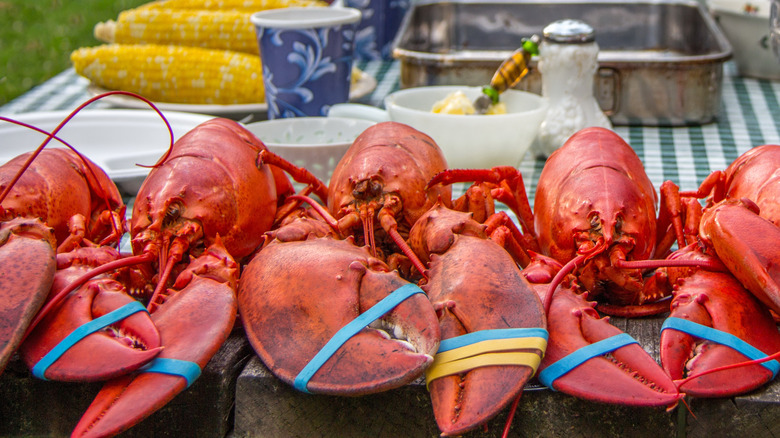
Despite the significant annual harvest, the Pine Tree State's lobstermen aren't simply grabbing as much as they can, whenever they can. Strict sustainability standards are followed, including returning under- or oversized lobsters to the water, marking and protecting egg-bearing females to help breeding stocks, and using low-impact gear and traps.
Lobsters weren't always the high-priced luxury they are in today's culinary world. Historic accounts tell of the crustaceans being so plentiful that they were more commonly eaten by the poor, prisoners, enslaved people, and others who couldn't afford or access more desirable proteins. They became a delicacy in the late 19th century, soaring again in popularity decades later when they escaped World War II-era rationing rules. Today, lobster are an infrequent enough treat that many foodies need to remind themselves to avoid the mistakes everyone makes when buying lobster, like overlooking a lobster's physical condition, when they choose to indulge.
So, the next time you're tucking into a lobster roll or any other sweet, succulent lobster dish, you likely don't have to wonder where your meal was pulled out of the water. In most cases, that's the cold, clean waters off the coast of Maine.