

The Shady Things Alleged About Costco's Rotisserie Chicken Supplier
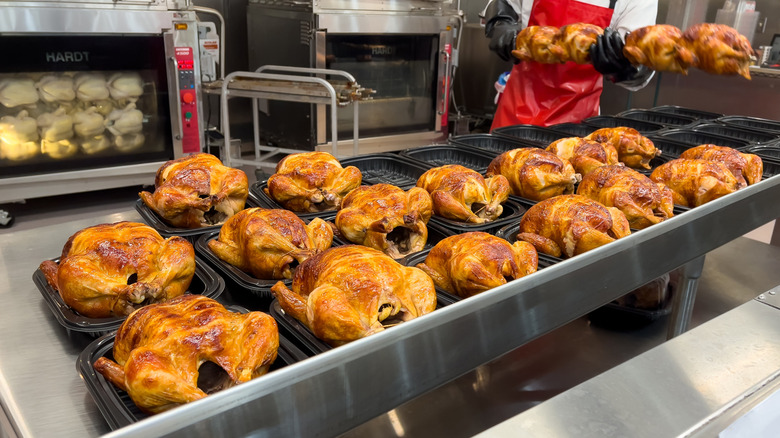
Like many other offerings at Costco, the warehouse retailer's rotisserie chicken has developed a cult following among shoppers. The store's coveted chicken is what's known as a loss leader in the retail industry, meaning it's intentionally sold below cost in an effort to get customers into the store, where they'll hopefully buy more expensive items. Costco is able to maintain these rock bottom rotisserie chicken prices through a strategy called vertical integration, which in this case means that the store controls every aspect of its chicken production. Costco does this through the Lincoln Premium Poultry plant in Fremont, Nebraska, which officially opened in 2019 and reportedly cost $450 million to develop.
Costco has been open about its commitment to sustainability and environmental protection. The store has also been vocal about the importance of good animal welfare and the use of humane practices in its facilities. These claims have been contradicted by reports of issues at Lincoln Premium Poultry, issues that affect Costco shoppers, community members, and the chickens being processed. The plant has been plagued by salmonella outbreaks since opening in 2019, while people living in and around Fremont, Nebraska have complained about water contamination and foul odors. There are also reports of animal cruelty, and some claim that poor conditions directly link to the frequent bouts of salmonella. While affordability is vital to consumers, especially in these financially turbulent times, it can't come at the expense of safety, sanitation, and animal welfare.
Repeated salmonella outbreaks
When it comes to salmonella, a type of bacteria associated with uncomfortable symptoms like nausea and diarrhea when consumed, chicken is a major culprit. While fully cooking chicken is key to reducing the chance of foodborne illness, manufacturers must also do their part. To this end, it appears that Costco's Lincoln Premium Poultry facility is having an exceedingly difficult time keeping its plant free of harmful bacteria. According to a report from Farm Forward, which reviewed inspection data gathered by the USDA, Costco's plant exhibited high levels of salmonella contamination since opening in 2019. Farm Forward's analysis determined the Lincoln Premium Poultry plant exceeded the USDA-mandated salmonella limits about 92% of the time.
Costco estimates that it sells millions of rotisserie chickens each year, which is extremely concerning in light of the salmonella risk present at its chicken processing plant. However, there have been no recent reports of the chain's rotisserie chicken leading to foodborne illness since the Lincoln plant has been in operation. Costco did experience a salmonella outbreak in 2013 when Foster Farms supplied its rotisserie chickens. Another incident in 2016 involved chicken salad made with Costco's rotisserie birds.
Reported animal mistreatment and cruelty
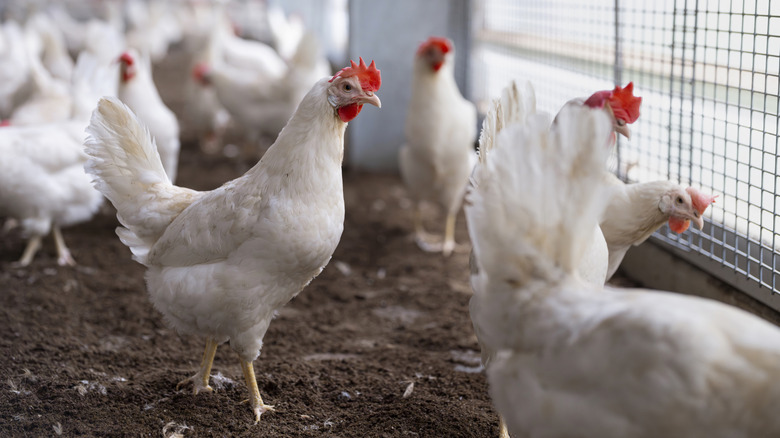
For many meat eaters, finding retailers that use sustainable farming practices is an ongoing concern. Chicken farms can be particularly complex undertakings, and companies are encouraged to adopt sustainable practices whenever possible. This entails allowing animals to roam freely, using feed crops that don't tax the environment, and ensuring chickens remain healthy and protected from disease are crucial tenets of sustainability. These processes ensure that animals are reared in proper conditions, but they also protect consumers from foodborne illness. Consider that research shows poor sanitary practices in poultry processing facilities causes cross-contamination, which increases the risk of salmonella outbreaks.
Though Costco talks a great game when it comes to sustainability and animal welfare, these statements don't offer a fully accurate view of its Lincoln Premium Poultry facility. An investigation conducted by Mercy For Animals found chickens living in unsettling conditions, with some over-large animals being incapable of holding up their own weight due to rapid feeding. This discovery led to a lawsuit, initiated by Costco shareholders, citing executives and board members for dereliction of duty regarding animal welfare and safety. There were also reports of wounded and diseased chickens, as well as chicks being born with severe defects. These conditions were so upsetting to Costco customers that some called for a boycott of its rotisserie chicken.
Environmental risks to surrounding communities

The community in Lancaster County, Nebraska had concerns about Costco's proposed chicken processing plant early on in the project. A community email campaign highlighted overarching fears about living in proximity to the impending Lincoln Premium Poultry facility. These fears included contamination of the water and air, as well as declining property values. Just three years after the plant officially opened, compost heaps containing dead chickens were discovered in a wellhead protection area, which is an area in such proximity to wells that there is a chance of substances making their way to the water supply. Despite the risks, officials determined that Lincoln Premium Poultry committed no wrongdoing.
Shortly after that came reports about manure-contaminated litter used as fertilizer contributing to water pollution. A study conducted by the Nebraska Farmers Union Foundation and Nebraska-based environmental consulting company GC Resolve (via Nebraska Examiner) detected increasing pollution in streams located in the eastern part of Nebraska and called for more in-depth testing as a result. Lincoln Premium Poultry again disputed the findings and claimed to be fully compliant with pertinent laws regarding responsible use of the fertilizing agent. In 2023, a bill was introduced in Nebraska that would have limited lawsuit filings to people living within a half-mile of an agricultural facility. However, the bill failed to pass and, as of now, is indefinitely postponed.