

8 Rules Anthony Bourdain Lived By When Dining Out
We may receive a commission on purchases made from links.
Anthony Bourdain's big break as the man we remember to this day came when he wrote the gritty, insightful article "Don't Eat Before Reading This" for The New Yorker. In it, he laid out a number of tips and rules for diners, drawing on his insight as a seasoned chef. It was his blunt honesty and plucky voice that people fell in love with, and he continued sharing more rules for eating until the food world lost him in 2018.
Bourdain didn't create food guidelines for a particular type of person. His words and advice often transcended social classes and income levels. He lived for people and food, so it only makes sense that his content could be applied to all walks of life. Whether you're heading out for an international vacation, going to dinner with some friends, or grabbing a quick bite at a local vendor, there's a Bourdain tip that's sure to apply. These are some guidelines that Bourdain lived by when dining out, and they could completely change the way you look at food.
Don't order the Monday special
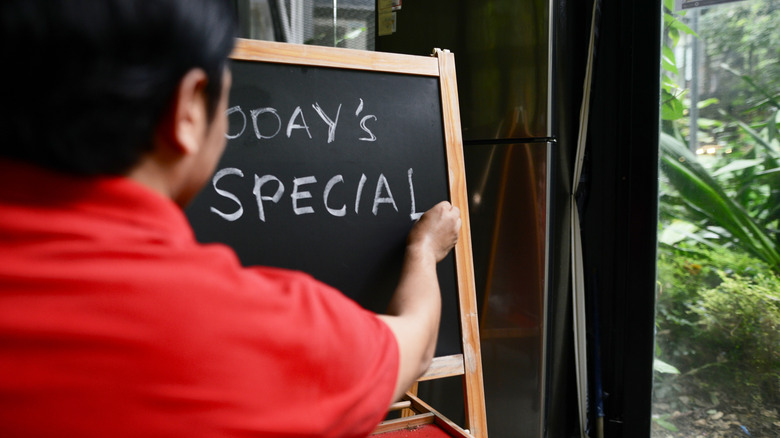
One of the tips he gave readers in his OG article for The New Yorker was to be wary of Monday specials. Bourdain advised people not to order a number of things at restaurants, but specifically to look at other menu items when the Monday special was seafood-based. This is because there used to be a pretty standard system for ordering seafood for restaurants, centered around the busy weekend service. "Many fish purveyors don't deliver on Saturday, so the chances are that the Monday-night tuna you want has been kicking around in the kitchen since Friday morning, under God knows what conditions," Bourdain wrote.
Bourdain's New Yorker article was published in 1999, so it isn't exactly breaking news decades later. However, the idea of a special being something to second-guess isn't all that outdated. I have spent nearly a decade in the restaurant industry myself, and I know that the special board is typically made up of leftover stock the kitchen is attempting to save from the waste bin. Seafood or otherwise, if there is a special early on in the week, it's very likely a last-ditch effort to push out food on its way to the trash. Hot tip: Watch out for the soup du jour, especially if it is seafood-based, for the same reason!
Watch your server when ordering
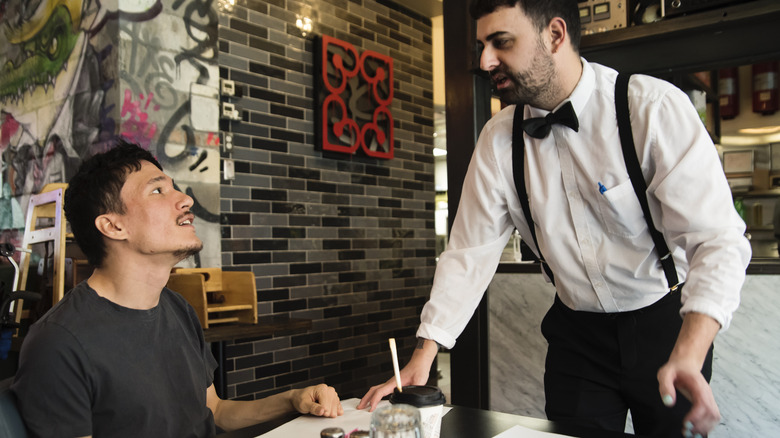
Anthony Bourdain was always in favor of restaurant staff, as he counted himself among their numbers and had great respect for the industry. Most diners may overlook their waitstaff, but Bourdain knew that those who are the face of the food are a wealth of information. As a former server, I can attest that the waitstaff are a valuable resource for those interested in the food a restaurant offers.
Most restaurant-goers don't take full advantage of the knowledge servers possess, and it's one of the biggest mistakes you can make while eating at a restaurant. This knowledge is not really that hard to access, either. In fact, you don't even necessarily need to ask your server if a dish is good. In his book "Kitchen Confidential," Bourdain explained that just paying attention to your server's reaction when you order can be telling. "Look at your waiter's face. He knows," wrote the esteemed foodie.
Even if a server can't outwardly say a dish is bad without fear of reprimand, a scrunched nose or raised eyebrow could be a hint you're making a mistake when ordering. Their distaste could be a personal preference, but it's important to remember your server is usually privy to how dishes are stored and prepared as well. Extra pro tip: If the staff don't eat the food at their own restaurant, you shouldn't either.
Don't blindly trust the crowds or review sites
Anthony Bourdain was an absolute pro at finding the real hidden gems in a city, even if he had never been there before. You may be surprised to learn that review sites were not a major part of his process in choosing where to patronize. In fact, he distrusted sites like Yelp, which he considered to be harmful to the restaurant industry in general.
"There's really no worse, or lower human being than an elite Yelper," he told Business Insider back in 2017. According to him, chefs despised the negativity of these diners. "They are the very picture of entitled, negative energy," he added. "They're bad for chefs, they're bad for restaurants." It makes sense, as those in the restaurant industry are typically people who have paid their dues, and locally owned restaurants are notoriously hard to keep running. Most food reviewers would likely know nothing about that, though.
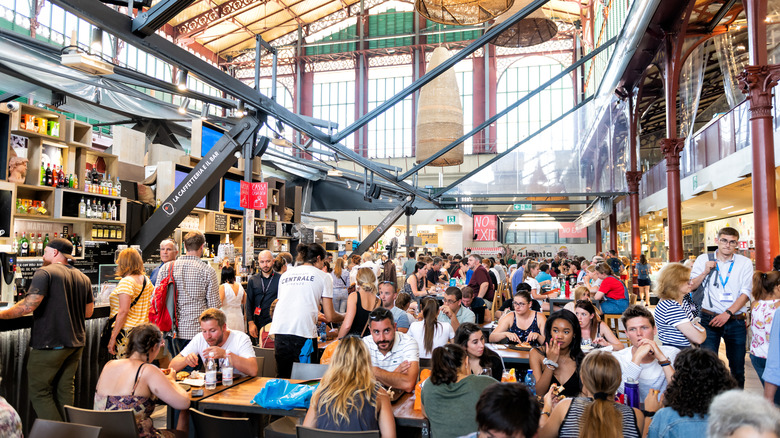
In somewhat of the same vein, Bourdain knew that the crowds couldn't all be trusted. Just because a food spot is busy doesn't mean it's good. It could just be hyped up, especially in high tourist areas. Instead, look at the crowds themselves. Is it a bunch of tourists with backpacks and sensible shoes taking up tables, or is the restaurant packed with locals? The latter is much preferred.
Go where the locals eat

Instead of simply looking for places with a ton of reviews or large crowds, Anthony Bourdain deferred to the locals. He made a point of diving into destinations and connecting with the people who live and work in an area. During his television career, the chef often visited the homes of locals, but the next best thing is patronizing eateries where they themselves spend their coin.
Street food vendors were particularly near and dear to Bourdain's heart, especially when able to eat side-by-side with locals. The thought-provoking writer and TV personality believed food was a way to connect with different cultures, and that street food did it best. Street food has a pride to it, and those who cook it are cooking for their friends, family, and community. If you bypass a popular destination's surface level by going a few streets deeper into a city, you're likely to find some gems.
If you are visiting a different city or country, reach out to the people who call that place home! Ask the people you meet on trains, in stores, and even on the street where they like to eat. This not only avoids falling into a tourist trap but also offers a more authentic experience of a destination.
Have rules about seafood
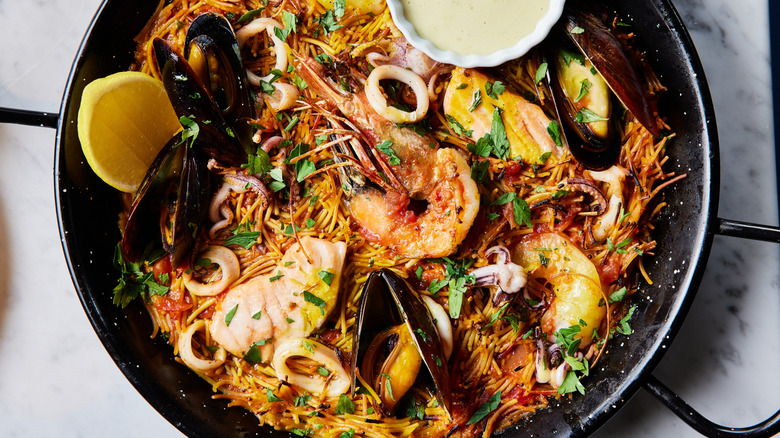
While my gas station sushi-loving self can't be trusted when it comes to seafood sense, Anthony Bourdain made his stance on certain seafood clear. His first rule immediately has my head dropping in shame, because the man advised against quick, cheap sushi. Sushi was so beloved to Bourdain that he co-authored a graphic novel about a sushi chef, but what you see in most grocery stores (and gas stations) was strictly off his table.
In addition to this steadfast rule, Bourdain was funny about his mussels. He wrote about only ordering them if he trusted the person making them or knew for a fact how the shellfish had been stored. This is some advice I would readily take, because mussel-induced food poisoning sounds like another level of misery.
Another seafood rule he mentioned in his book "Kitchen Confidential" warned of swordfish. "My seafood purveyor, when he goes out to dinner, won't eat it," stated Bourdain. "He's seen too many of those three-foot-long parasitic worms that riddle the fish's flesh." Although cooking the fish to the right temperature kills them, swordfish is notorious for parasites. Think about that the next time you see it marked up on your local high-end seafood restaurant's menu!
Don't order steak well done
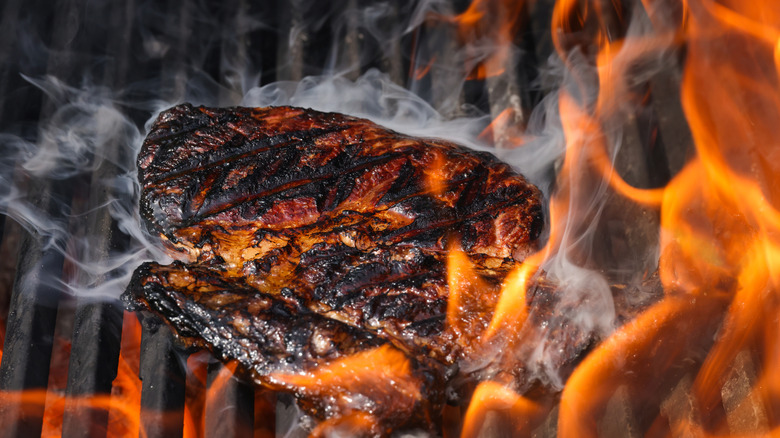
One of the most vital questions you're asked when ordering steak is how you'd like your steak cooked. This refers to steak temperature and doneness, and your answer will drastically change your experience while eating said steak. Overall, this comes down to personal preference, but if you ask your steak to be well done, you are making a major mistake. At least, a lot of professionals would think so, Anthony Bourdain included.
Most chefs consider overcooking a good steak to be akin to blasphemy. A nicer cut of meat is more likely to be served in a way that aligns with how the chef expects the dish to thrive. Bourdain revealed a gross reason to not order a well-done steak in "Kitchen Confidential." According to him, a well-done steak is more likely to be done with a cut of meat that is lower in quality than the customer is expecting.
As someone who worked in the restaurant industry for a while, I also know that a well-cooked steak could be one that has been overcooked for another table. A steak can always be cooked up, but can never be cooked down. This means that a steak that stays on the grill a little too long by mistake might be saved to cook up later for a table that orders a well-done steak.
Whenever possible, let the kitchen have creative freedom
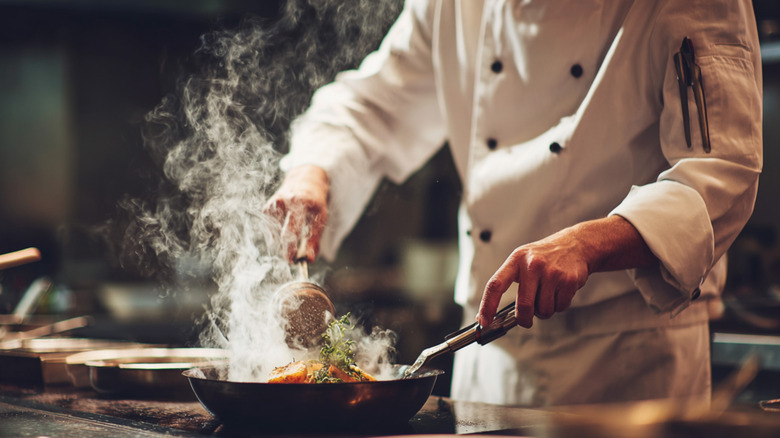
Anthony Bourdain had one trick to order the best meal at any restaurant, and that was to leave it up to the chef. Of course, this trick probably works best if you are a well-respected and beloved name in the industry like Bourdain was. However, this trick was inspired by the foodie's philosophy. He believed that the best food came from someone who cooked it with passion. It's kind of like the whole "made with love" thing your grandma was always on about.
"I'll have what you're good at." That's what Bourdain said on the Good Food podcast that chefs like to say when ordering. According to him, the request typically resulted in meals he enjoyed immensely. It gives the chef full creative freedom to do what they like, and that's when the true magic happens.
Now, I wouldn't exactly recommend this if you're walking into any ol' restaurant. If you do not know the chef and there are dozens of dishes walking out of the kitchen at a time, it's not the time to put in an unexpected request. If you happen to find the right circumstances, though, letting the chef lead may result in one of the best meals you've ever had.
Always be kind and pleasant toward your server
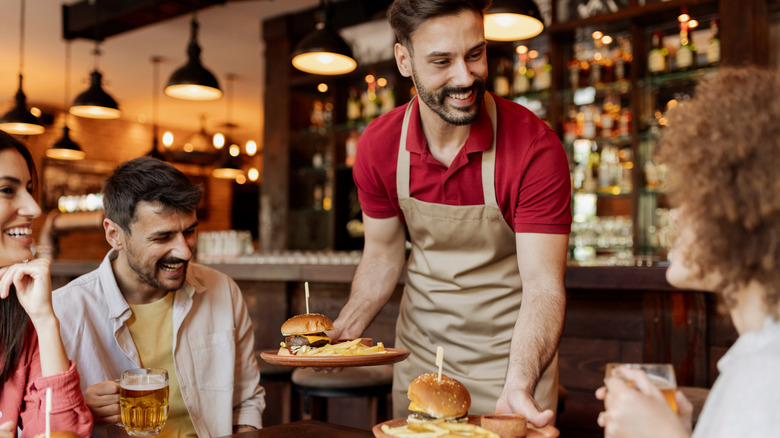
Kindness is so much more than one of the unspoken rules of dining out; it's just common decency! You would be surprised, however, at the number of people who don't consider their words or actions when they're directed at restaurant staff. I've met some amazing people by serving them food, but I've also had some of the rudest interactions of my life the same way. Anthony Bourdain, being as deep in the industry as he was, knew this as well as any restaurant vet.
Bourdain spent the vast majority of his time in the restaurant industry in the back of the house. However, he had zero respect for those who disrespected front-of-house workers. It's normal for servers to run to the kitchen with play-by-plays of what is happening in the dining room with their unpleasant customers. If you are rude to your server, know that the whole restaurant staff knows the cut of your jib.
If you're a fan of Bourdain and appreciate his direct way of speaking, just know that his bluntness did not stop him from holding kindness in high regard. He once said that he would kill a relationship if he ever witnessed someone he dined with being rude to waitstaff. "If we go out to lunch together and you're rude to your waiter ... our relationship is dead, and will always be dead," he said (via YouTube). We love a kind king!