

The Overlooked Detail That Can Ruin Whiskey's Flavor Over Time
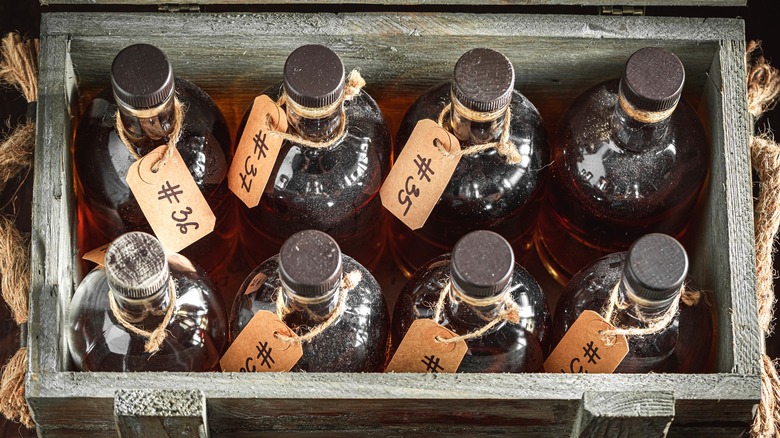
Unlike wine, whiskey stops "maturing" once it's in the bottle, so you can count ageing among the false facts about whiskey storage most of us once believed. Under certain conditions, in fact, quite the opposite is true. Whiskey can actually get worse over time with one of the most-overlooked whiskey storage mistakes: not paying enough attention to the cork. Storing your bottles in cool, dark places with optimal humidity doesn't stop the loss of flavor that happens when a wooden cork gets too dry.
Natural cork can dry out and degrade over time, creating tiny openings where air can flow in and out of the bottle. Normally, a little air is helpful; letting your whiskey breathe helps release more of the volatile compounds that give it a lot of its flavor, aroma, and character while also opening up more layers in the taste profile. If this happens during storage because of a dried-out cork, however, too much of those compounds escape, giving you a flatter, less vibrant whiskey.
This isn't a problem with screw caps or synthetic corks. If your bottles at home use those, you're in the clear. If you're a fan of whiskeys that use natural cork stoppers, such as Johnnie Walker Blue Label, check in on the condition of your corks. Other brands, such as Buffalo Trace, might use natural or synthetic cork depending on the bottle, so make sure you know what you're dealing with before storing the bottles away. Thankfully, dried-out corks rarely happen because the alcohol that evaporates inside your whiskey bottle helps keep the cork moist; it's more of an issue with older bottles that have had the same corks sitting in them for decades.
How to solve the problem of dried-out whiskey corks
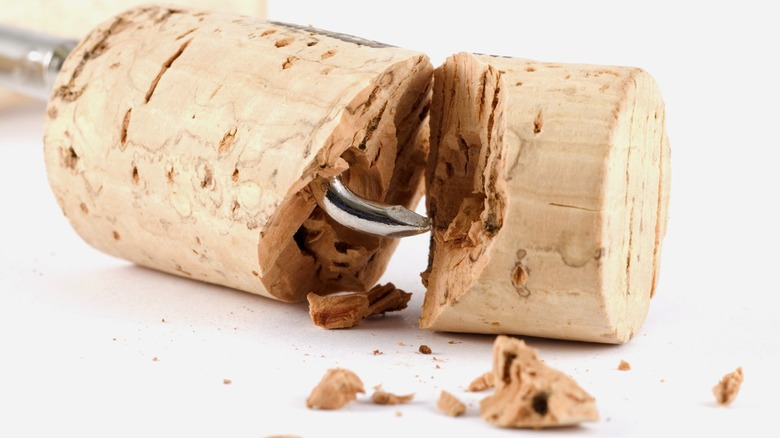
Prevention is the first step in keeping your whiskey safe from the oxidation that happens with dried out natural corks. Store your whiskey in a cool, dark place with humidity levels falling somewhere between 60% and 70%, which is optimal for keeping the cork moist without adding any risk of mold. Every now and then, check your bottle to see if the cork feels loose or brittle. If it does, you can try recorking the bottle with a new one. The wax paper trick for recorking wine bottles should work just as well for whiskey: wrap a piece of wax paper around a fresh cork to reduce friction, then gently slide the cork into the bottle. You can also try sealing the mouth of the bottle with wax or paraffin around the cork to keep it airtight. In worst-case scenarios, transfer the whiskey into another airtight bottle, making sure to filter out any pieces of cork that might have broken off inside the original one.
Whatever you do, don't attempt to keep the cork moist by storing your whiskey bottle sideways. While some experts may recommend this for wine, the higher average ethanol content in whiskey means things can go very wrong with the cork. Scientists have found that 2,4,6-Trichloroanisole — also known as TCA, the chemical compound responsible for the nasty, musky taste of cork taint — gets more concentrated in drinks with higher ethanol levels. Basically, letting the cork soak in your whiskey actively makes your whiskey taste worse, so keep your bottles upright at all times.