

The Risk You Take When Turning Canned Condensed Milk Into Caramel

Sure, chocolate sauce makes a great topping for ice cream, cakes, or even simple toast. But, if you're not a chocolate fan, or want to try something new, you can make a simple caramel sauce with a can of condensed milk. It's also the easiest way to make dulce de leche, saving time by skipping the step of cooking down fresh milk. To make a caramel sauce, all you have to do is submerge an unopened can of condensed milk in boiling water. However, turning your can of condensed milk into caramel comes with a big risk, and can lead to another mistake everyone makes when cooking with condensed milk: If you don't cook it correctly, the can could actually explode, making a huge mess that could be harmful to more than just the interior of your kitchen.
The aftermath of such a mistake is seen in this TikTok video, with the video's poster commenting "I got distracted while making dulce de leche and completely forgot about the can [of condensed milk] resting in water... After a big boom and a few hours of cleaning up the mess that went everywhere, I couldn't help but laugh to keep the tears at bay." In the video, the kitchen counters, cabinets, floor, walls, and ceiling are covered in burnt, sticky, brown-and-black caramel after the can exploded. It may look like a cartoonish mishap, but it could have been disastrous had the user been in the kitchen when it happened.
How to avoid an explosion when making caramel with canned condensed milk
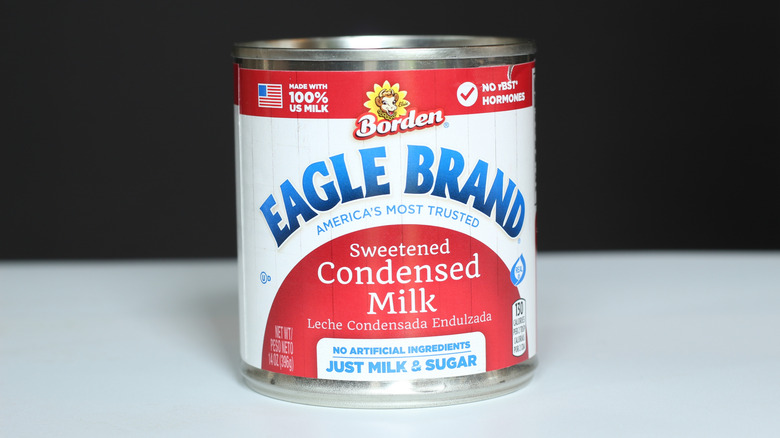
When an unopened can of condensed milk is submerged in boiling water, the heat converts the sugar in the milk into caramel. The milk and sugars in the can have a higher boiling point than water, so if the can is completely surrounded by water, the contents can't get hot enough to boil. However, if the milk inside the closed can begins to boil, it expands into gas and could lead to an explosion. So, you need to make sure the can is always submerged. To do this, use tongs to add your unopened can of condensed milk (with the label removed) to a large pot of boiling water so it's completely covered. To get a nice, thick caramel, reduce the heat and let it simmer for about three hours, adding water occasionally so the can is never above water. Remove the can from the hot water with tongs and make sure it has cooled completely before opening.
While this caramel preparation is pretty common, it still comes with risk and can lead to mistakes. On their FAQs, both Carnation and Eagle Brand, two names synonymous with condensed milk, don't recommend it. To completely avoid any explosion danger, you can pour the condensed milk in a baking dish, place that dish in a water bath, and bake it at 425 degrees Fahrenheit for about an hour, stirring occasionally. For a quick, flavorful caramel sauce, combine condensed milk with a little brown sugar, butter, and dash of vanilla extract over medium-high heat, whisking constantly until thickened. Keep a close eye on it because it's still at risk of burning, but you don't have to worry about a full explosion.