

9 Little-Known Details About Yacht Dining
We may receive a commission on purchases made from links.
If all your knowledge of yacht life comes from certain reality TV shows like "Below Deck Sailing Yacht" or "Below Deck Mediterranean," then you may have a less than realistic idea of what living on a yacht is really like. Sure, it's luxurious, but not as dramatic as you might think (at least until a storm comes up, that is). And one element of yacht life that is far more complex than you probably realize? Getting three square meals a day when you're in the middle of an ocean.
To get the scoop on all things yacht dining, we recently spoke with Chef Abby Cheshire. A private yacht chef for the last five years traveling around the globe with her clients, Cheshire is also the author of the new cookbook, "Passport to Flavor: 100 Global Dishes You Can Make Anywhere." The cookbook gives you a glimpse into what goes into being a chef on a yacht and takes you on a journey, with recipes organized around more than a dozen yachting destinations and the breakfasts, lunches, dinners, and cocktail hour treats Cheshire would likely serve in each. So, ready to dive in? Here are nine little-known details about yacht dining.
1. The menu might be planned months in advance
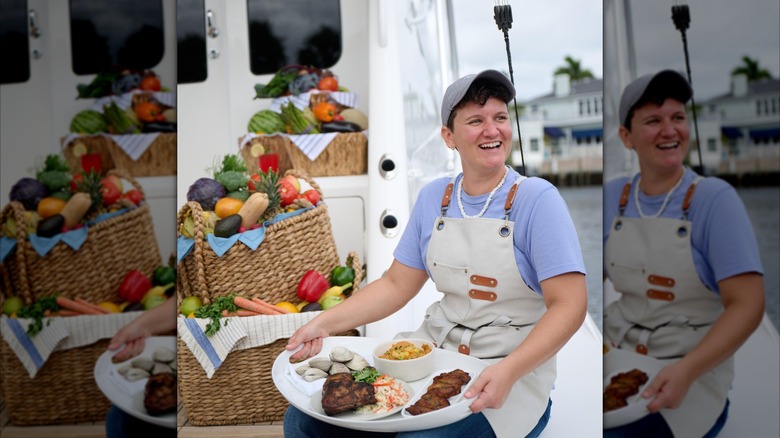
While chefs at a typical restaurant may be planning out dinner specials on the day-of, the chef on a yacht doesn't get that privilege. Instead, according to Cheshire, the menus for an entire weeks or months-long yachting trip can be planned out multiple months in advance. In her instance, she puts together a set menu — inclusive of a breakfast, lunch, cocktail hour, and three-course dinner — for each and every day of the entire two months that she plans on being at sea, before ever stepping foot on the yacht.
Being so well prepared ahead of time allows Cheshire to anticipate her needs and ensure the boat is well provisioned, a crucial part of her job. "On land ... you can go to the grocery store if you're missing eggs or whatever," she says, "but on a boat, there's so much planning that's involved, because we go out for one to two months at a time — so you have to think about provisioning the boat for that amount of time."
2. Planning the menu is a collaborative process with diners
Cheshire isn't just left up to her own devices when it comes to putting together the menu for the sailings. Deciding what's going to be on offer is more of a collaborative process between herself and her clients, as well as the guests that join them for the trip or part of it. She notes that she starts the process a few months before the yacht is even scheduled to go out.
"I'll get guests' preference sheets and ... allergies. [The clients] have a firm schedule of when all their guests are coming in, so I know exactly the likes and dislikes, and any allergy requests, from any guests that step on board," she describes.
From there, Cheshire will start planning her menu and send a draft to her clients. They'll go back and forth with revisions, letting her know any changes that they want, and then she'll revise the menu until it's approved.
3. (Almost) all ingredients for months are purchased before the yacht sets sail
As alluded above, Cheshire can't just step off the yacht to get some extra ingredients if she discovers that something's missing from the galley. As such, she purchases all of the proteins and dry goods that she anticipates needing for the entire sailing before the yacht leaves Miami — a grocery bill that runs up to somewhere around $18,000. The exception? She'll buy fresh produce when the yacht is in port at one of its destinations on the itinerary.
So with that said, what does she do if she forgets something or runs out of an ingredient mid-sailing, with nothing but open ocean in sight? While she calls herself a "type-A person" and says forgetting anything is very rare, she also admits, "I never make it known if I do forget something. ... If I do miss something, I like to just call it magic. It still comes together without anyone knowing that we were missing an ingredient. I just shift to make it work."
4. A single crew member may be entirely responsible for the yacht dining experience
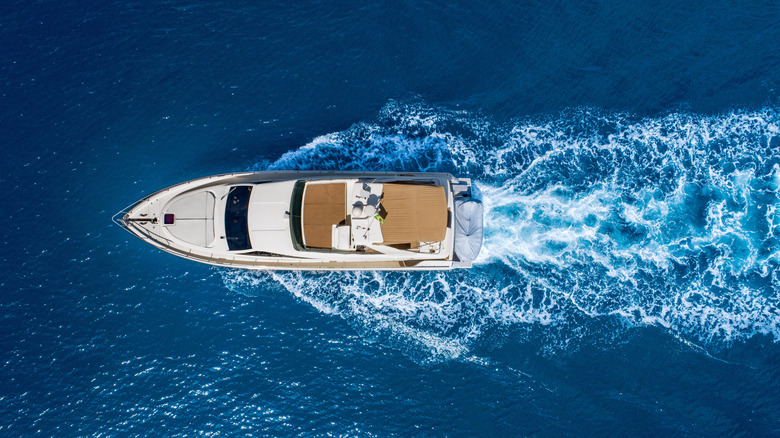
When you think of the yacht crews that you see on television, you probably imagine at least a handful of people working behind the scenes to make a luxury yacht vacation come to life for those onboard. However, that has not been Cheshire's experience. Instead, she's a one-woman show, the individual entirely responsible for absolutely every element of the dining experience.
Additionally, she may pick up some other crew tasks along the way, because, for the past few years she's not only been the only culinary team member aboard the yacht, she's been the only crew member, period. "Both of the families that I work for, they captain the boat," she describes, "and then I'll help with lines because I've learned that throughout the years — you need some extra hands, especially if you don't have a mate."
5. Dining on a yacht is more intimate and personal
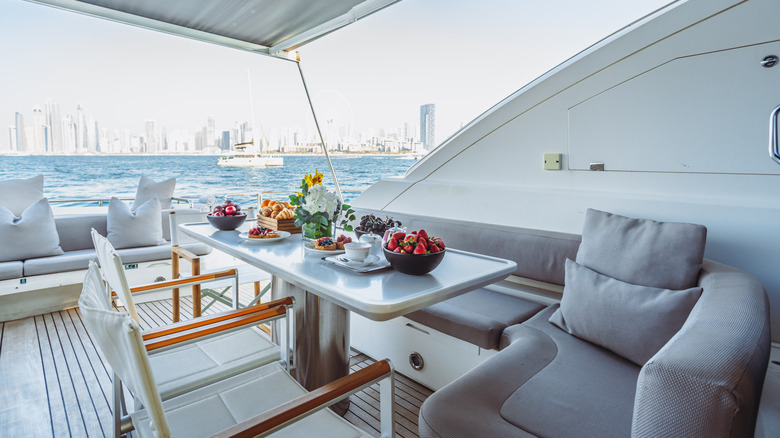
When you compare dining on a yacht to dining on a cruise ship or even just at a restaurant, Cheshire describes it as overall far more intimate and personal. While you may not have the number of options you might get at a cruise ship buffet, or even on a typical restaurant menu, you do get the benefit of working one-on-one with the chef to craft a dining experience entirely to your liking.
"Cruises are a little overwhelming with all the food options, and they have thousands of chefs back there putting together different types of meals," Cheshire says. "The foods you get on cruises are a lot more extensive than [what] you get on the yacht, because I'm in charge of the whole galley. No one's helping ... so it's a little more limited in the menu, but it's more personal. You can make requests, and I can adjust seasonings to their liking."
In the past, Cheshire has shown off her nimbleness in the kitchen by catering to myriad guest needs. She's adjusted her menus to accommodate vegan diners and, in one case, even began doing a lot of her cooking outdoors, to accommodate a guest who was very sensitive to smell.
6. Dining during a storm comes with severe risks
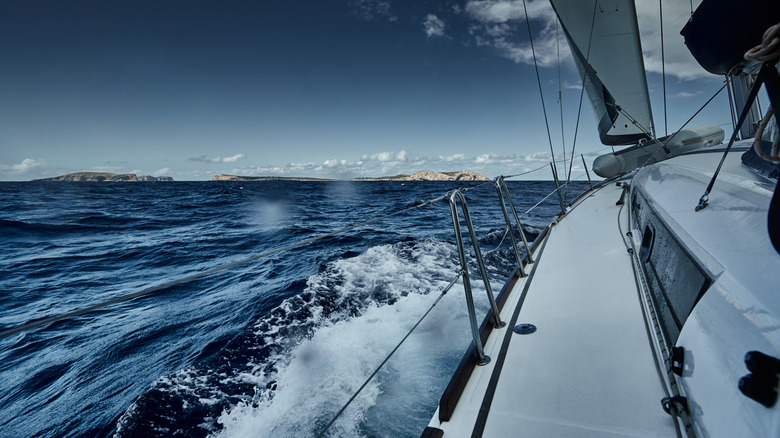
While imagining yachting probably brings up visions of placidly floating through crystalline Caribbean waters or sapphire waves off the Mediterranean coast, things aren't always quite so idyllic. Storms pop up now and then and, when that happens, Cheshire says the chefs on a yacht face some unique challenges.
She describes her most challenging meal she's ever made at sea: "This past summer, there was a huge storm that came through. ... If lightning strikes the boat and you're running water, washing your hands, washing dishes, or touching any faucets, you'll get electrocuted. So, I had to cook dinner without washing as I go. That was difficult. That was interesting — a little scary — but I got dinner out on the table in the middle of a crazy storm." We'll just take a guess and assume that the guests didn't enjoy that particular meal above deck.
7. Yacht chefs cook in an open kitchen environment
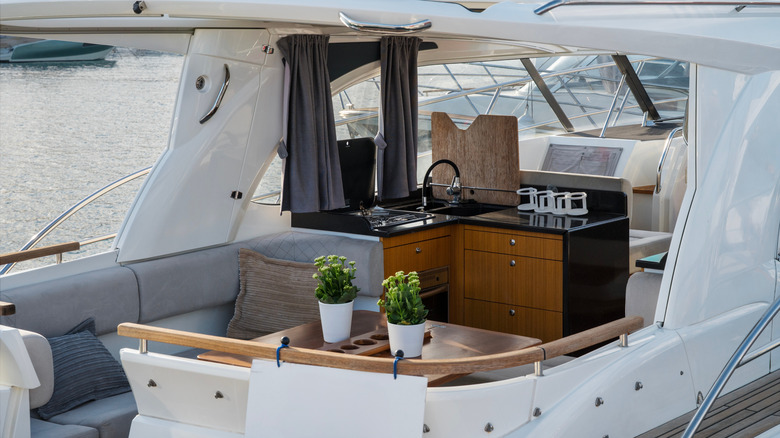
Cheshire notes that she's developed a strong, friendly relationship with her clients since picking up this gig five years ago, and part of that is likely to be credited to the fact that she's not hidden away in the belly of the boat. This makes the dining experience more personable.
"The galley kitchen is actually in the salon, or dining room, of the yacht," Cheshire describes. "It's like an open kitchen. I'm cooking in front of [the guests] while they're eating. It's like I'm party of the family. ... You're seen in the day-to-day."
Plus, in addition to the galley having more of an open kitchen concept, Cheshire also does some cooking outdoors. Not only does this help cut down on cooking smells in the tight space, like those that would have been unpleasant to her aforementioned smell-sensitive guest, but it can also keep the yacht's interior cooler.
8. You can send your meal back to the kitchen
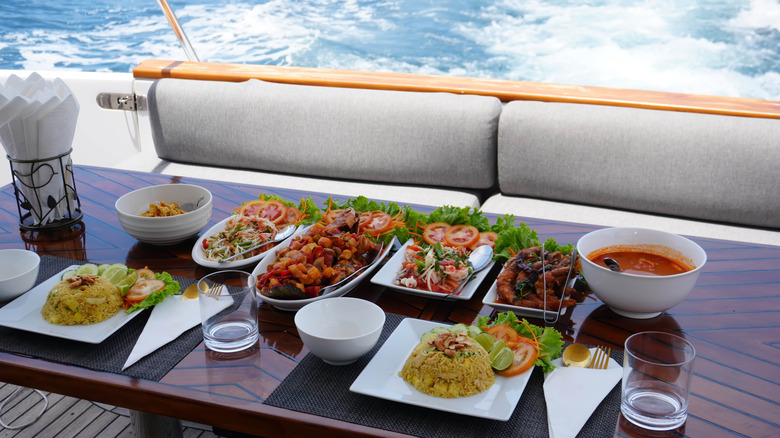
With all the planning that goes into cooking on a yacht, you might just assume that there's no flexibility if you simply don't like what the chef is going to prepare for the day. However, Cheshire says that's not the case at all.
Occasionally, she'll get last-minute change requests while she's already at work for the day in the kitchen, and then she pivots. While she's never personally had someone essentially send their meal back to the kitchen, like one might at a restaurant, she says she wouldn't be deterred if it were to occur.
"I never get frustrated," she says. "It's my job, and I honestly love it. ... So, if they say, 'I'm not really feeling it,' that just requires me to problem-solve and be creative with whatever else I have in the fridge, ready to go."
9. Yachts aren't always outfitted with standard kitchen equipment
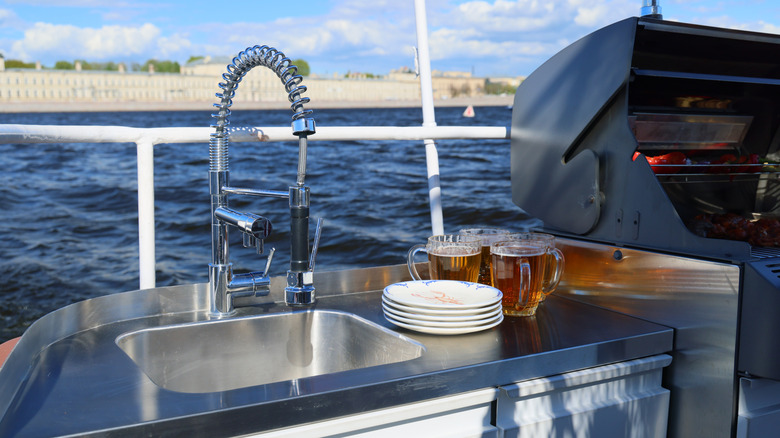
You can't always rely on a yacht to be outfitted with everything you need to replicate the same meals you might make with ease at home. For example, Cheshire says she's worked on a yacht without an oven before, and as she details in "Passport to Flavor: 100 Global Dishes You Can Make Anywhere," while there may be 10 freezers and refrigerators on board, plus ample storage space in random places on the vessel, the actual kitchen space is relatively small. She doesn't have access to all the nice-to-have gadgets that the average home cook might — but only having the necessities makes it easier to get around.
In some cases, though, Cheshire brings items from home so that she has what she needs — most notably, her sourdough starter. She says, "I'll fly into wherever with my starter in the backpack and TSA is always asking what it is — but [the guests] always want fresh sourdough bread, so I'm constantly making loaves of sourdough."