

4 Creative Ways To Reuse Plastic Fruit Containers
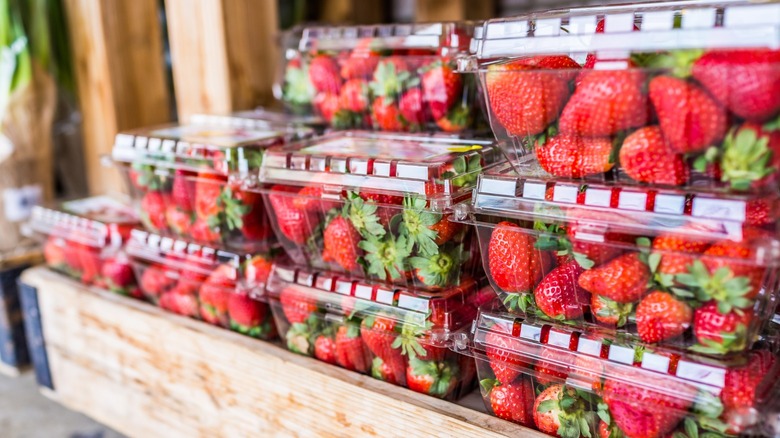
Fruit is an essential part of many diets, and is such a versatile ingredient. Plump, juicy strawberries can be eaten all on their own or diced and mixed into yogurt bowls. Blueberries pair well in baked goods — like banana blueberry muffins — or are a perfectly pop-able snack. Grapes are perfect as-is, or when life gives you leftover champagne, make frozen grapes.
There's only one issue here — what to do with all of the plastic containers you collect if you're a frequent fruit buyer. Especially for those who are trying to focus on their environmental footprint, just throwing out these containers seems wasteful. You can consider a berry basket for storing your eggs, but keep your plastic fruit containers too — they actually have a ton of creative re-uses. From fulfilling storage and organization needs in your home, to acting as a vessel for leftovers, these containers can be really useful in your day-to-day life. As a note, there is a layered discourse about whether or not these containers are safe to re-use for foodstuff or fashion into mini greenhouses or planters for their home gardens.
While many do this, others are worried about microplastics and chemicals leeching into the soil. So just to be on the safe side, makeshift planters won't make an appearance on our list. But if you're in the market for other uses, grab a hold of your plastic fruit containers because we've pulled together a list of some of the most inventive ways you can recycle them.
Storage for crafting supplies
For the crafty and do-it-yourself-obsessed readers, leftover fruit containers can have a number of organization related uses for your crafting supplies. Once you've polished off those delectable strawberries, you can use their container in a multitude of ways to keep all of your art supplies in order.
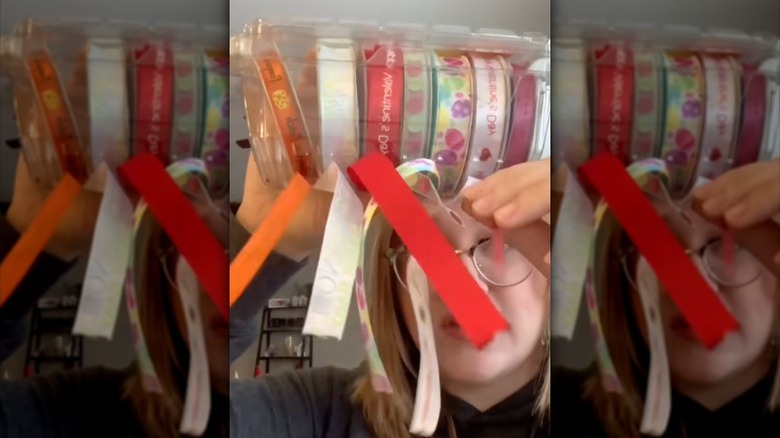
Regardless of what kind of art you pursue, empty fruit containers are the perfect solution to a messy workspace. For painters, you can store brushes in these vessels, and their slats will allow for any moisture to dissipate before you need to use the brush again. One really fun use for larger berry containers is to store your ribbons, string, or twine. If you have unruly rolls everywhere, place them inside the receptacle and pull the end of each through one of the holes in the bottom or side of the container. Now, everything will be kept in one, easy to access place, and all you'll need to do to get some ribbon is pull.
And for the parents out there, you know your children have hundreds of paint brushes, markers, colored pencils, and crayons. Empty fruit containers are an easy and low-cost way to keep all of these organized and in one place. Designate one vessel for each type of item, and you'll find that coloring time becomes a lot more contained. For these larger crafting items, strawberry or grape containers could be best—or the longer, thinner blueberry containers if you can get your hands on one.
Messy drawer organization
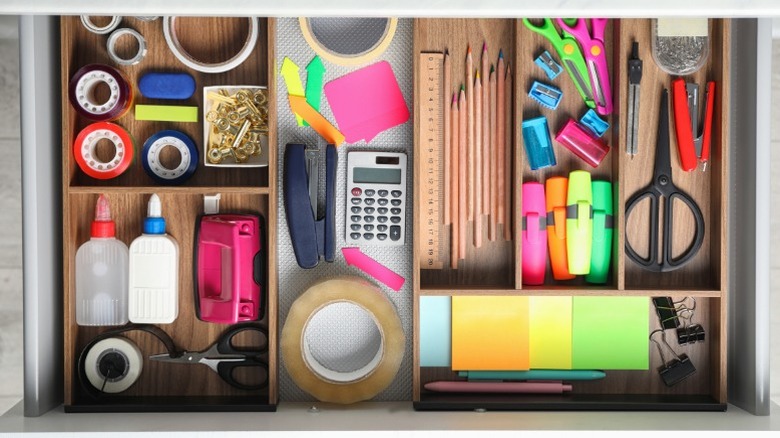
We all have that one junk drawer that seems to be overflowing with random items. Even when you try to rearrange things, it never seems to last long enough to be helpful when you need it the most. More broadly that just crafting supplies, your empty plastic receptacles can be used to keep the junk drawers (and other drawers) around your house in order.
The best kitchen organizers come from unexpected places, so instead of buying what can be expensive plastic organization systems, cut the lids off of your used fruit containers and arrange them inside your drawers. Depending on the depth of the drawer, multiple kinds of fruit vessels could work — in other words, use more shallow containers for smaller drawers versus deeper receptacles for larger ones. In your junk drawer, use the containers to organize keys, batteries, loose change, or other random items.
If you're using the empty plastic in your bathroom cabinets or drawers, you can store items like Q-tips, cotton balls, or even makeup palates. For a home office or desk, the vessels could be used to hold erasers, pens and pencils, or paperclips. Much like those store-bought organizers, you can treat the fruit containers like puzzle pieces, and fit them together to take advantage of their usefulness in the space.
Makeshift cord organizers
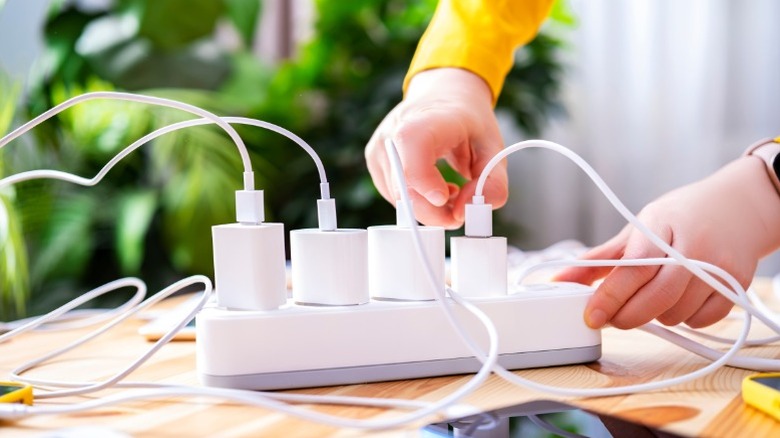
Along the same lines as the ribbon and twine organization hack, empty fruit containers can also be used to fashion makeshift organization systems for the plethora of cords in your home. We all know how annoying it is when your cords get tangled together, or you're trying to get to one and inadvertently pull out all of the others as well. Savvy companies have created cord solutions, but they range from the not ideal and cheap cord clips to full-on organization systems that will run you at least $30.
Instead, use those fruit containers you were planning on tossing in the recycling bin. The point of these organization devices is to keep each cord separate from the others around it. Like our ribbon hack, all you'll need to do to accomplish this is thread each cable through one of the holes in the bottom of your plastic vessel.
Low-profile containers — think blueberries or blackberries — could work well for this, because you could even attach them to the back of your television, computer, or desk without taking up too much space. Or, if you're looking for more of a storage solution and less of an organization hack, the containers can be used to simply wrangle all of your loose cords into one place — just toss them in and snap the lid closed.
Lunchboxes and leftover containers
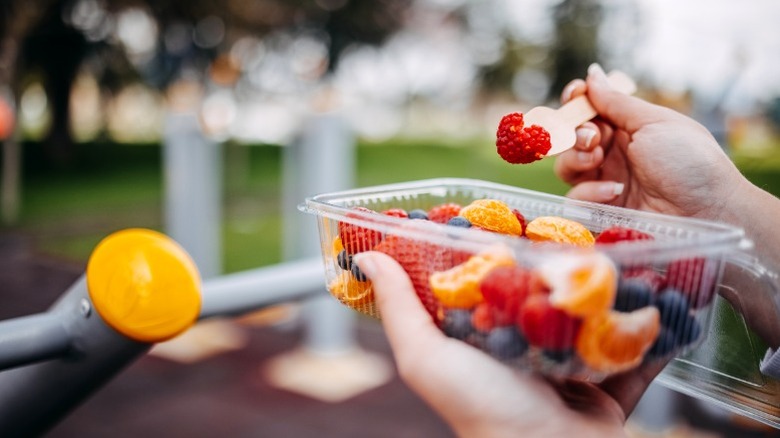
While you might be hesitant to grow fruits, veggies, or herbs in leftover containers because of the potential for them to leech chemicals into the soil, there's another way you can use the plastic boxes to your benefit when it comes to foodstuffs. Instead of cultivating, use berry boxes as lunchboxes or temporary containers for leftovers.
In terms of lunchboxes, the larger containers — think grapes or strawberries — will make the best options for transporting your daily lunch, especially if you don't mind everyone seeing what's inside. These larger vessels should fit things like sandwiches, yogurt, or some sides, but it's important to keep in mind that they do not share the same insulation properties as a lunchbox that will keep your food fresh. Generally, the Food and Drug Administration recommends tossing any perishables left at room temperature after two hours, so unless your commute is longer than that, you should be good to go.
Additionally, if you hate handing out your personal Tupperware (which is the surprising way Queen Elizabeth stored food) and never getting it back, the containers can serve as vessels for gifting amazing baked goods to your friends and family. Much like how you can use them as lunchboxes in a pinch, for the bakers who love to share their treats, these containers could be the perfect solution. To spruce them up a bit, you could even add some colorful paper to the bottom before placing your brownies, cookies, or other nibbles inside.