

How Gordon Ramsay Keeps Herbs Fresh (Without Fancy Containers)

Don't let the "idiot sandwich" meme and viral angry on-screen outbursts fool you: Celebrity chef Gordon Ramsay dispenses plenty of valuable cooking tips that'll help lighten your load in the kitchen. One that people can use regardless of skill level involves how to keep herbs fresh — even without fancy containers or time-consuming prep.
"Herbs are great for adding flavor without spending a fortune," Ramsay says in a YouTube compilation of his top tips for cooking with vegetables. "To keep them at their best, simply place them in a glass of water, and they'll stay fresh for up to a week." He also points out that you can infuse your go-to olive oil with spare sprigs and drizzle it over pastas, sandwiches, vegetables, and beyond.
Transferring herbs from a stuffy plastic bag to a glass with a couple inches of water at the bottom is an easy upgrade. The key is to trim the stems, remove the bottom leaves so none are submerged, and replace the water every two days. It's certainly a lower lift than chopping and freezing herbs ahead of time. Many cooks use the latter method to preserve fresh herbs in water or oil for future use. But if you're planning to use them in a matter of days, you can save yourself the effort by using Ramsay's hack instead.
Why this herb-saving hack works
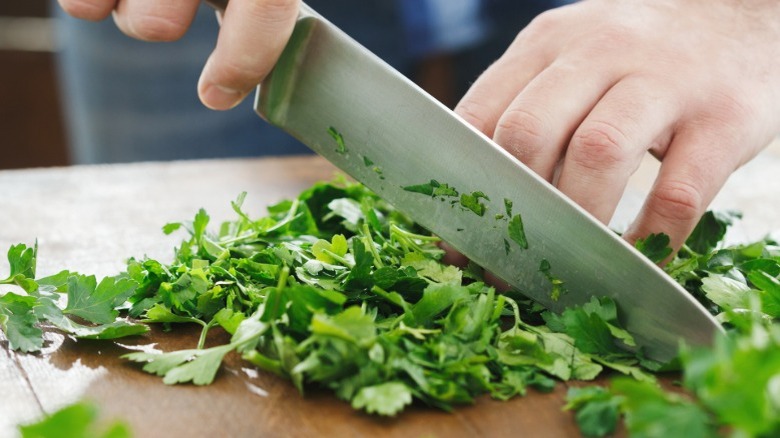
Herbs grow fuller and faster when they're routinely trimmed, which aids water absorption and helps keep them fresher for longer. It's also important to note that the type of plant matters when selecting a storage method. Using a jar partially filled with water is ideal for softer options like dill, mint, cilantro, and parsley. These tender herbs tend to live for two to three weeks as long as they're kept moist. This can be achieved by either closing their container with a lid or keeping a plastic bag secured on top of it with a rubber band. The herbs should also be put in the fridge.
Basil stays fresh with this herb-storage method, too, but prefers a room-temperature environment and no cover. By contrast, hardier herbs, like rosemary, thyme, and sage, are best kept in a damp paper towel, rolled or laid flat in a single layer in a plastic bag. (Even Ina Garten says this trick makes her herbs last longer.)
To find out what type of herbs you have, look at the stems. If they're soft and fragile, they need more water and could benefit from Gordon Ramsay's storage method. These herbs should be added at the end of cooking or as a finishing touch. Hardy options have sturdy, wood-like stems that aren't as flexible. They'll last longer with less moisture and can hold their own against long cook times and high temps, so toss them in all sorts of stews and soups.