

The Breakfast Item You're Almost Always Overpaying For At Restaurants
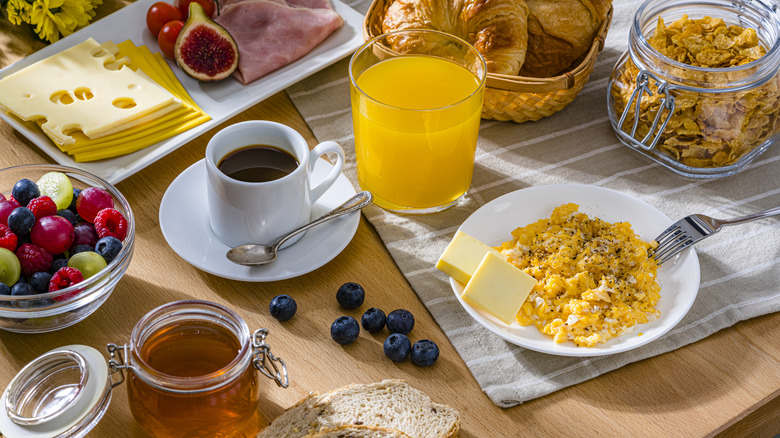
It should come as no surprise that dining out at a restaurant will cost you more than preparing the same meal at home. After all, you're not only paying for the cost of ingredients, but also for the preparation, service, and all the added operational costs that come with running a restaurant — right down to the cooking gas and overhead lights. But one item stands out as a particularly bad value for customers: the humble egg, no matter how it's prepared.
Historically, large food markups have landed on pricier, celebratory splurge items like champagne, wine, or lobster tails. By contrast, diners looking for a more cost-effective meal might turn to breakfast in search of reasonably good deals. Most breakfast options are relatively inexpensive compared to lunch or dinner entrees, making them an attractive choice for anyone looking to treat themselves without breaking their budget. However, taking a closer look at foods you overpay for at restaurants, the breakfast category as a whole can be one of the greatest profit centers for restaurants, with eggs leading the charge. For the consumer, that means shelling out many times more than the actual ingredient cost for their favorite scramble.
Why restaurants overprice eggs
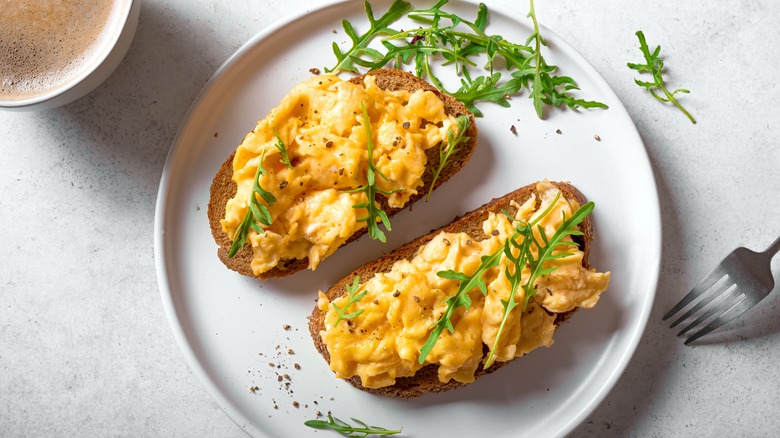
Even when consumer prices fluctuate due to factors like bird flu or distribution issues, wholesale egg prices remain relatively low. According to USDA wholesale pricing data, eggs purchased in bulk have recently averaged under $1 per dozen. That puts the egg portion of a three-egg omelet at roughly 25 cents. According to Toast, the median cost of an omelet reached $14.71 across the U.S. in 2025. Even after accounting for added vegetables, cheeses, and meats, that still leaves restaurants with significant profit margin potential. As executive chef Adam Mali told SFGate, "When it comes to protein, eggs have the biggest markup."
For customers, that markup can translate to paying roughly 20 to 30 times the costs of eggs themselves, depending on portion size and preparation. For diners looking to get more value, opting for items built around higher-cost ingredients like steak, smoked salmon, or prosciutto, can narrow that gap. If ordering eggs is non-negotiable, choosing more labor-intensive preparations like Eggs Benedict, soufflés, or Eggs Sardou can help justify the higher price.
That's not to say restaurants are gouging customers to pad their pockets. When many establishments operate on profit margins of roughly 8% to 12% (according to SFGate), the cushion created by eggs can go a long way in keeping the rest of the menu viable. Since wholesale costs of ingredients like coffee or beef are often volatile, owners need to offset losses elsewhere on the menu, and eggs are able to do a lot of the heavy lifting. In the hands of a professional the humble protein can be transformed into something that's as elegant as it is delicious. Still, for customers looking to get the most bang for the buck, egg-centric dishes may protect a restaurant's margins, but not the customer's wallet.