

8 Grocery Store Items That May Be Harder To Find In 2026
The U.S. food industry is undergoing a lot of changes this year. Not only are higher prices, shrinking shelf space, and climate issues affecting what grocers can stock, but changes in eating habits and a renewed focus on healthy eating also have an impact. For instance, more people are using GLP-1 weight loss drugs — with 12% of American adults doing so as of November 2025, according to a poll by KFF — which means they are shopping for protein-rich foods and quality produce to meet their new diet requirements. Likewise, younger generations have a growing interest in fresh produce, gut-healthy beverages, and fewer packaged foods.
These changes in consumer behavior will influence what you see on the shelves of your local grocery store, and what you don't see. Case in point: As people try to increase their fiber intake, there may be a run on fruits and vegetables in some areas and less shelf space for some beverages as fiber-filled drinks take their place. Combine that with the fact that farming in the United States is taking a hit right now, not only in terms of rising costs, but also in climate unpredictability, and you will see a growing disruption in both fresh and frozen fruit and vegetable availability.
Other potential changes you will see among the shelves of your local store are discontinued food items and products that are no longer being prioritized. With that in mind, here are eight grocery store items that may be harder to find in 2026.
Certain General Mills cereals
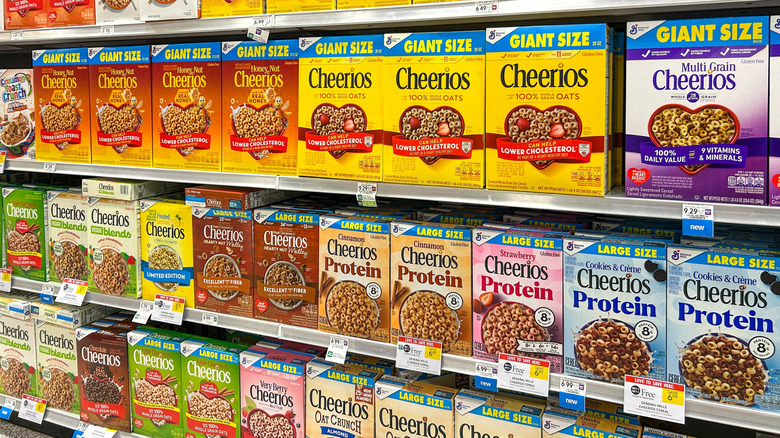
Many cereal brands are being impacted by climate issues, especially when it comes to products that use maize, wheat, and rice. General Mills, the maker of Cheerios, Cinnamon Toast Crunch, Lucky Charms, Cocoa Puffs, Chex, and more, is not immune. In fact, in December 2025, General Mills reported that the company's adjusted operating profits had fallen by 20%.
Part of this may stem from the fact that consumers are increasingly purchasing generic brands in order to save money, while others may be opting for breakfast items that don't include eating cereal every morning. In response to declining sales, reduced demand, and reported supply chain issues, General Mills pulled several of its cereals from the grocery shelves, including Honey Nut Cheerios Medley Crunch Cereal, Chocolate Peanut Butter Cheerios, and 18-ounce packages of Honey Nut Cheerios Minis.
If you notice other General Mills brands missing from your local shelves, the company recommends that consumers looking for a specific cereal use its online product locator to see if it's still available. On a more positive note, the company is planning to reintroduce Frosted Lemon Cheerios. You can expect to see them on shelves this summer.
Some Frito-Lay brands
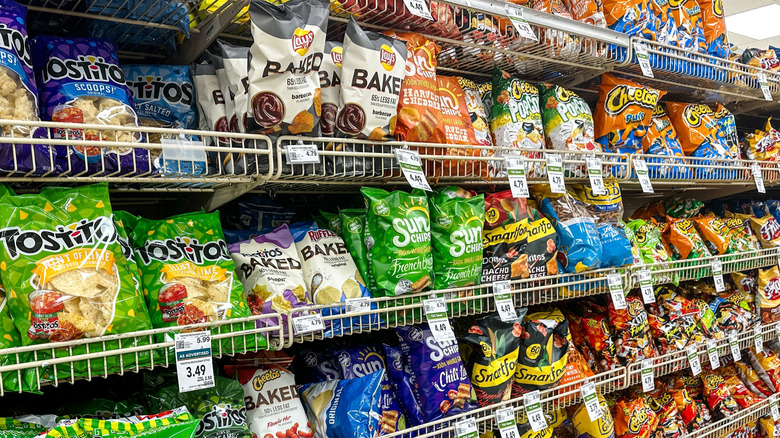
Snack foods are taking a hit in 2026, including those from Frito-Lay. In fact, PepsiCo, which owns Frito-Lay, has already closed multiple manufacturing plants in recent months, including the Rancho Cucamonga plant in California, where Flamin' Hot Cheetos were born. Other plants closing include those in Orlando, Florida, and Liberty, New York. PepsiCo announced in December 2025 that it is also reducing its product line by 20% and will instead enhance snack items to align with current trends, such as eating more protein and prioritizing healthier ingredients in processed snacks.
As for which snack foods are being discontinued, Frito-Lay products impacted by the cuts reportedly include Doritos Dinamita Sticks, Flamin' Hot White Cheddar Smart Food, Ruffles Lime & Jalapeño, Tostitos Black Bean & Garlic, Lay's Honey BBQ Poppables, Sun Chips Chili Lime, and multiple other snacks. In place of these snacks, you may see Simply NKD (or naked) Doritos and Cheetos on your grocery shelves. These snacks are free of colors, stripped of any dyes or artificial flavors. You can also expect to see Doritos with added protein, too.
Tropicana orange juice
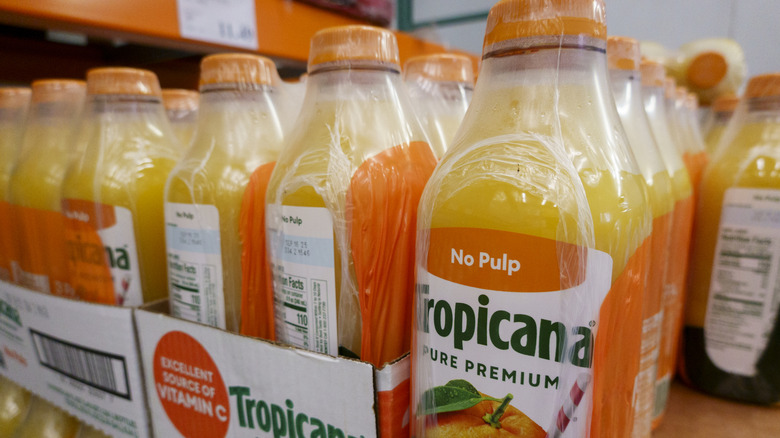
There's a perfect storm brewing in Florida that has negatively impacted citrus producers and ultimately orange juice manufacturers like Tropicana. Thanks to the impact of multiple hurricanes in recent years — including Irma, Ian, and Milton — as well as a bacterial disease known as citrus greening affecting orange trees and ongoing trade wars, Florida's orange production has taken a significant hit. In fact, a forecast by the United States Department of Agriculture for the 2025 to 2026 growing season predicts record low production.
All of this together has significantly impacted Tropicana. One of its primary suppliers, Alico Citrus, ceased operations after the growing season that ended in 2025. This turn of events has likely led an already struggling company to scramble for a new supplier that meets its manufacturing needs. As the company works to address the loss of its supplier as well as tackle its less-than-stellar financials, it may be challenging at times to find Tropicana on shelves.
In the grocery stores near me, finding Tropicana orange juice – especially when the store is running a sale — is definitely hit or miss. Usually, I end up bringing home another brand because there is no Tropicana orange juice on the shelves.
Hershey Whatchamacallit bars
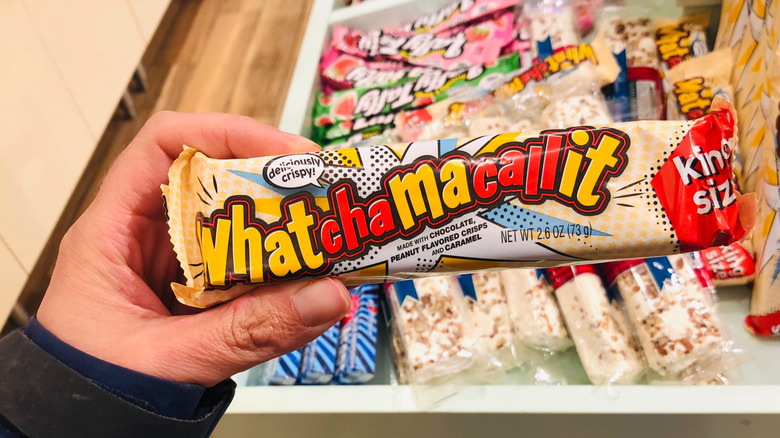
While the Whatchamacallit has never been an overly popular candy bar, it hasn't been discontinued either — though it's certainly harder to find in many stores across the United States. Not only has Hershey's lack of advertising for this unique candy bar (which combines peanut- and chocolate-flavored rice with chewy caramel) led some customers to wonder whether the Whatchamacallit even still exists, but consumers have also had trouble finding it. In fact, some Reddit users have assumed this candy bar has been discontinued because it's no longer available in their local grocery stores.
But according to the Hershey website, the Whatchamacallit is still being produced and can be found at several major retailers, as well as some online retailers. If you're craving one and your store doesn't have it, you can visit the Hershey site to track down online and local retailers stocking the candy. But that doesn't mean it will be easy. Notably, when I did this search, there were none at my local grocery store, and I would have to drive about 30 minutes just to get one. You can also buy them from the Hershey website, but this will cost you about $42 for a large supply of 36 bars. Only you can decide if the Whatchamacallit is worth that much effort.
Fewer powdered drink options
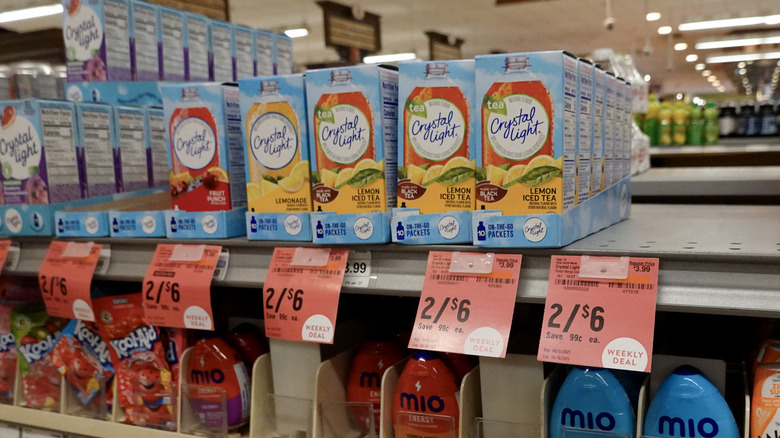
In the highly competitive drink market, grocers may start to prioritize shelf space for what people consider "healthier" drinks and stock fewer traditional powdered drinks than they did in the past. Of course, the approach will vary depending on each individual market and its demands, but younger generations are influencing the beverage industry in a big way. As a whole, they are more interested in functional beverages like Poppi, Olipop, and other gut-healthy alternatives than in the quick and convenient powdered drinks — such as Crystal Light, Kool-Aid, and Nesquik — that their parents grew up drinking. In fact, experts predict that this functional beverage market could balloon to $339.6 billion by 2030.
One specific powdered drink you may have trouble finding is Flavor Aid, which was first developed in 1932. While you can still find it online, it's tougher to locate at grocery stores than in its heyday. Even the company that makes the product doesn't promote it on its website.
Most of the shift away from powdered drinks like Flavor Aid is rooted in a renewed interest in beverages that aid in digestion and improve gut health. Meanwhile, powdered drinks also contain artificial sweeteners and dyes, which may cause some consumers to skip the products. In fact, on Reddit, commenters have voiced their concerns about the sweeteners causing gastrointestinal issues and how citric acid could impact their teeth. As grocers adjust to less demand, you may see fewer options on the shelves.
Quality produce
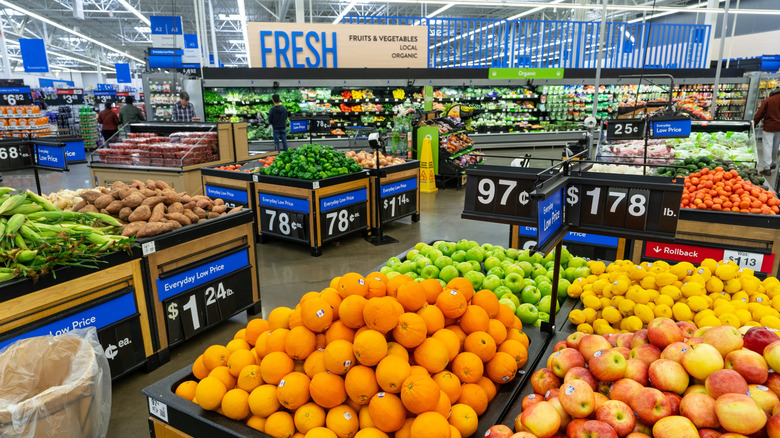
In the United States, long-lasting heat waves, hurricanes, and floods have all impacted fruit and vegetable growing conditions. Combine that with increasing labor costs and staffing issues, and you may notice some changes in the amount of quality produce at your local stores. In fact, grocery store workers have acknowledged on Reddit that stores are experiencing supply issues and cost-cutting measures. Some stores are also allegedly receiving less produce on their delivery trucks, which means fruit and veg could sit on the shelves longer than in the past.
Meanwhile, a renewed focus on healthy eating could also increase demand for fruits and vegetables. In fact, a survey by healthy snacking company That's It found that consumers often opt for fresh produce over packaged foods when choosing snacks. This greater demand for quality produce may make it challenging to keep things stocked. The end result could mean grocers are out of certain fresh fruits and vegetables, or what they do have in stock is of poor quality or has been picked over.
In fact, Reddit users recently called out some grocery stores' inability to stock quality produce. One poster said they've noticed a "steep decline in the quality of fruits and vegetables" no matter where they go. And, it's not just one type of produce that grocery shoppers think is lacking in quality. Shoppers are noticing issues with berries, tomatoes, lettuce, bell peppers, broccoli, Brussels sprouts, and more. In my local stores, I've noticed that many times sugar snap peas, Yukon gold potatoes, and arugula are either out of stock, or what is remaining is of poor quality.
Frozen cauliflower
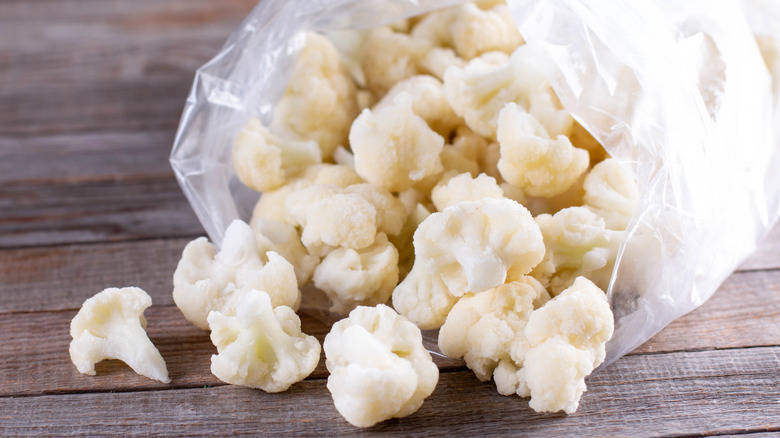
There is no doubt that cauliflower is having a moment. People use it in place of potatoes and rice, turning cauliflower into pizza crust, pasta, and even bread. But this growing demand is putting a lot of pressure on manufacturers, making it hard for them to keep up and ultimately harder for grocers to stock it. What's more, California, where 90% of the nation's crop is grown, has experienced a number of issues that impact production, including significant heavy rains and frozen conditions.
This, in turn, quickly impacted the supply chain, making it more difficult for manufacturers of frozen cauliflower and related products to get what they need to keep up with demand. Ultimately, this means fewer bags of frozen cauliflower, including riced cauliflower, shipped to stores and a greater likelihood that it will be out of stock when you are there. For instance, one Reddit user noted that riced cauliflower was out at their local Sam's Club for three weeks, even though there was a barcode and shelf space for it. Another Reddit user in the same thread said the Walmart in their area was out of frozen cauliflower for a long time, and that while it's since come back in stock, the quality is severely lacking.
For me, personally, it has been several months since I was able to find frozen cauliflower in the freezer section of my local grocery store. Interestingly, I can find fresh cauliflower more frequently, though there is rarely much stock available.
THC-infused goods
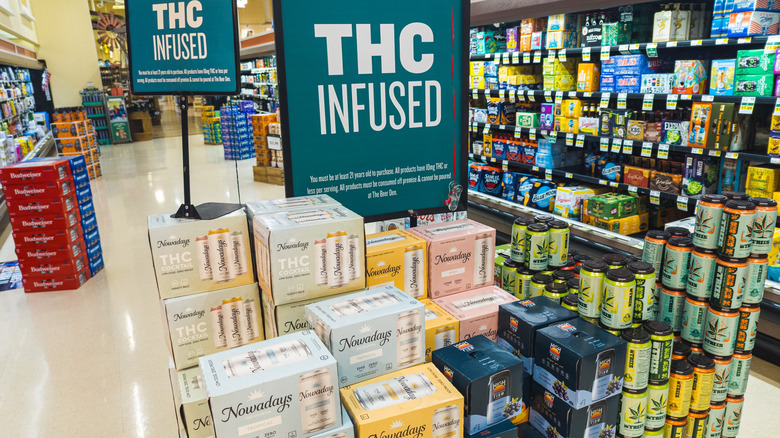
If you enjoy THC-infused goods, we have some bad news. A new law banning foods and drinks that exceed 0.4 milligrams of THC per container takes effect in November 2026. By the end of the year, you'll likely struggle to find certain products such as THC-infused gummies, chocolates, seltzers, cookies, and other snacks made with synthesized cannabinoids derived from hemp. This has caused some Reddit users to suggest stockpiling their favorite items.
Meanwhile, some industry experts predict the crackdown will also impact hemp farming, making it more challenging for companies to source hemp — even to make items that are legally still allowed, such as hemp milk and seeds. What's more, the legal changes have broadened what is banned to such an extent that it's creating a great deal of confusion. This could result in some producers leaving the market altogether, which has people concerned that the impact could become evident even before it takes effect. In fact, one Reddit user speculated that "farmers are going to stop growing [crops], brands will not have reps supporting this area, and stores will eventually have to downsize staff and inventory within the next [six] months ... so I'd say there's more urgency behind it than not."