

Before Becoming A Food Giant Nestlé Started With One Basic Staple
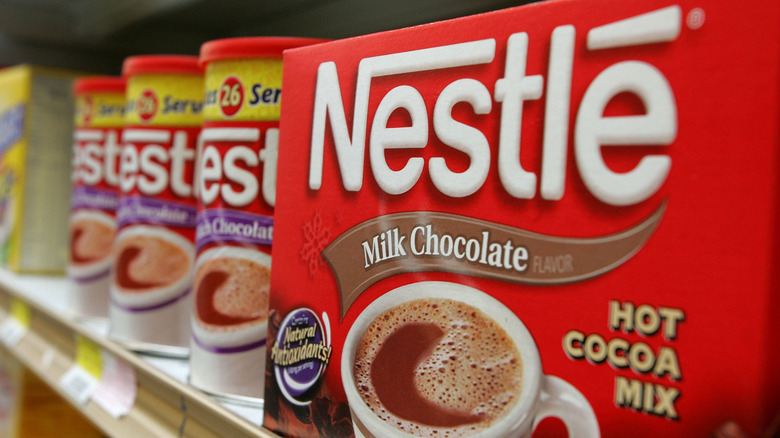
It is hard to find a corner of the world that Nestlé has not reached. As of January 2026, there are over 100 products listed on Nestlé's website. The company is famous for its chocolate and coffee, but it's also the manufacturer behind household brand names, like Stouffer's, Perrier, and Purina pet food. Before becoming an international food giant, Nestlé started with one basic staple: condensed milk. The Anglo-Swiss Condensed Milk Company was founded in 1866, becoming Europe's first commercial producer of shelf-stable, condensed milk. One year later, Henri Nestlé, a pharmacist in Vevey, Switzerland, developed a canned baby formula made from flour, milk, and sugar. The companies merged in 1905, and thus the Nestlé Group was established.
What is condensed milk in the first place? It is milk that has about 60% of its water content removed, and is sold sweetened. It first became popular in the 1860s as part of military rations during the American Civil War, as it has a high calorie count by weight (about 123 calories per 1 fluid ounce). These days, condensed milk is beloved worldwide, used to quickly and cheaply add sweet, milky flavors to desserts and drinks. Younger cooks may find the ingredient a little kitschy, leading to mistakes when cooking with condensed milk, like not using it in both sweet and savory dishes. Fortunately, there are many recipes involving this classic pantry staple, from simple condensed milk toast to homemade dulce de leche. Just remember, a little goes a long way!
How condensed milk became a pantry staple

In the 19th century, condensed milk filled a need in the market before refrigeration made the transportation of milk possible, as even pasteurized milk needs to be chilled. Fresh milk was popular as a nutritional food in the mid-1800s, but due to poor hygiene at dairy farms or mishandling during transportation, milk would often be contaminated or spoiled. Gail Borden, who introduced condensed milk to the commercial market, went so far as to advertise that condensed milk would "keep indefinitely". While that is obviously untrue, the process did indeed prolong the shelf life of milk, making it much easier to transport around the world, which in turn solidified its position in the everyday pantry.
If, for whatever reason, you are unable to find condensed milk, or would like to control the amount of sugar added, some good substitutes for condensed milk include making your own (either out of regular dairy milk or plant-based milks), or look for what is labeled as "cream of coconut" (and not "coconut cream"!)
While Nestlé has cornered the market in multiple categories of foodstuffs, the untold truth of Nestlé includes some rather unsettling claims about child labor on its cocoa farms. Thankfully, it is ever easier in the era of globalization to make conscious consumer decisions that make sense for you and your family, whatever those choices may be.