

The Tedious Process Behind Chick-Fil-A's Perfectly Crispy Chicken
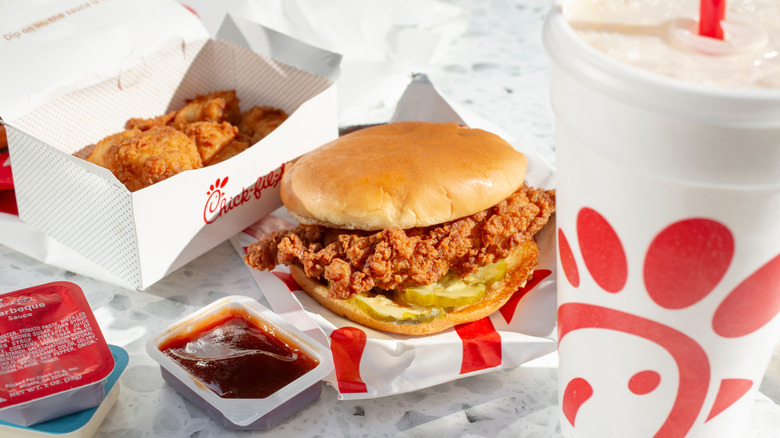
There's a reason Yelp reviews crowned Chick-fil-A America's favorite chicken sandwich chain. The restaurant continues to be the go-to for perfectly crisp, flavorful, juicy chicken between buns because, even though Chick-fil-A has evolved over the years, the fried chicken recipe at the chain's heart has remained essentially unchanged since the 1960s.
Quick-service chains regularly automate food prep processes, but Chick-fil-A still has a lot of literal hands-on work that goes into making those iconic chicken fillets. The process starts with high-quality chicken fillets that come frozen to the restaurant. Once thawed, they're hand-breaded in a milk-and-egg wash, then coated in a seasoned flour mixture. At multiple stages, the chicken fillets are checked by hand for imperfections to ensure only those of the right size and consistency make it into a sandwich.
The pro step that every Chick-fil-A employee is taught is to push down hard with their bodyweight when pressing the fillets into the flour mixture. Repeated on both sides of the fillet, this step ensures a thick, even coating of the flour mixture, which plays a crucial role in how crispy the chicken gets. Finally, the breaded fillets are placed in a pressure fryer. Here, too, the process is meticulous. To ensure the chicken cooks evenly, the pieces are positioned so the thicker sections of meat are exposed to hotter oil, thus ensuring even cooking and a perfect crunch in every bite.
Pressure frying makes recreating Chick-fil-A's crispy chicken at home a challenge
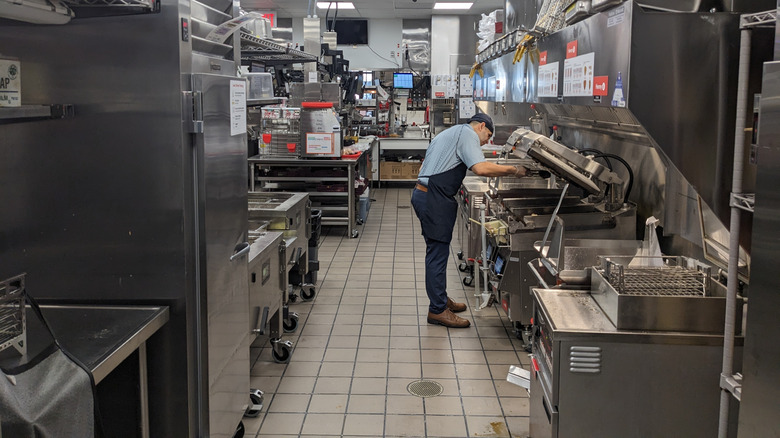
While there are lots of great copycat Chick-fil-A sandwich recipes, homemade results are rarely as good as the restaurant's. The breading process is relatively straightforward and can be recreated, but the actual frying is difficult to replicate. The pressure fryers used at Chick-fil-A are inspired by the ones the chain's founder, Truett Cathy, used when he first started making chicken sandwiches. In fact, all the restaurant's fried poultry uses these efficient industrial fryers, including Chick-fil-A's nuggets.
The founder of Henny Penny, the company behind Chick-fil-A's original pressure fryers, is credited with inventing the first pressure fryer. In addition to doing the job faster (Chick-fil-A's fried chicken takes just four minutes to fry), the process also locks in moisture better, resulting in juicier, more flavorful meat. The good news is that even an open fryer gives you equally crispy chicken. However, it takes longer to cook and is relatively less flavorful.
The other, albeit smaller, hiccup in recreating Chick-fil-A's chicken is that the seasoning recipe (another hand-me-down from the company's founder) is top secret. If you're not averse to a little tweaking and experimentation to get the best flavor approximation, then it's worth attempting to recreate the iconic chicken at home. Remember to use refined peanut oil, just like the restaurant does. Equally important, use ample downforce when dredging your chicken through breadcrumbs — not pushing down hard enough is one of the main mistakes ruining your homemade fried chicken.