

Forget Vegetable Oil, Here's What Your Grandparents Probably Used To Fry Food (And It Likely Tasted Better)
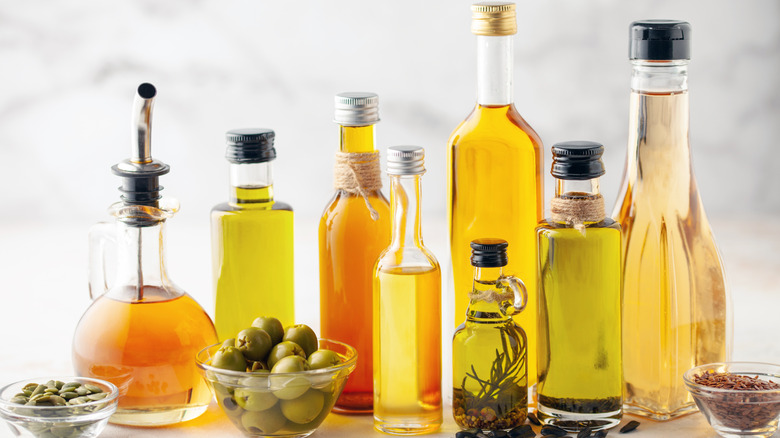
With vegetable oils dominating the cooking fat market, palm, soybean, rapeseed, and sunflower oils are leading the charge in the 21st century. Their relative ease and affordability to mass produce and transport led to the boom in using vegetable oils for cooking. But before vegetable oils became an indispensable pantry item worldwide, animal fats such as lard, tallow, and schmaltz were generally used for culinary purposes in many cultures.
Lard was primarily used in the United States to fry food well into the 1900s. Thanks to the prolific swine industry in the 1800s, pork and pork products like lard were significant contributors to the country's economy. Rendering fat meant that more of the animal was used, and depending on the source, the fat retained a delicious flavor reminiscent of its origin.
Lard is made by rendering the fat trimmed from a pig. Leaf lard, made from the fat surrounding the kidneys, is highly prized by cooks for its milder flavor. However, pigs carry much more fat along the back, and most lard on the market is made from this source. While fatback lard has a stronger flavor, its wide availability makes it the preferred choice when large amounts of fat are needed, especially for deep-frying.
How and why to use lard in cooking
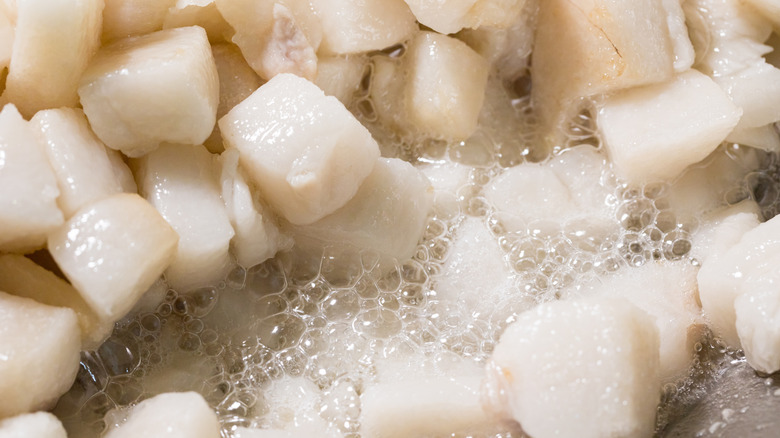
Lard was out of fashion for a long time, and there were many reasons why people stopped buying it, from animal welfare concerns to the perceived unhealthy role of animal fat in a balanced diet. Since the resurgence of lard in the cooking zeitgeist, it is becoming increasingly easier to procure a tub of the stuff.
Use it to fry potato products in, or as the fat component in recipes like Yorkshire pudding and authentic Mexican tamales, lending a welcome, slightly porky flavor. It can even be used for baking pie crusts because it contains less water than butter, resulting in flakier shells. However, make sure you use leaf lard for baking sweet treats, else you will end up with a porky-tasting apple pie!
It is notable that lard may actually be nutritionally better than butter, as it has been found to have less saturated fats than its dairy counterpart, and is a significant source of vitamin D. If dietary restrictions are a concern, other fats such as tallow (made from beef fat), schmaltz (made primarily from chicken fat), and ghee (made of clarified butter) are suitable substitutes for lard, depending on the application and flavor profile required. Or, you can turn to a blue tub of good ol' Crisco or vegetable shortening if the flavor of the fat does not make much of a difference in the final dish.