

The Pepperoni Red Flag You Might Be Ignoring At Pizzerias
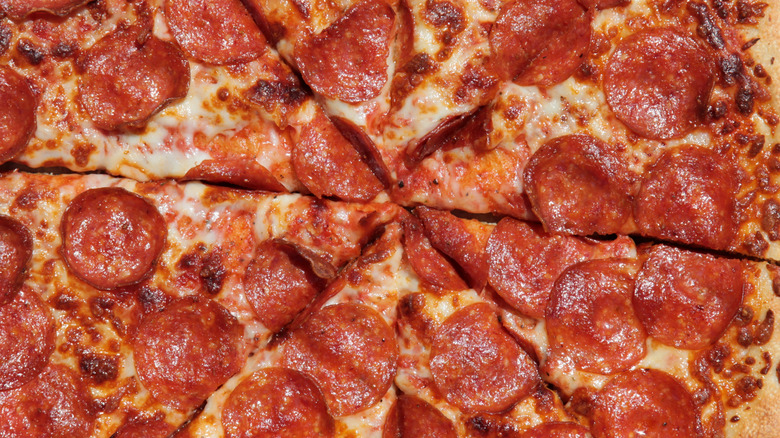
A little greasy, a little spicy, a little salty, a little messy: that's the perfect pepperoni pizza. Pepperoni and pizza are both Italian dishes, but they were first combined in the United States, so it's no surprise that pepperoni is Americans' favorite pizza topping. Pepperoni is versatile, too, and has a place in most kitchens well beyond the classic pizza.
Not all pepperoni is created equal, though. Some are higher quality than others. Pepperoni slices are typically flat when they're sold, and baking it doesn't cause them to change shape or size. So, if you walk into a pizzeria and spot curled, wrinkly, or otherwise suspiciously shaped pepperoni, it's probably not going to be good. That, and a lack of visible oily sheen, can mean the pepperoni has been sitting for too long and might have gone bad, pizzeria owner Glenn Cybulski told Mashed. "Move on, it's old," he said.
Commercial pepperoni, such as the type sold in most supermarkets and used in most pizzerias, is a variety called lay-flat. It's specifically engineered to keep its size and shape during the baking process. It really shouldn't be changing its appearance during baking, except to get a bit brighter in color and a little greasier as fat escapes from the pepperoni slices. So pizza with lay-flat pepperoni that's not, well, laying flat, is a bad sign.
Times when curled pepperoni is actually a good sign
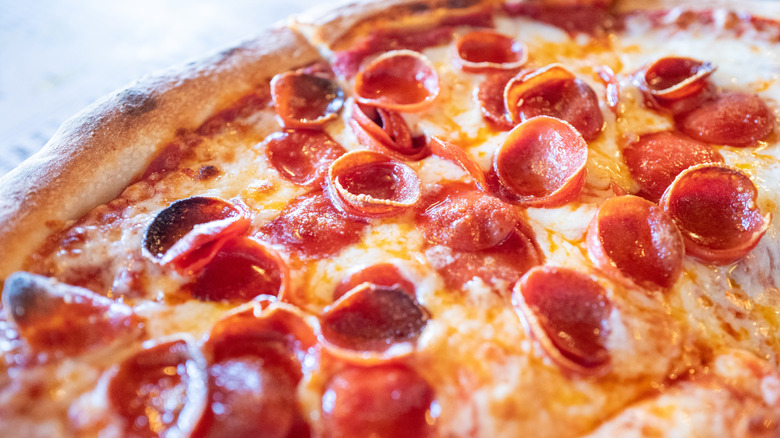
There's a big caveat here: Not every pizzeria uses lay-flat pepperoni. The other widely used type is referred to as cup-and-char pepperoni, which is designed to (surprise!) cup and char as it cooks. It should actually curl up around the edges, and start to almost burn at the ends. But again, it should behave consistently: All cup-and-char pepperoni should be cupped, so if you see uneven cupping or unappealing curling, it's a possible sign something's wrong.
While most sausages are made with a natural casing coming from a part of the animal, lay-flat pepperoni is made with a synthetic casing or none at all. In most pre-sliced pepperonis, the casing is actually removed before it's sliced at the factory. When cooking, then, there's no casing to shrink, so the pepperoni retains its size and shape. What that means is, in the case of most pizzas, pepperoni changing its shape is a bad sign.
Cup-and-char was originally the only type of pepperoni available, and it's made with natural casing. That natural casing shrinks as it cooks, while the meat in the center of the pepperoni slice doesn't, causing the cupping. It looks impressive on social media, so it's made a comeback after years of falling out of favor. More pizzerias are using cup-and-char, so if the pepperoni looks uniformly curled, it's not a flaw, just a different type of pepperoni. Otherwise, if there are unusual wrinkles or curls, stay away.