

Should You Be Washing Your Watermelon?
While rinsing pre-cut watermelon is obvious, do you really need to wash a freshly purchased, uncut watermelon you just picked up at the supermarket? After all, you're probably not eating the rind, so it stands to reason skipping over rinsing your fruit is fine. However, not washing the rind definitely qualifies as a watermelon mistake. When you cut a watermelon, your knife makes contact with the rind first, meaning it can drag all kinds of bacteria inside your fruit.
Think about it: Watermelon rinds are touched a lot, from growth to harvest, encountering many unsavory contaminants along the way. Before landing in your shopping cart, they're handled by hundred of hands, touched by everyone from farmers to grocery store workers to other shoppers. There's also pre-harvest to think about. While growing on the ground, rinds marinate in dirt and all that comes with it, including animal excrement. All kinds of trace substances, many of which are potentially harmful, end up lingering on your food.
So, even the bits you're not eating pose a health risk. It's no wonder that watermelons have been linked to infectious disease outbreaks, such as listeria and E. coli. Suffice to say, washing watermelon, or any foods with rinds, such as oranges and melons, is vital to your safety.
How to safely wash a watermelon
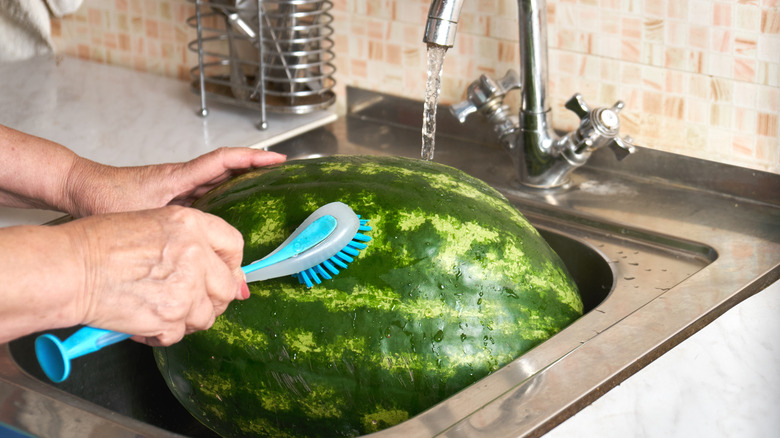
Washing a watermelon prior to cutting isn't complicated, but it does take some time and effort. It's not enough to merely rinse your watermelon under running water — although that's how you should start, turning your fruit as you go to ensure you wash the entire surface. From there, use a light brush to gently scrub down the rind as an extra precaution. Make sure to dry your watermelon thoroughly after washing; leftover moisture can breed bacteria. Once washed, store your watermelon at room temperature and away from direct sunlight until you're ready to eat it.
In addition to careful washing, storing your watermelon properly after cutting also keeps your food safe. While watermelons keep best at slightly higher temperatures than the average refrigerator provides, unless you're able to keep food in a cooler on ice long-term, it's typically best to refrigerate watermelons. When refrigerated in an airtight container, sliced watermelon should last roughly five days.