

Not All Rice Is Rice Cooker-Friendly: This Is The Type To Avoid
We may receive a commission on purchases made from links.
Sometimes, when you're cooking rice at home, it can be tough to perfect. Is it a 2:1 ratio of water to rice? Is it going to boil over on the stove? Thankfully, a rice cooker can help you get it just right (you can even make quinoa in a rice cooker). There are, however, common mistakes everyone makes with rice cookers that can leave you with unseasoned or burned grains. To get some tips on what type of rice to avoid when cooking with a rice cooker, we reached out to an expert. Coco Morante is a recipe developer and author of "The Instant Kitchen Meal Prep Cookbook," which focuses on pressure cooker and air fryer meals, but she also knows a thing or two about rice cookers.
As far as what to steer clear of in your rice cooker, Morante says, "I wouldn't put Minute Rice, aka instant rice, in a rice cooker. Its shorter cook time isn't compatible with the appliance's default settings, and you'll likely end up with mushy and/or broken grains." Instant rice is a pre-cooked rice that has been dehydrated and will reconstitute on the stovetop in a matter of minutes. Not only is it against Morante's ideal use for a rice cooker, but most chefs never buy instant rice because, even if it's cooked according to instructions, it can end up claggy and overcooked.
How to cook rice properly in a rice cooker, according to an expert
"While you can cook most varieties of rice in a rice cooker," Coco Morante says, "some are easier than others when it comes to getting consistent, reliable results." She recommends using medium-grain white rice for most rice cooker models and following the instructions that come with the appliance. "Jasmine and basmati rice tend to require a little less water, or else they can get too soft and mushy. Brown rice requires more water and a longer cook time." For jasmine or basmati rice, you'll want between 1¼ and 1 ½ cups of water per cup of rice, based on how firm you want it. Less water equals firmer rice, which is ideal for fried rice.
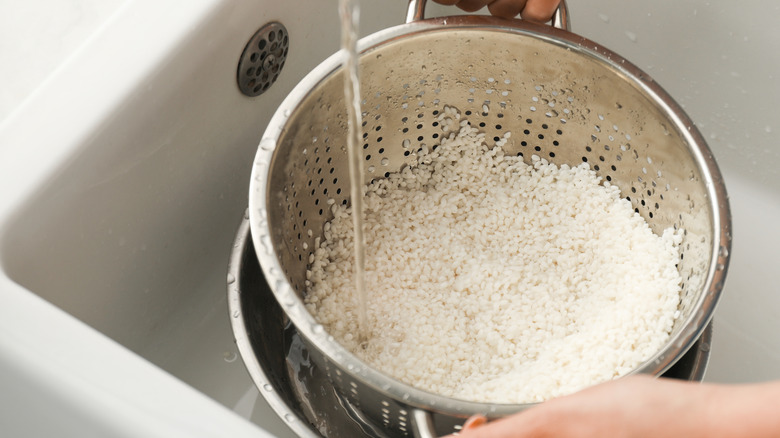
"Brown rice requires more water and takes longer," Morante explains. "You'll want to use anywhere from 1 ¾ to 2 cups of water per cup of rice, depending on how soft you like your grains, and it'll take about 45 minutes (sometimes a little more) to cook through." No matter what rice you're using, give it a rinse before cooking. Rinsing helps separate the grains and get them as fluffy as possible. For a simple brown rice recipe, adding a bit of soy sauce will give it extra flavor. Cooking white rice in chicken stock or adding bouillon will improve the taste and may help it pair better with the accompaniments it is served with.