

Why Beef Tallow Fell Out Of Popularity And How It's Made A Comeback
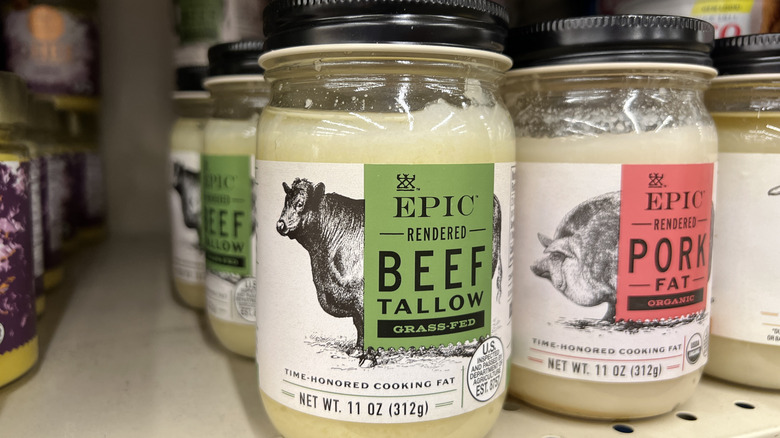
Beef tallow: a type of cooking fat obscure enough that, a couple of years ago, it would hardly be worth writing an article about it. Now, it's all anyone's talking about when it comes to frying. Why is that, and what exactly is beef tallow? Basically, it's beef fat that has been trimmed from other cuts, then melted down slowly (rendered) and re-formed and hardened for packaging. Like butter, tallow is solid at room temperature, but melts into a liquid when it's heated.
Tallow, once common but more recently fading into obscurity, is making its comeback thanks in large part to the Make America Healthy Again movement. In fact, the United States government's own food pyramid now puts tallow and other fats like butter at the top. It's risen in popularity as a way to return to more rustic, "whole" foods that are less processed than alternatives like seed oils.
But there are reasons tallow fell out of popularity in the first place. It's high in saturated fat, which can increase the chances of a heart attack and stroke. The saturated fat can increase the likelihood of clogged arteries, leading to heart disease. And beef tallow is high enough in saturated fat that a single tablespoon contains basically an entire day's worth of saturated fat, per the Cleveland Clinic.
Tallow can be a substitute for seed oils — but not a very healthy one
Tallow is most often used as a substitute for common seed oils, such as canola oil or rapeseed oil. And there is a clear advantage to tallow over those oils: It's much less processed. That's a big part of why it's recently become so popular, as people look for more natural foods and look away from ultra-processed ones. So it's a perfect cooking fat for people following a keto diet, for instance.
Does less-processed mean healthier? In the case of tallow, the answer is mostly no. People who eat more unsaturated fats, like vegetable oil, tend to have healthier hearts than people who eat more saturated fats, like butter and tallow. A 2025 study found that switching in soybean, canola, and olive oils in place of butter "may confer substantial benefits for preventing premature deaths" — in other words, they just might help you live longer.
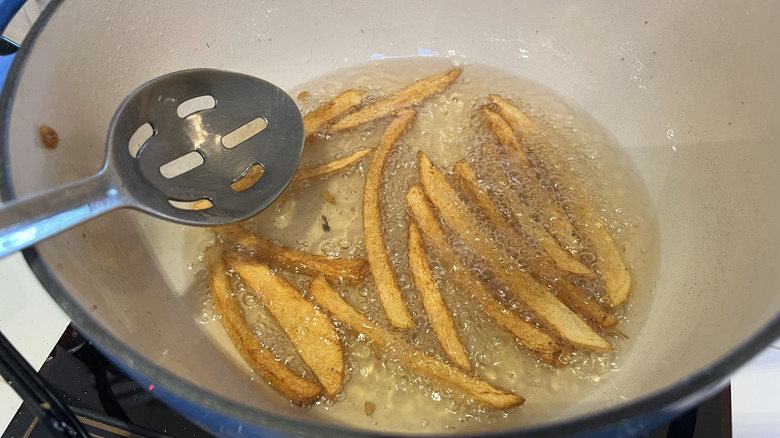
Here's a caveat: We don't decide what to eat based exclusively on how healthy it is, of course. And the truth is that tallow is great for certain cooking applications. It makes great french fries, for instance, and is good for high-heat cooking because of its high smoke point. Tallow can lend a smooth texture to baked goods and a savory flavor to fried foods when they're deep-fried or sautéed in it. It's a great alternative fat, but nutrition experts don't recommend replacing all of your cooking oils with tallow.