

One Of Anthony Bourdain's Favorite Cocktails Dates Back To The 1800s
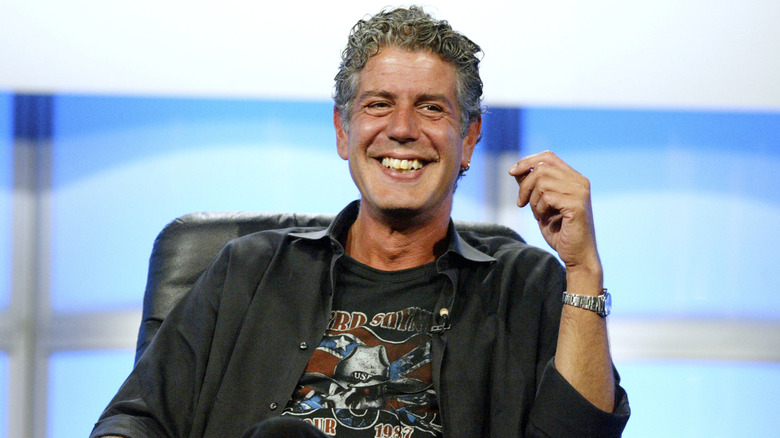
As far back as Anthony Bourdain's best-selling memoir, "Kitchen Confidential: Adventures in the Culinary Underbelly," the rock star chef not only provided advice that still holds up to this day, but showed the world that he knew his way around the industry. This was later enforced with his various television series and a career as a celebrity who changed the way people looked at food. Even today, his advice is sought out for dishes and beverages worth trying. Of course, the timeless Negroni was Bourdain's favorite cocktail, but it was revealed in an interview with Barron's that he also enjoyed "a good Sazerac."
As a Negroni fan who revolutionized how everyone saw food and culture, Bourdain's love for the Sazerac makes sense. Though a close relative to the Old Fashioned, the classic Sazerac recipe also resembles the Negroni in its simple execution of an Absinthe rinse, bitters, whiskey or cognac, and sugar with a lemon garnish. Its rich yet fuzzy origins trace back to New Orleans circa the 1800s. Here, most credit its creation to Antoine Amedie Peychaud, of Peychaud's Bitters, who named it after his preferred cognac, Sazerac de Forge & Fils. Peychaud then partnered with the Sazerac Coffee House, later renamed the Sazerac House, who served it as a signature cocktail with his homemade bitters. The Sazerac was then allegedly perfected when Leon Lamothe added the anise-favored Absinthe. As Sazerac gained popularity, it became a New Orleans mainstay, served in many establishments. As the city grew and evolved, so did it, later becoming its official cocktail in 2002.
How the Sazerac evolved with New Orleans and variations to try
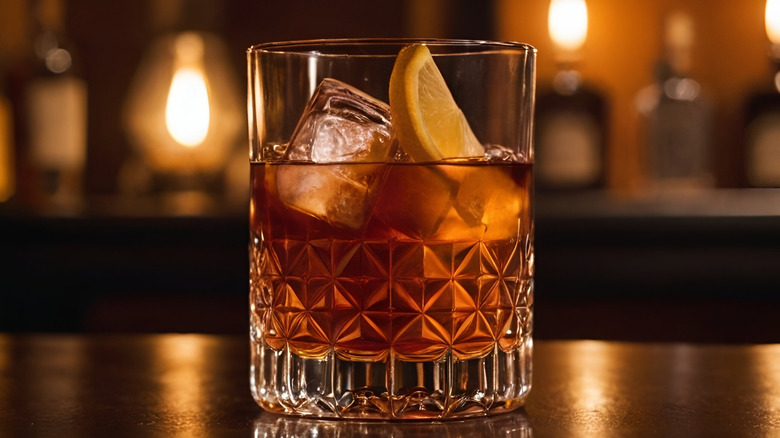
Given its decades-long tenure, the Sazerac has changed since stepping into the Big Easy. Though originally a cognac-based recipe, the Sazerac's first major adaptation took place in the 1885 when Europe's phylloxera epidemic caused a cognac shortage. Not wanting to lose their beloved Sazerac, the bars substituted for rye whiskey, which was readily available and has a dry yet bold, spicy profile that could balance the other sweet ingredients. The next big shift for Sazerac came when absinthe was banned in 1912 due to its purported hallucinogenic properties. However, this was substituted by absinthe's replacement, herbsaint, which held a similar anise flavor with botanical notes. Today, there's some contention over the proper execution of the Sazerac, debating whether the accepted base spirit is whiskey, cognac, or maybe both.
Ultimately, it seems that the beauty of the official cocktail of New Orleans lies in how proudly inconsistent and adaptable it is, which may give pause to what Bourdain might have meant by "a good Sazerac." For those in search of their own definition, perhaps the banarac, which has a split base of rye and Armagnac and incorporates banana liquor, could be of interest. Alternatively, the Zazarac, which has its own complex history, originally swaps the rye and cognac for bourbon, offering something unique yet familiar. Wherever one lands, few things are certain about Sazeracs: Never shake it, serve it chilled without ice in an Old-Fashioned glass; the garnish and spirit should never touch, and always include Peychaud's bitters.