
The Well-Known Olive Oil Company That's Owned By The Chinese Government
If you don't regularly keep up with business news, you might be surprised to find out some of your kitchen mainstays are actually owned by Chinese companies. For instance, GE Appliances has been owned by a Chinese company, Haier, since 2016. America's biggest pork producer, Smithfield Foods, is also owned by a Chinese business. Its brands include Armour, Eckrich, and Nathan's Famous, and was purchased by the WH Group (then Shuanghui) in 2013 (via CNBC).
You can add a couple of popular olive oils to this list. The Salov Group, the Italian company behind olive oil brands Sagra and Filippo Berio, was sold to a state-owned Chinese conglomerate over a decade ago. When it was originally reported in 2014, details of the sale were undisclosed, save for the fact that the Bright Food Group was buying a majority stake (via Reuters). In a 2015 People's Daily Online report, it was revealed that the stake was 90% of Salov's equity; the cost of the acquisition remained undisclosed. The remaining stake was eventually bought out in 2017, according to the Salov Group's 2020 sustainability report, giving Bright Food full ownership of the company and its brands. The Bright Food Group's stakeholder group is composed of three state-owned entities, making both Sagra and Filippio Berio brands owned by the Chinese government.
Why was the Salov Group sold to the Chinese government?
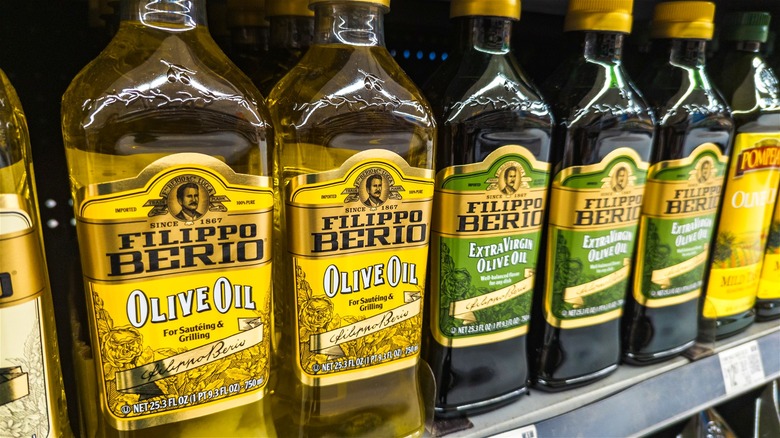
Speaking with The Telegraph in 2017, Filippo Berio U.K. managing director Walter Zanre shared that selling the Salov Group ended up saving the company. According to Zanre, then-Salov president Alberto Fontana felt his grandchildren wouldn't be the best choices to lead the company in the future — and it seems he made the right call. In a 2024 press release, the Salov Group announced its 2023 sales reached €518 million (around $561 million in 2023); sales for the year prior to Bright Food's acquisition of the company totaled $417 million (via Olive Oil Times).
Before the sale in 2014, the company's reputation was already taking a few hits regarding the quality and authenticity of its products. In a 2004 story in the New York Times, Fontana revealed that, depending on how harvests go, as little as 20% of Filippo Berio's oil comes from actual Italian olives, raising questions on whether or not it could be truly categorized as "Italian olive oil." Filippo Berio's extra virgin olive oils also failed to meet international standards, according to a 2011 study by the UC Davis Olive Center.
While there's no indication that the Salov Group has addressed these issues, its revenue growth suggests its sale to the Chinese government has been beneficial to the business. Sentiments online suggest it might be one of the worst-reviewed olive oils, but that clearly didn't stop the company from selling more than 27 million gallons of its products in 2023.