

How To Make Homemade Steak Taste Like It Came From A Restaurant
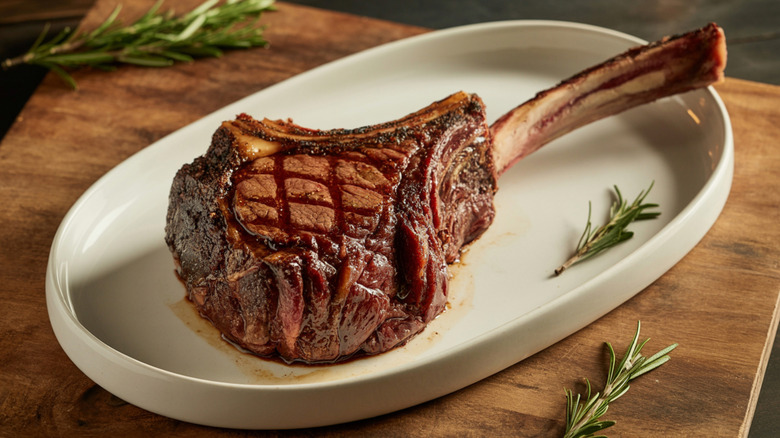
You've nailed the sear. You have a nice crust, it's cooked perfectly — yet somehow, your steak at home still isn't quite up to par with something from a steakhouse. What's the restaurant's secret? It might only come down to one simple game-changer: finishing it with a pat of compound butter. You've probably seen it at your favorite eatery, just a tablespoon or two placed atop a freshly cooked steak, melting beautifully into the meat as it hits your table. That glossy, herb-flecked pat isn't just for looks. At steakhouses, the steak rests to allow the juices to redistribute, and that final addition of savory, aromatic butter adds an extra layer of depth to every bite.
It's a great reason to start flavoring your butter instead of relying solely on your steak's seasoning; it's a simple process that makes each bite even more indulgent. Plus, you can use exactly as much as you like after the steak is cooked, rather than risking an overpowering marinade. With a custom mixture of aromatics, herbs, and maybe a little spice, you can achieve that white-linen, steakhouse-level flavor without needing any serious culinary experience.
Master the art of crafting flavorful compound butter
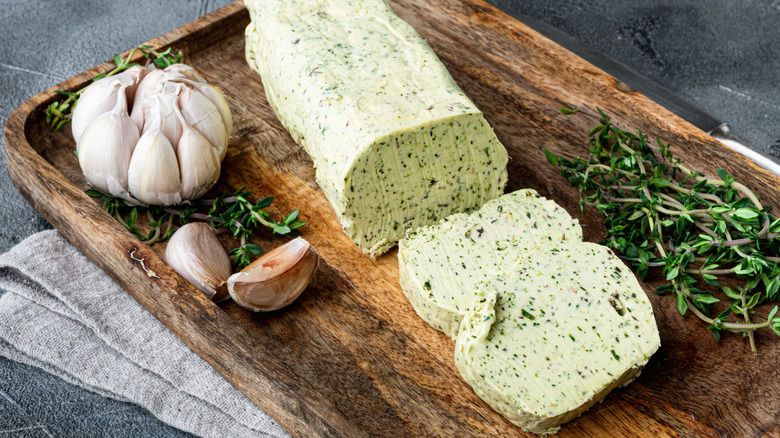
A compound butter is just what it sounds like: butter mixed with various ingredients that can be sweet, savory, or spicy. Not only is it perfect for steaks, but it also makes a beautiful spread for biscuits or traditional mashed potatoes — you can even zest up chicken with a lemony compound butter. Best of all, it's ready to grab from the fridge whenever you need it. Generally, mixtures with aromatics like garlic or fresh herbs will keep for about five days, while those made with shelf-stable spices will last even longer.
As a rule of thumb, it's probably best to start with unsalted butter, so you can more easily control the flavor. Let it sit on the counter until it reaches room temperature; you want it soft and spreadable, but not melted, before adding in your flavors. Mixing by hand with a fork is probably best, so you don't overly whip it, but a food processor will work in a pinch.
Think about what ingredients will complement your steak. Rosemary, thyme, and sage are great for the savory profile. Minced garlic or shallots make fabulous aromatic additions, and you can go spicy with some cayenne or red pepper flakes. And for a hit from all directions, a classic Southwestern-style cowboy butter with chives, cilantro, garlic, lime, Dijon mustard, and chipotle powder can give a great kick. Once it's all mixed together, put the butter on a sheet of parchment paper and roll it into a manageable log for future use. It will re-solidify in the fridge and be ready to slice, one pat at a time, onto your cooked steak.