

How To Freeze Cooked Ribs So They Still Taste Fresh Later
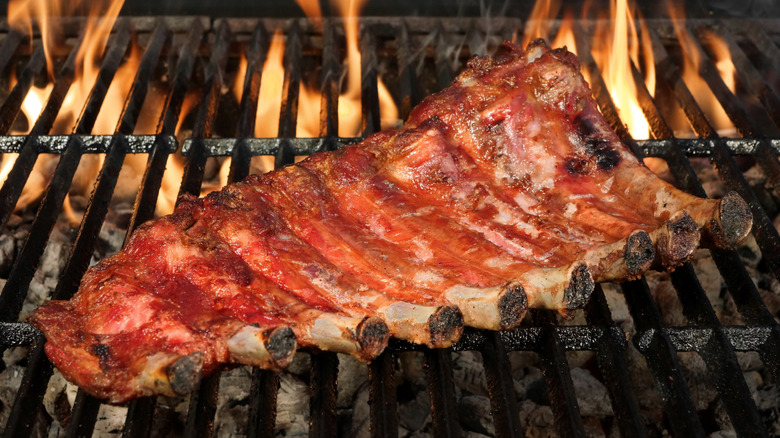
You spent hours getting your ribs just right — the last thing you want is to waste a single bone. The good news is that cooked ribs actually freeze better than most people expect. That's because ribs are rich in fat and connective tissue that help insulate the meat through the freeze-and-reheat cycle. All you have to do is follow a few easy steps, and your frozen ribs will taste nearly as fresh as the day you made them.
First step, you need to cool them down quickly — but safely. Let the ribs get to room temperature after cooking, but don't leave them out too long. According to the USDA, meat left out between 40 degrees and 140 degrees Fahrenheit is in the bacterial danger zone, so you need to get them refrigerated within two hours of cooking. To keep an eye toward reheating, you should portion them before freezing, which means cutting the rack into sections of two or three bones. Smaller portions freeze and thaw more evenly, and you'll only defrost what you actually need rather than the whole rack.
For ideal moisture retention (that's not covered in ice), brush each portion with a thin layer of barbecue sauce or reserved cooking juices. Sauce acts as a moisture barrier that protects the meat from drying out in the cold. Next, wrap each portion snugly in heavy-duty aluminum foil, then slip the pieces into an airtight freezer bag and squeeze out as much air as possible before sealing. This keeps the constantly recirculating air from penetrating the surface of the meat.
What to avoid with frozen ribs and how to reheat them
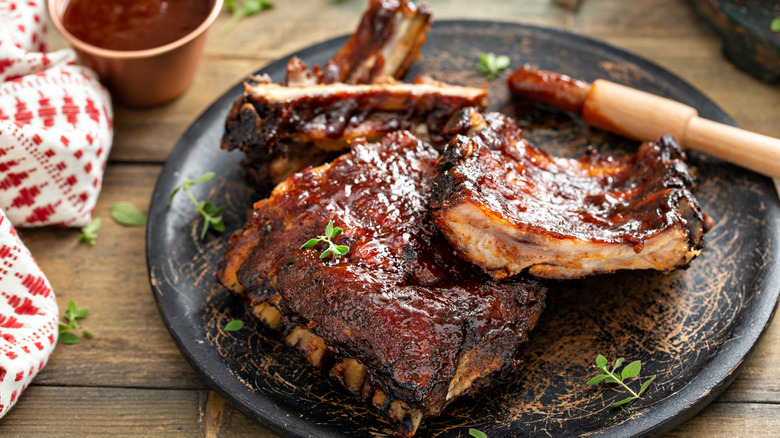
If you're worried about reheating ribs, there are some real concerns. While they can be good to eat for much longer, for ideal flavor, the USDA says you should take them out of the freezer within a few months. Write the date on the freezer bag before it goes in, so you don't have to guess on flavor. Placing warm ribs directly into the freezer causes ice crystals to form inside the packaging, which triggers freezer burn — those grayish, dry patches that rob the meat of moisture and flavor. Always let ribs cool completely before packaging.
When it's time to reheat them, you should plan ahead. Put the frozen ribs in the refrigerator the day before. Counter thawing pushes the meat back into the bacterial danger zone. Plan ahead and allow up to 24 hours in the fridge — it's the safest and best method to preserve flavor.
And the secret to reheating ribs has a lot to do with moisture. You should cook them in the oven in tinfoil with a bit of broth or water below to gently steam and prevent them from drying out into a tough, jerky-like texture. Just like the original cooking, slow and low is the way to go — aim for around 250 to 275 degrees Fahrenheit until heated evenly. Put a little broth, apple juice, apple cider vinegar, or barbecue sauce inside the wrapping before you cook, and they might be as delicious as when they came off the grill or smoker. And if it's a whole leftover meal you're putting together, there might just be a thing or two you could learn about reheating mashed potatoes for a real freezer smorgasbord.