

Can You Cook And Bake With Raw Milk?
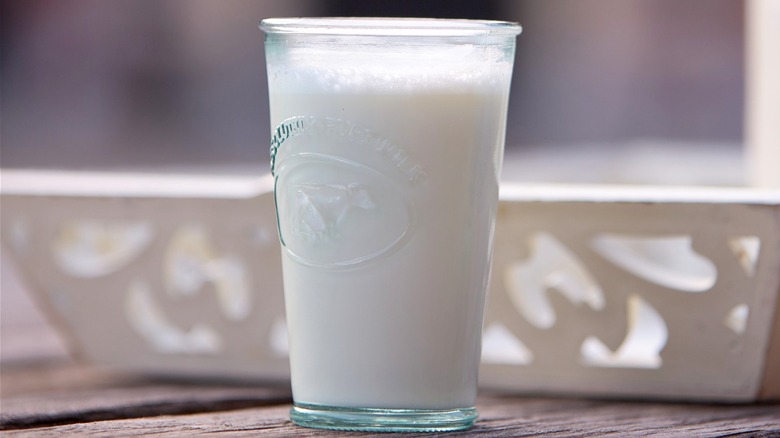
As with any food getting its share of conversation on social media, a good number of folks are eager to cook and bake with raw milk to see what it can really do. While it isn't advisable to consume this unpasteurized dairy product at all, you can technically use it in any recipe that calls for milk. In fact, cooking or baking may be preferable to drinking raw milk, which can pose serious health risks.
The FDA warns against the consumption of unpasteurized dairy, especially among the elderly, pregnant, immuno-compromised, and children. A 2025 scientific review published in Foodborne Pathogens and Disease showed that multiple harmful bacteria can reside in raw milk, including E. coli, Salmonella, and Listeria monocytogenes. According to a 2017 study in Emerging Infectious Diseases, this risky product accounted for an estimated 96% of reported dairy-related foodborne diseases.
Cooking or baking with raw milk can theoretically make it safer to consume because many recipes go well above the temperature needed to kill pathogens. All it really takes to pasteurize the liquid is to heat it at around 161 degrees Fahrenheit for 15 seconds or more. A recipe for milk bread, for example, calls for much higher temperatures. Keep in mind, however, that cooking may not guarantee proper heat treatment because the other ingredients and prep steps can add a lot of variables. If you want your food to be as safe as possible, stick with pasteurized milk instead.
The pros and cons of cooking with raw milk
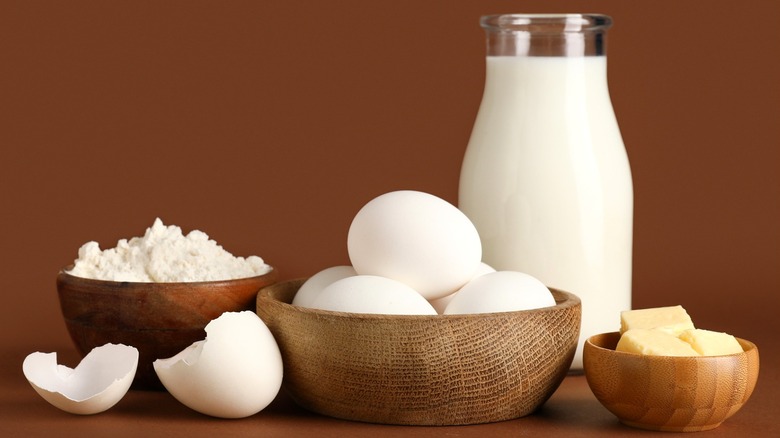
Proponents of raw milk say that it's more nutrient-dense than pasteurized milk, and contains beneficial gut bacteria that would otherwise be destroyed by pasteurization. This should be taken with a grain of salt, however. A review of scientific literature by the FDA found that unpasteurized milk doesn't actually contain any beneficial bacteria. In fact, research suggests the main differences between raw and pasteurized milk aren't in their nutritional value, but rather in their taste, appearance, and texture.
Raw milk is said to taste creamier than its pasteurized counterpart, with each cow's diet having a more pronounced effect on its flavor. This, in theory, would give your food a boost of richness and complexity when you cook or bake. It's important to keep in mind, however, that taste is subjective. Adam Richman, for instance, said on the "A Hot Dog is a Sandwich" podcast that raw milk's flavor made him averse to trying the dairy product again.
In fact, a blind taste test conducted for a New Yorker story in 2012 identified pasteurized milk as creamier than the raw kind. A separate blind comparison by a Journal & Courier contributor found that pasteurized milk was thicker and sweeter than the raw alternative. This, along with the numerous studies highlighting its health risks, suggests that the pros of cooking and baking with raw milk depend entirely on your own flavor perception, while the cons are rooted in science.