

Buying Prime Rib? Pay Attention To This Detail At The Store If You Want A Juicy Cut
We may receive a commission on purchases made from links.
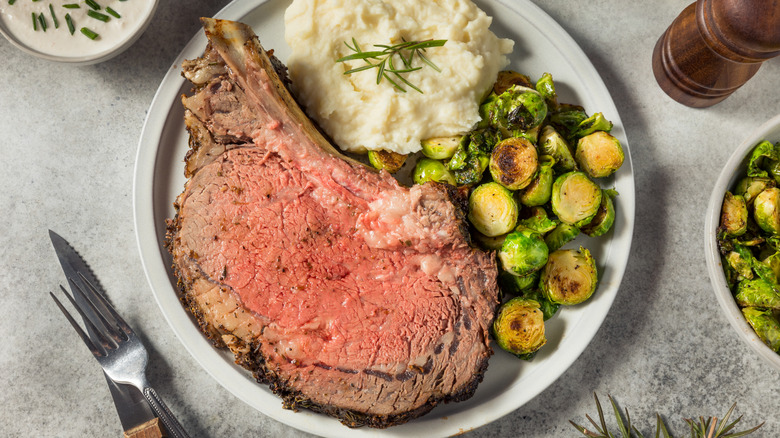
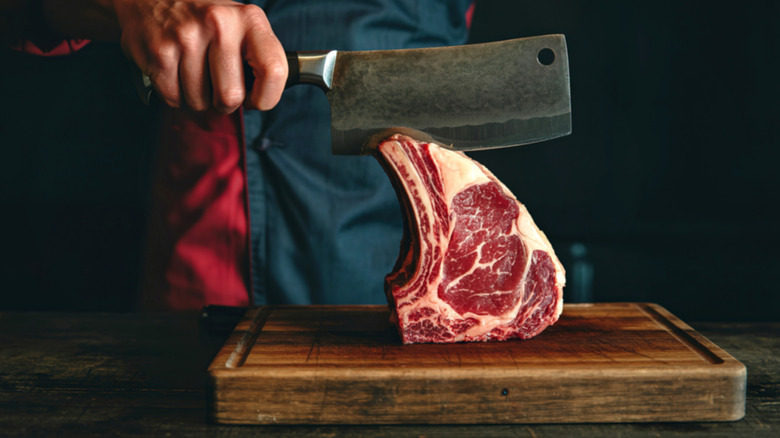
A homemade prime rib recipe is the perfect food to grace the dinner table on special occasions. Tenderness and flavor are vital to this cut, so selecting high-quality meat is of the utmost importance. One factor you should carefully consider when shopping for prime rib is marbling. In cooking, marbling refers to intramuscular fat, which appears as white streaks running through the beef (unlike intermuscular fat, which is situated between the muscles). Marbling is important to the quality of the meat because it helps keep the meat juicy after it's been cooked.
Some claim that finely marbled beef is best. Finely marbled cuts feature a large volume of thin streaks of fat uniformly distributed throughout the meat's surface area. Medium marbling has larger fat streaks that are less consistent. Coarse marbling indicates lower-quality beef, because portions of intramuscular fat are large and unevenly dispersed. Good marbling creates a tender texture as fat breaks down when exposed to heat. Melting fat also contributes to the Maillard reaction that occurs when beef is exquisitely browned, resulting in an excellent meaty flavor.
Remember, prime rib and USDA Prime Beef are not the same. Prime is a beef grade given by the USDA to indicate a top-tier marbled cut of meat. Then there's Choice Beef, which is still well-marbled but lacks the quality of Prime cuts. As such, prime rib can be Prime-grade, but Choice-grade prime rib is more accessible (since only an estimated 3.5% of beef in the U.S. is classed as Prime).
Cooking and serving tips for a prime rib feast
If you've never shopped for prime rib before, buying the right amount to satisfy your guests can be confusing. Fortunately, there's an easy rule that can help: plan on having 1 pound of beef for each guest. That means a dinner party of five requires a hunk of beef weighing at least 5 pounds. If you're lucky enough to find Prime-grade prime rib at your local grocer, be prepared for a significantly higher price. USDA Prime beef is about 25% more expensive than Choice-grade, which is why prime rib is often relegated to celebratory occasions.
Let's imagine that you find a beautifully marbled Prime or Choice prime rib roast, and now it's time to cook up that bad boy. When aiming for medium doneness, remove the roast from the heat early to ensure a perfect prime rib every time. Medium prime rib has an internal temperature of 145 degrees Fahrenheit, but it continues cooking once it's out of the oven. Removing it when your meat thermometer reads approximately 135 degrees prevents the roast from being overdone. Prime rib should rest for about 15 to 20 minutes before carving.