

The Once-Beloved Pizza Chain That's A Shell Of Its Former Self
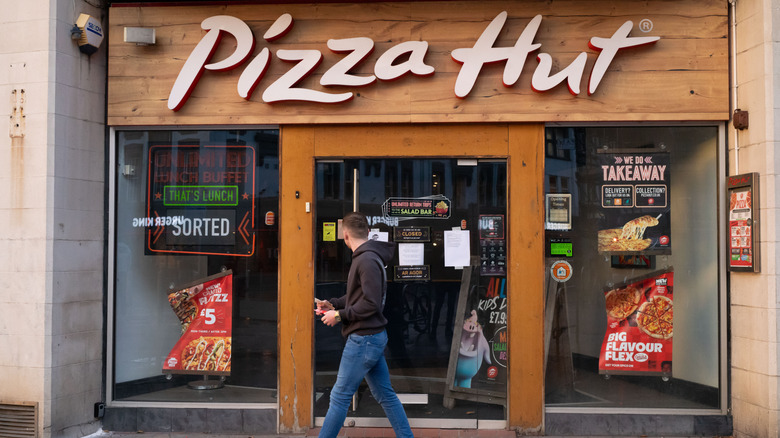
Nothing encapsulates Pizza Hut's tragic downfall like its iconic red-roofed buildings getting repurposed as other restaurants, shops, dry cleaners, and even churches. The global chain's plans for a $130 million turnaround in 2017 overlapped with its transition from full-service dine-in stores to delivery- and carryout-focused outlets. Unfortunately, this only left it straddled between the two models, and it excelled in neither.
Pizza Hut's sales haven't risen significantly since 2004, and according to CNBC, its U.S. market share fell below 20% in 2024. The following year, Pizza Hut closed down over half of its U.K. outlets. Soon after, Yum Brands, the chain's parent company, began considering either a partial or complete sale of Pizza Hut. It was once the world's largest pizza chain (until Domino's overtook it in 2017), but the red roof has now joined the list of pizza chains that are disappearing across the country.
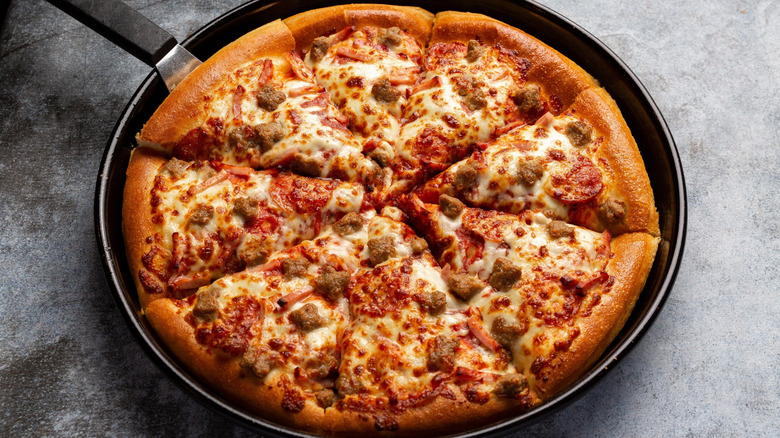
Between its stagnating innovation and clumsy transition to a delivery model lie several other signs that Pizza Hut is struggling to stay in business. The food quality, for instance, has also plummeted. Pizza Hut makes a point to advertise freshly made dough, but customers regularly point out that the golden, buttery crust of yore now lacks its original flavor and texture. One former employee confirmed this in a Reddit comment, writing, "It's all frozen. I started working for Pizza Hut in 1994 and they switched to frozen about 2-3 years later." In a separate Reddit thread, another Pizza Hut employee posited that while their outlet makes fresh dough daily, other outlets may be cutting corners by preparing theirs in advance.
Why Pizza Hut's comeback strategy doesn't seem to be working
Another possible reason for Pizza Hut's downward spiral is that it failed to successfully reinvent itself as customer preferences evolved. High-end pizzerias serving more authentic fare began competing for novelty starting in the late 2010s, and the relatively stagnant offerings of the once-popular purveyor of stuffed-crust pizza stopped drawing customers. Unable to successfully compete in delivery and efficiency, it continued losing market share to Domino's on the fast food side.
The brand also tried to quietly capitalize on nostalgia by remodeling a few existing red-roofed sit-down outlets into Pizza Hut Classic locations. These are a throwback to 1980s Pizza Hut, complete with painted glass lamps and checkered tablecloths which attract nostalgic fans, sometimes from out of town. However, any business gained will likely benefit the franchise owners of those locations. Plus, with 75% of all restaurant orders eaten off-premises as of 2025 (per National Restaurant Association), these Classic outlets are unlikely to make a dent in the pizza chain's woes.
Turning things around for a brand the size of Pizza Hut is no small feat, but it's not impossible, either. Sure, some factors are out of its control, like diners shifting away from conventional fast food pizza. The chain could, however, take notes from Domino's, which successfully overhauled everything from its sauce recipe to its ordering systems in the late 2000s. Fans of the Hut would be overjoyed to see their beloved pizza chain pull off a similar revival. For now, however, they'll have to be content with the updated hand-tossed crust — Pizza Hut's big change to its popular pizza style.