

The 3-Step Test For Picking A Good Avocado At The Store
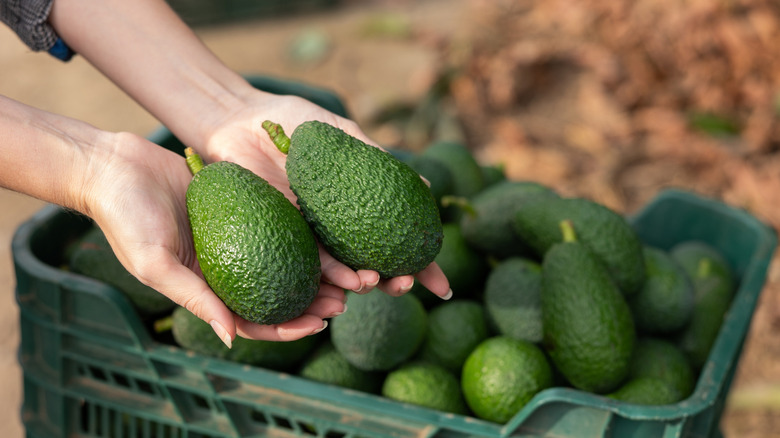
Avocados can be one of the most satisfying choices from the produce department, offering a uniquely delicious taste alongside notable health benefits due to their richness in vitamins, fiber, and healthy fats. On the downside, they can be as difficult to pick out correctly as they are satisfying to eat. Fortunately, curious shoppers can look to three simple factors to make better avocado selections. The key indicators that the avocado you're looking at is a good one are: color, the texture of the skin, and the firmness of the avocado's flesh.
Even if you grab an underripe avocado, all isn't lost. Avocados don't begin to ripen until picked and naturally soften over time when stored at room temperature. There are also common tricks for how to ripen an avocado more quickly, such as storing it in a paper bag with a banana. Conversely, avocados that are at risk of over-ripening before you're ready to use them can be preserved by keeping them in the cool temperatures of your refrigerator.
Still, those who keep the following aspects in mind won't have to worry much about speeding or slowing ripening. With these tips, you'll be bringing home avocados that are already near peak ripeness on the regular.
Step 1: Look at the skin
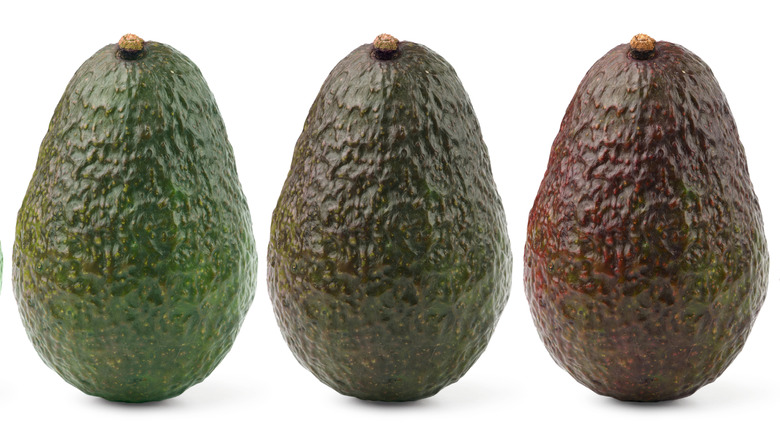
Choosing avocados incorrectly is a common mistake everyone makes with avocados, but the first critical factor in avoiding this can be determined with a glance. A ripe avocado will have deep, dark green skin, almost approaching black. Depending on the type of avocado you're looking at, it may also be dark green with black specks.
Generally, it's best to avoid selecting avocados with fully blackened skins. These may be at peak ripeness already, or even overripe. You'll need to consume these immediately, and they may have already begun to lose quality.
Assessing an avocado's ripeness by color alone is a simple test, and it's not always the most reliable. It is best used on common Hass avocados, which go from medium, leaf green to dark, forest green as they ripen. Alternative avocado varieties, such as Bacon or Fuerte, will stay lighter green on the outside, even when perfectly ripe.
Step 2: Feel for bumps
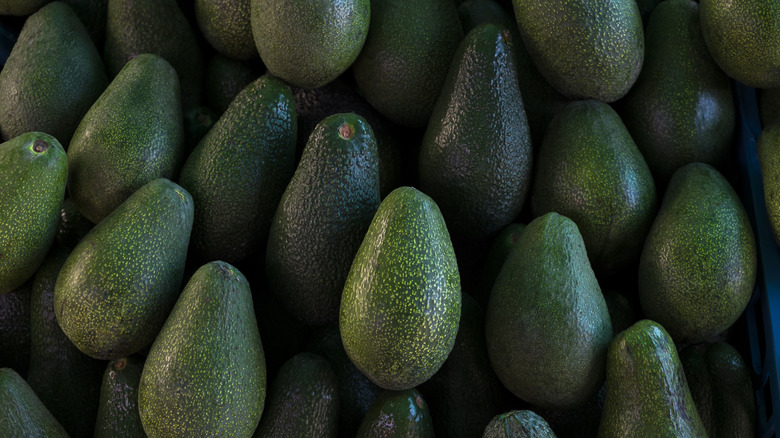
The final two tests for ripe avocados happen as soon as you pick one up. First, concentrate on the feel of the avocado skin. Ripe avocados generally have a bumpy texture. There should also be no obvious dents in the fruit, nor should it look deflated.
There's usually no need to worry if these bumpy areas seem collapsed and blackened. This is typically a result of damage to the lenticels, which are large pores in the plant tissue that facilitate gas exchange while the avocado grows. On common Hass avocados, minor lenticel damage often has little effect on the quality of the fruit inside. Insect damage can cause rough, brown, corky patches to develop on the avocado skin, though this usually doesn't affect the inside either. Thrips, the tiny insects that feast on vegetation, have been known to eat the outermost layer of an avocado's skin, resulting in dry, brown scar tissue. Unless thrip damage is severe, the unsightliness tends to be cosmetic.
On the other hand, avocados that are mostly smooth on the outside are likely underripe. It's best to leave these at the store or purchase them several days to a week before you expect to use them.
Step 3: Squeeze (gently)
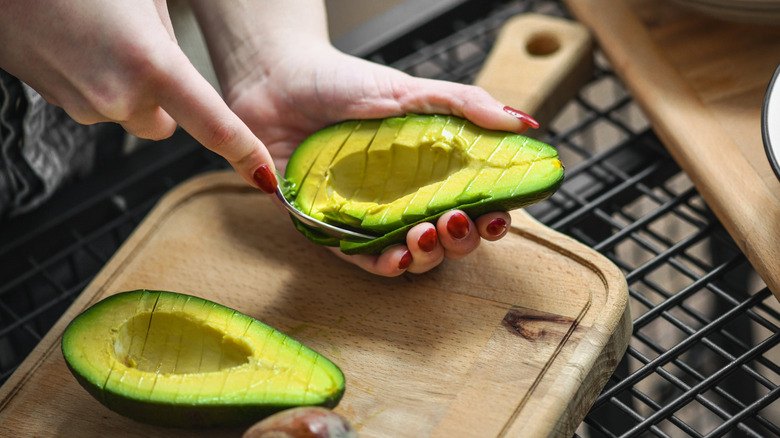
If your avocado looks good and has the right skin texture, all that's left to do is squeeze. Gently squeezing the avocado will reveal where it falls on the rock-hard-to-mush spectrum. Ideally, your avocado should yield slightly to gentle pressure. If it still feels extremely firm, it still has time left to fully ripen.
On the flip side, there shouldn't be any obvious indentations left behind from pressing an avocado. This suggests the avocado is already overripe, with the flesh continuing to soften beyond the desired texture with each passing moment. There's no easy, straightforward metric here. Within the general guidelines, you'll need to use your judgment and experience to learn what perfect texture for your cooking needs and eating timeline.
Visually examining and physically touching fruits and vegetables of all kinds are among the tricks and tips used by food experts to find the freshest produce. For avocados, the three-step test of checking color, skin texture, and firmness can make a huge difference in picking the best ones the store has to offer. When using this method, you'll instantly have a good idea whether the avocado you're holding is guacamole-ready or belongs back on the shelf.