

How To Prepare Prime Rib That's Extra Flavorful
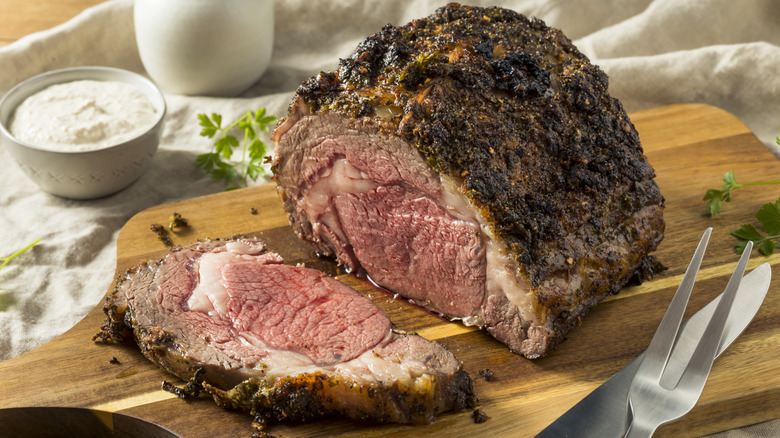
A well-executed prime rib should be tender, juicy, and flavorful. This cut of meat is sourced from the loin of cows, which explains its gorgeous texture and marbling since these muscles get less activity than other parts of the animal. The intramuscular fat plays a key part in giving the roast flavor as it melts while cooking, and because of this many home chefs believe that prime rib should be seasoned with just salt and pepper. But hear us out: Creating a spice rub for the beef will really turn up the dial on the tastiness and allow you to play around with different flavor profiles.
Dry rubs are essentially just a blend of spices and herbs, but these seasonings are slathered onto the meat before it cooks. This process is different than soaking your meat cut in a marinade, which would instead use seasoned liquids to boost the flavor and tenderness. While recipes are endlessly adaptable, rubs often feature salt, sugar, onion, and garlic. This ingredient combo contributes to a mouthwatering texture by holding in moisture and tenderizing the meat while also creating a tasty crust on the surface. In fact, rubs are superior to marinades in that respect, as excess moisture on the surface of food will get in the way of a crispy texture.
Tips and tricks for creating an outstanding prime rib spice rub
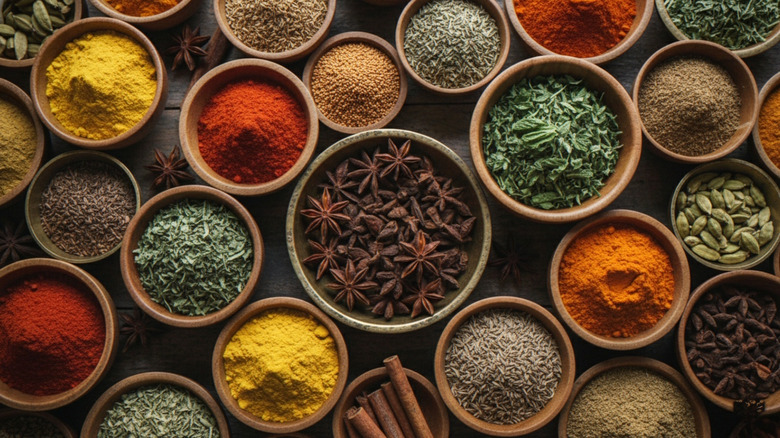
One of the nice things about adding a spice rub to your prime rib is the variety of flavor options you have. For example, this homemade prime rib recipe uses a blend consisting of minced garlic, herbs, salt, and olive oil. If you want to replicate your favorite steakhouse flavors, consider adding horseradish powder to herbs and spices like thyme and coriander. Smoked paprika is another great suggestion, as the seasoning can infuse your prime rib with warm, earthy flavors.
Applying a spice rub is straightforward, though a bit tedious. You want a uniform coating of herbs and spices all over the beef, and you want to make sure the rub securely clings to the surface of the prime rib. In this case, make sure the exterior is fully dry to prevent the blend from slipping (you can dab it with a paper towel if necessary). When calculating how much seasoning you'll need, it's generally up to you. If you're not sure, try using between ½ and 1 tablespoon of seasoning for every pound of prime rib. Once you're satisfied with the seasoning, you can begin cooking your prime rib according to the recipe instructions. You can also check out these prime rib cooking tips to ensure your next hunk of meat is one for the record books.