

Should Kids Drink Raw Milk?
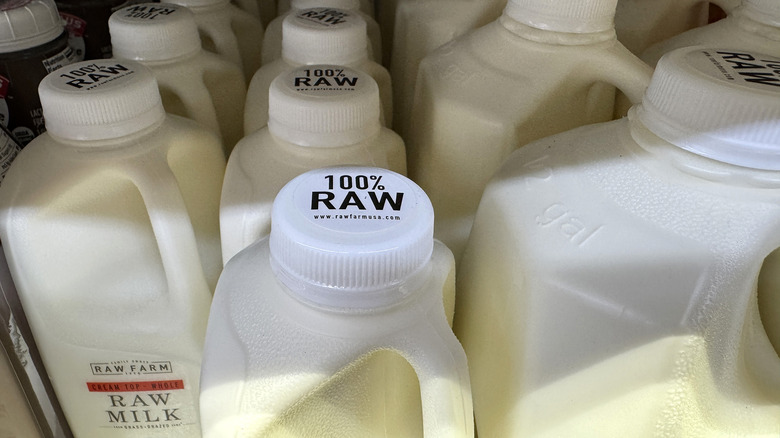
Real food. It's a buzzword that everyone seems to be using, but what does it actually mean? It's as much a movement towards natural, whole foods as it is away from vanilla cupcake-flavored Goldfish graham crackers or Cheetos flavored like barbecue Lay's potato chips. Health-conscious shoppers are browsing grocery aisles for less processed choices, and a high-profile example that's exploded in popularity in recent years is raw milk. Although you can't buy raw milk everywhere, its allure as a farm-to-table product carries influence, with special interest being paid to its perceived health benefits for kids.
Raw milk is cow (or sheep or goat) milk that isn't pasteurized. It gained notoriety after Robert F. Kennedy Jr., the Secretary of Health and Human Services, advocated for it as a health food. Here's the problem: Raw milk hasn't been proven safe to drink, nor is it definitively healthier than pasteurized milk. Studies that tout the immune-boosting properties of raw milk are widely misused, especially regarding children.
Despite what Kennedy believes, the FDA still calls raw milk dangerous. Since raw milk hasn't been heated to a high enough temperature to kill bacteria, it's more likely to contain pathogens such as Brucella, E. coli, Listeria, and Salmonella, which could lead to gastrointestinal illness, organ damage, or even death. Consumption of those pathogens is particularly dangerous for individuals under five years old or over 65 , but the FDA and CDC both advise against drinking raw milk at any age.
Claims that raw milk helps immunity aren't supported by science
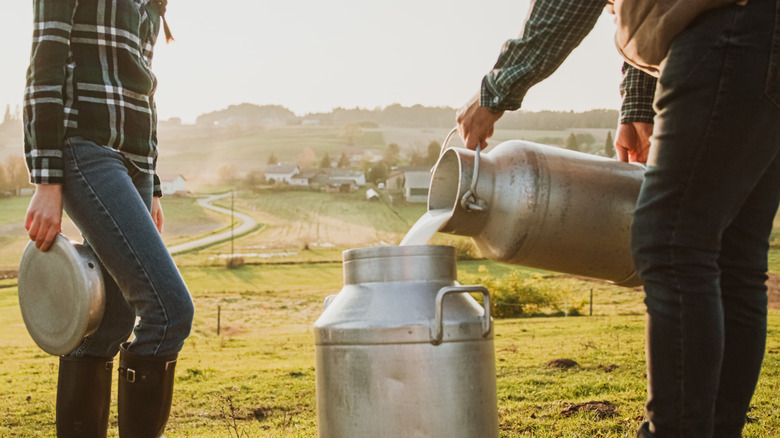
A series of Swiss studies beginning in the late 1990s, now referred to as the "farm effect," proposed that children who grew up near or on farms tended to have lower rates of allergies and asthma compared to their suburban and urban peers. In these studies, children tended to drink raw milk produced very locally. Moreover, these studies did not conclude that raw milk alone was responsible for the farm effect. Instead, it was determined to be a combination of factors, including exposure to animals, local vegetation, and the microbes that come along with them.
Most research on the farm effect was conducted on small farms in Europe, so its findings didn't apply to the large, industrial farms that dominate the American agricultural landscape. Although a 2007 American study suggested that the farm effect is also real in the States, analyzing the correlation between drinking raw milk and lower rates of asthma and allergy was not something the authors researched. In regard to raw milk, the study noted, "At this stage, consumption of raw farm milk cannot be recommended as a preventive measure" (via the FDA).
The CDC says there's no nutritional difference between raw and pasteurized milk. There is, however, clear evidence that raw milk is harmful to children and adults. In 2025, six children under 10 became sick from drinking raw milk produced in Florida (per the Florida Department of Health). Raw milk has also been flagged as a potential carrier of H5N1 avian influenza, better known as bird flu.