

The Sauce Red Flag You Should Never Ignore At A Pizzeria, According To A Pizza Shop Owner

A good sauce is the secret ingredient for a restaurant-worthy pizza — it helps enhance the flavors of all the other ingredients and harmonize the layers. You'll know that a pizzeria is worth coming back to if it cares about the quality of its pizza sauce. According to World Pizza Champion and certified Italian pizzaiolo, Glenn Cybulski, however, if you happen to see any pans of that sauce just lying about, it's time to get out of there.
When Mashed asked Cybulski about what red flags to look out for at a pizza place, he mentioned that leaving the sauce out in unrefrigerated pans was not okay. "Even though tomatoes have a high acidity, it only takes a short time once it's warm to start growing bacteria that will make you sick," he said.
The science backs it up. Most tomato products have a pH level ranging from 4.1 to 4.9, which isn't always enough to stop the growth of harmful bacteria. A 2004 study in the Journal of Food Protection, for example, found that salmonella can grow at a pH level as low as 3.94. According to the World Health Organization, some harmful strains of E. coli can still grow at a pH of 4.4. Since different recipes can either increase or decrease the pH of tomato sauce, it's hard to tell if the sauce at your pizza place is acidic enough to stop bacterial growth. The one thing you can count on is proper storage, and if the sauce is exposed, it's a big warning sign.
Why pans of pizza sauce should be refrigerated
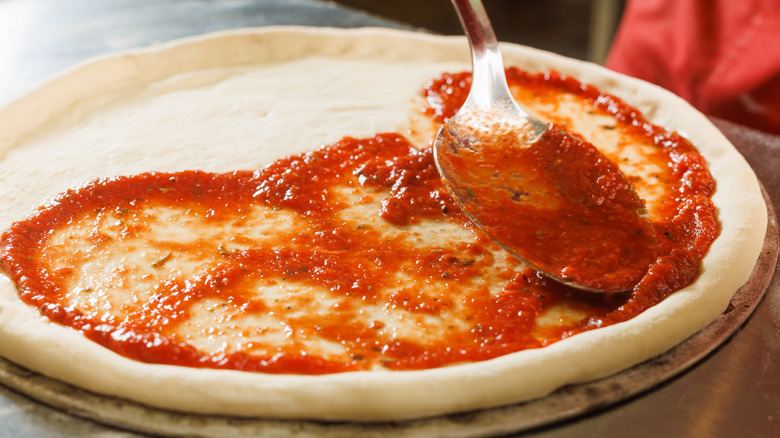
Because the acidity of pizza sauce alone won't reliably inhibit bacterial growth, refrigeration is the best step to making sure it stays safe to consume. According to the FDA, bacteria tends to multiply the fastest at temperatures between 40 and 140 degrees Fahrenheit. By keeping the sauce in a refrigerator set below 40 degrees, your local pizzeria can significantly slow down bacterial growth and avoid getting people sick.
Refrigeration also helps stop other spoilage factors. The FDA reports yeast and mold can grow at pH levels as low as 2, making pizza sauce nowhere near acidic enough to stave them off. Their growth is inhibited at temperatures below 50 degrees Fahrenheit, however, which is why it's crucial that a pizza place refrigerates its sauce. That said, it's not a permanent solution; fresh tomato sauce is one of those foods that spoil faster than people think, and will only keep for three to five days even when refrigerated.
The same applies even when you're making pizza sauce at home. If you don't plan on keeping your sauce at a constant temperature above 140 degrees Fahrenheit, it's best to follow the 2-Hour/4-Hour Rule: eat or refrigerate food kept between 40 and 140 degrees Fahrenheit for less than two hours, and discard it if it's been out for four or more hours. Between those times, it's only safe to eat it; refrigeration will no longer be an option.