

What Happens To Leftover Starbucks Food Items?
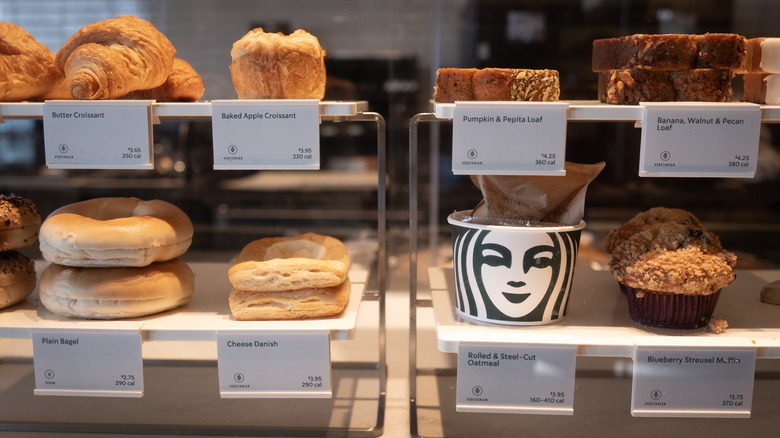
It's no secret that food waste is a big problem. Chain restaurants each have their own protocols for fighting food waste (which not only causes environmental issues but eats into restaurants' bottom lines). Customers who stop by a Starbucks in the morning might not think about what happens to the food that doesn't make it to a customer by the end of the day, but Starbucks actually has an extensive program to donate leftover food that can't be sold. It's called FoodShare, and was introduced in 2016.
After employees spoke up, encouraging Starbucks to donate rather than throw out unsold food at the end of the day, the coffee chain introduced FoodShare with plans to connect the unsold food with local food banks and food pantries. Now, the program thrives. "Starbucks equips 100% of company-operated stores in the U.S. and Canada to donate eligible unsold food rather than sending it to landfills," the company said in a statement to sister website Tasting Table. That has diverted over 111 million meals from landfills to food access charities, said Starbucks.
Many of these items come into the stores frozen, so their shelf lives are already counting down upon arrival. But that doesn't mean they're not still good. In fact, FoodShare is limited to only the food items that Starbucks deems still safe for consumption. Since 2019, these items have been packed up by Starbucks staff, then driven to distribution centers where they are then routed to food banks and pantries.
Starbucks' food waste reduction efforts have helped, but they don't eliminate all waste
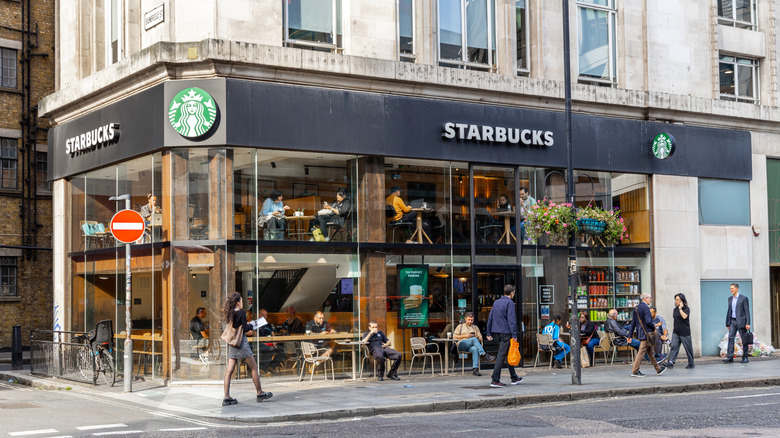
In addition to FoodShare, Starbucks also partners with the app Too Good to Go, which allows users to find deeply discounted, almost-expired food that's still fine to eat. In Europe, the Too Good to Go partnership has saved more than 5 million meals from being thrown out, according to Starbucks. Starbucks has worked with Too Good to Go in Europe since 2017 and added the service to its United States stores in 2025.
But since Starbucks is a fast food restaurant, sometimes the speed of service means products don't make it to the end of the day unsold. In the hustle and bustle of a busy coffee shop, some food items can be damaged, or sealed products can be accidentally opened. Those can't be donated, especially if they're contaminated or otherwise unsafe (and if someone got sick from that, Starbucks would be liable). "That is not food waste," Starbucks said in a statement to The Cool Down. "It is a public health commitment."
One note here: Not everything that appears to be a Starbucks is a Starbucks. Institutional food service operators (in places like colleges or hospitals) sometimes run licensed Starbucks kiosks under a program called We Proudly Serve Starbucks. Because these are run by the institution, not Starbucks itself, their food waste policies vary and don't necessarily participate in FoodShare or Too Good to Go.