

You May Be Making Your Eggs In The Wrong Type Of Pan
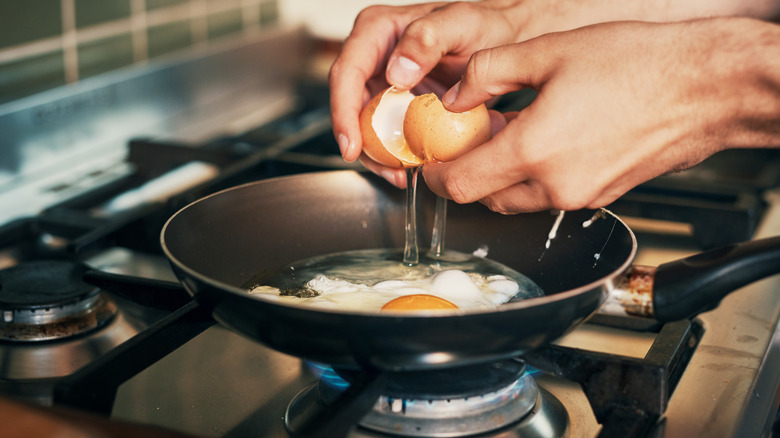
Eggs are a top-tier staple food. They're affordable, rich in protein and vital nutrients, and you can cook them in lots of different ways. Although making the ideal egg involves many factors, one that's potentially underrated is the pan you use. Many types can get the job done, but cast iron and stainless steel are generally the wrong choice. The best and easiest option is a pan with a nonstick coating.
The advantage is right in the name. A quality nonstick pan with an intact coating allows the egg to release easily without sticking or requiring too much oil or butter (depending on the dish you're making). This helps you avoid breaking delicate over-easy eggs and prevents scrambles from leaving a burnt residue behind. This nonstick nature is typically achieved through polymer chemicals applied to the skillet as a coating. Another advantage of nonstick pans is that they're relatively affordable, often in the $20-30 range. This makes them an accessible option compared to other, higher-priced modes of egg-cooking.
For both of these reasons, they're typically superior to cast iron, which generally requires more fat to keep the eggs from sticking, even with proper seasoning. The same is true of stainless steel, which is known for sticking unless you use quality cookware and a careful technique.
Other considerations when choosing a nonstick egg pan
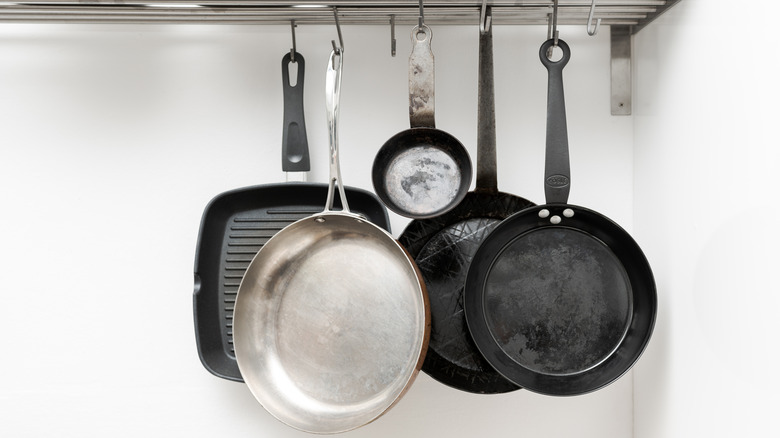
Nonstick pans aren't without their downsides. Most importantly, even when properly cared for, these vessels begin to lose their coating within a few dozen uses, so you'll need to replace them far sooner than well-treated cast iron, carbon steel, stainless steel, or other long-lasting materials. In addition, most contain some level of PFAS chemicals, which are a growing concern for the environment and human health. Still, they don't require the same level of care as some alternatives.
Material isn't the only factor to consider when selecting the perfect egg-cooking pan. Size is also critical, and the ideal choice varies depending on what you're making. Fried eggs are best prepared in an 8-inch pan to keep them from spreading too far before they solidify, while scrambled eggs and omelets benefit from a 10- or 11-inch vessel to help them cook quickly.
The next time you want an omelet or a good scramble, avoid one of the biggest mistakes everyone makes when cooking eggs by taking some time to consider your pan choice. Using an affordable, easy-to-find nonstick pan is the way to go for the most reliable egg quality.